Singer Model 15 Value: Identify 15-91, 15-90 & More
By the Numbers
Store ratings checked Sep 27, 2026. How we count
The Singer Model 15 is not one machine with one price. It is a long-running family that includes treadle, hand-crank, belt-driven electric, and gear-driven electric variants. The useful resale question is therefore not “What is a Singer 15 worth?” but which Model 15 variant is this, does it sew correctly, what is included, and what have comparable machines actually sold for in the same selling radius?
This guide gives you an identification and valuation workflow without inventing a national price. Singer’s own current value guidance says age, limited production, and condition can matter, but it does not publish an exact appraisal. That makes variant proof, current sold evidence, and transaction costs the defensible path.
Source and method check: August 27, 2026. Model features come from Singer manuals and the International Sewing Machine Collectors’ Society (ISMACS). Market-value research uses current exact-match sold evidence; active asking prices are not treated as sales.
Quick answer: what makes a Singer Model 15 worth more?
A Singer 15 usually becomes a stronger resale candidate when all of these are true:
- The exact variant is identified instead of being listed as a generic “antique Singer.”
- The handwheel turns freely and the machine forms a balanced straight stitch.
- Reverse, feed dogs, bobbin winding, tension, and the motor or treadle drive work as designed for that variant.
- Electrical wiring, the foot controller, belt, cabinet, and hinges are safe enough for an honest demonstration.
- The bobbin case, slide plate, power lead or belt, controller, accessories, manual, and cabinet parts are present.
- Current sold evidence is for the same 15-variant, drive type, cabinet or head-only configuration, condition, and pickup or shipping terms.
Age alone is not a value. ISMACS records millions of Model 15 and 15K machines across a long production span, so “old” does not automatically mean scarce. The premium must come from the exact configuration, decoration, condition, completeness, provenance, or buyer demand supported by current sales.
First identify the exact Model 15 variant
Singer’s current support guidance tells owners to look for the serial or model number on the throat plate or bed for treadle and hand-crank machines, on the right side for some treadle/electric machines, and underneath some electric machines. Photograph every number before cleaning because a partial prefix can lead to the wrong factory or date range.
Then compare physical features. The ISMACS Singer Model 15 comparison chart separates variants by handwheel, bobbin-case position and part, stitch-length control, bobbin winder, feed-dog control, and drive arrangement.
| Variant | Visible cues to verify | Drive setup | Resale listing boundary |
|---|---|---|---|
| Singer 15-30 | Spoked handwheel; earlier stitch control; bobbin case at the 1 o’clock orientation in the ISMACS chart | Commonly treadle or hand crank | Do not call it a 15-91 because the bed shape looks similar |
| Singer 15-88 | Spoked handwheel; round reverse plate; droppable feed dogs | Treadle or electric configuration | Photograph the belt and motor arrangement; do not infer the original setup |
| Singer 15-90 | Solid handwheel; round reverse plate; droppable feed dogs | External belt-drive motor | Keep separate from the gear-driven 15-91 in comp research |
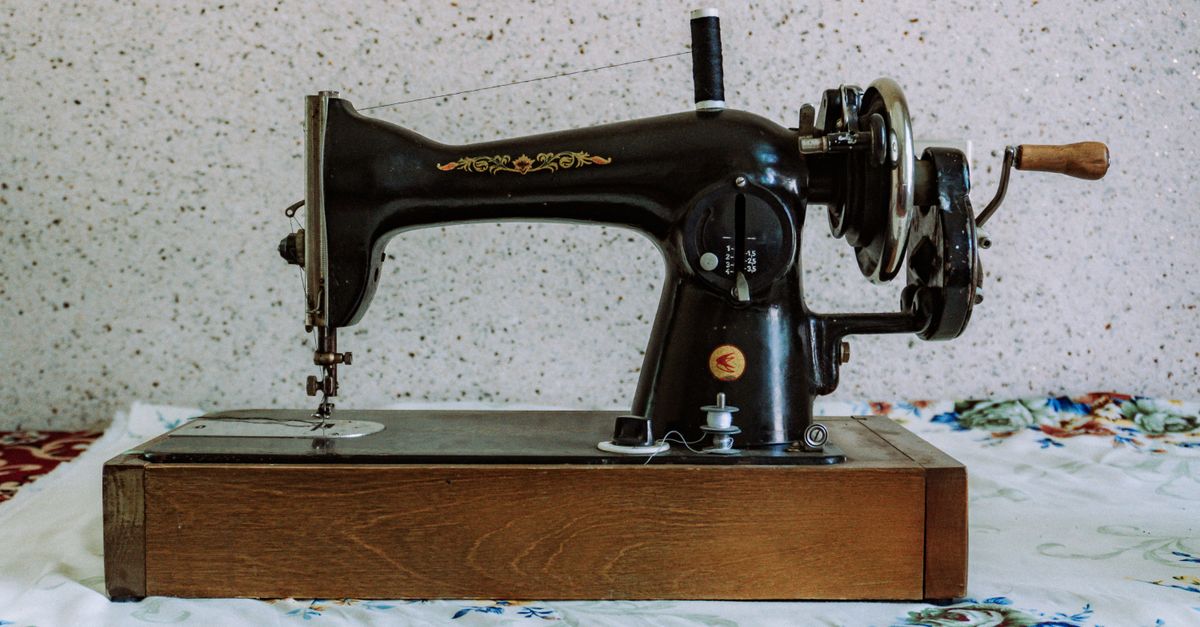
| Singer 15-91 | Solid handwheel; round reverse plate; droppable feed dogs | Built-on “potted” gear-drive motor | Inspect the motor, wiring, controller, and gear drive as part of value |
| Singer 15K variants | Kilbowie-built machines use a K in the model designation | Varies by subclass | Use the exact 15K subclass; do not convert it to a U.S. dash number without evidence |
The table is a field screen, not a substitute for the comparison chart or the correct manual. If two cues disagree, stop and inspect the bobbin case, stitch regulator, feed-dog control, motor, and serial record again.
The 15-90 and 15-91 are not interchangeable comps
Both can have a solid handwheel, reverse, and a similar black body. The important difference is the drive. The 15-90 uses an external belt-driven motor. The 15-91 uses a built-on gear-driven motor. That changes the electrical inspection, missing-parts risk, repair path, and what an exact buyer may be searching for.
The Singer 15-91 instruction manual archived by ISMACS is the correct operating reference for the 15-91. It shows threading, bobbin winding, controls, oiling points, and normal use. If the machine in front of you does not match the manual’s controls and drive, do not force the identification.
Use the serial record as dating evidence, not the only model proof
Singer’s current support page links to the ISMACS Singer serial-number database. A serial allocation can help date and locate production, but a date does not prove every missing or changed component is original. Motors, cabinets, controllers, handwheels, and decals can be replaced over decades.
Record these fields together:
- Serial number and prefix.
- Model or subclass marking, if present.
- Factory or allocation result from the serial database.
- Motor type and motor plate.
- Handwheel, bobbin-case orientation, stitch regulator, reverse control, and feed-dog control.
- Cabinet, treadle, case, controller, and accessory configuration.
Singer Model 15 inspection checklist
Do not plug in a vintage electric machine only because the handwheel turns. Cracked insulation, a brittle lead, exposed conductors, heat damage, or an improvised controller can turn a low-cost test into a safety failure.
Unpowered checks
- Photograph first. Capture the full front, rear, bed, serial, model plate, motor plate, wiring, controller, cabinet, underside, bobbin area, decals, and every included accessory.
- Turn the handwheel by hand. It should move through a full cycle without a hard stop. Do not force a seized mechanism.
- Inspect the bobbin area. Confirm the bobbin case and slide plate are present and match the variant reference.
- Check the needle bar and presser bar. Look for bends, heavy rust, missing clamps, and improvised screws.
- Test the feed-dog control and stitch regulator. Controls should move without excessive force. A variant that is not designed to drop its feed dogs should not be marked defective for lacking that control.
- Inspect the drive. A treadle needs a complete pitman and belt path. A 15-90 needs its external motor and belt. A 15-91 needs its built-on motor and intact drive assembly.
- Inspect the cabinet or case. Check hinges, mounting pins, support arms, veneer, drawer operation, and whether the head can be raised and lowered safely.
Powered sewing test
Only proceed when the electrical path is safe to test. If you are not qualified to evaluate vintage wiring, record the machine as untested and price from untested comps rather than implying a professional inspection.
Use the correct needle, bobbin, thread, and threading path from the matching manual. Then record:
| Test | Passing evidence | What a failure changes |
|---|---|---|
| Motor or treadle drive | Smooth response without smoke, burning odor, sparking, grinding, or a hot lead | Stop the test; use untested or repair-project comps |
| Straight stitch | Consistent stitch formation on the top and underside | Diagnose threading, needle, tension, hook, and timing before calling it sewing-ready |
| Reverse, when fitted | Feeds fabric backward under control | A missing or failed reverse reduces utility for buyers expecting that subclass |
| Feed dogs | Advance fabric evenly; drop and rise only on variants designed to do so | Binding or failed feed control requires service disclosure |
| Bobbin winding | Winds evenly without slipping or excessive noise | Missing tire, spring, or drive parts become a repair cost |
| Tension | Lock point sits in the fabric instead of looping above or below | Re-thread and retest; unresolved tension belongs in the listing |
Keep the stitched sample and show both sides in the listing. “Motor runs” is not the same claim as “machine sews a balanced stitch.”
Build a current Singer 15 comp set
Use eBay Product Research rather than relying only on active listings. eBay says Product Research can show up to three years of sales data, actual sold prices including accepted Best Offers, shipping costs, and filters such as condition and buyer or seller location.
Search in layers
Start narrow, then widen only when the exact sample is too small:
- Search the exact variant:
Singer 15-91 sewing machineorSinger 15-90 sewing machine. - Separate head only, portable case, cabinet, and complete treadle configurations.
- Separate tested sewing, motor runs only, untested, parts or repair, and serviced—and require evidence for any “serviced” claim.
- Exclude manuals, parts, attachments, toy machines, and listings that merely say “fits Singer 15.”
- Separate local pickup from shipped sales. A cabinet sale with no shipping is not the same transaction as a packed head shipped across the country.
- Note whether the sold price includes a table, case, controller, manual, bobbin case, slide plate, and accessories.
For a small sample, use the middle sale instead of letting one restored showpiece or incomplete parts machine set the value. Keep excluded results in the research notes so another person can reproduce the comp set.
Value worksheet
| Line | Your evidence | Rule |
|---|---|---|
| Exact sold sample | Same variant, configuration, condition, and sale method | Do not mix 15-90 and 15-91 just to create a larger sample |
| Supported sale price | Median or conservative center of the accepted sample | Keep accepted offers and shipping terms when Product Research provides them |
| Platform fees | Current fee for the selected channel | Verify on listing day |
| Packing and shipping | Actual box, protection, carrier, insurance, and dimensional cost | A cabinet usually needs local pickup or freight planning |
| Repair allowance | Wiring, controller, belt, bobbin parts, service, or cabinet work supported by inspection | Do not call your own labor free |
| Required profit | Minimum return for sourcing, testing, photographing, listing, and buyer handoff | Set before negotiating |
| Maximum buy price | Sale price minus every cost and required profit | If negative, pass or switch to a parts-only route |
The Underpriced flip profit calculator can hold the fee and cost math once the exact sold sample establishes a supportable sale-price input.
Condition and route decision table
| Observed condition | Appropriate value evidence | Safer route |
|---|---|---|
| Correct variant, complete, safe electrical path, balanced stitch sample | Exact tested/working sold comps | Local pickup or carefully costed shipping |
| Handwheel free, wiring unsafe or not evaluated, no powered test | Same variant sold as untested | Local project-machine sale with precise disclosure |
| Missing bobbin case, slide plate, controller, motor part, or cabinet hardware | Incomplete and parts/repair comps plus actual replacement cost | Repair only when the supported spread survives the parts and labor |
| Seized, cracked casting, burned motor, major rust, or incomplete drive | Parts-only sold evidence | Part out, donate for parts, or recycle through an appropriate route |
| Beautiful decals but no functional proof | Condition-photo match plus untested comps | Never price from appearance alone |
Photos buyers need to verify the machine
A useful Singer 15 listing should make identification possible without asking the buyer to trust the title. Provide clear, evenly lit photos of:
- Full machine from the front, rear, left, and right.
- Serial number and any model or subclass marking.
- Handwheel, stitch regulator, reverse control, and feed-dog control.
- Bobbin area with the slide plate open and bobbin case visible.
- Motor and motor plate; belt path or built-on gear-drive area.
- Wiring, plug, controller, and any cracked or repaired insulation.
- Needle plate, presser foot, tension assembly, and bobbin winder.
- Cabinet, hinges, mounting pins, treadle linkage, case, or base.
- Every included foot, bobbin, manual, screwdriver, oil can, belt, and attachment.
- The front and back of the actual stitch sample.
- Decal loss, finish wear, chips, rust, veneer damage, odor source, or other flaws.
Write the same information in text. A buyer using a screen reader or a buyer who cannot interpret one angle should still be able to understand the variant, drive, test result, and damage.
Listing title and description boundary
Use only the exact variant you verified. A clean title pattern is:
Singer 15-91 gear-drive sewing machine — tested stitch — controller — [case or cabinet]
Change every field that is not true. Do not add “industrial,” “heavy duty,” “rare,” “serviced,” “restored,” or a production year unless you can support it. The Model 15 is a durable domestic straight-stitch family, but a heavy cast-iron body does not make it an industrial machine.
In the description, separate facts from unknowns:
- Identified as: exact variant and the physical cues used.
- Serial evidence: prefix, allocation result, and lookup source.
- Powered test: what was tested, for how long, and what was not tested.
- Stitch result: fabric, thread, straight stitch, reverse, and tension outcome.
- Electrical condition: visible wiring observations and whether a professional evaluated it.
- Included: every controller, cord, bobbin case, slide plate, accessory, case, cabinet, and manual.
- Flaws: finish, decals, rust, veneer, missing parts, odor, noise, binding, and repairs.
- Handoff: local pickup, lifting plan, or the exact head-only packing boundary.
How This Differs From the General Sewing-Machine Guide
The sewing machine flipping guide covers category-wide sourcing, a general sewing test, and the local-pickup-versus-shipping decision across many brands and machine types. Model 15 research goes deeper: identify the subclass, distinguish similar drive and control arrangements, build an exact comp set, and document a variant-specific listing.
Sources
- Singer: What’s my sewing machine worth? — current Singer identification and value-research steps.
- ISMACS Singer Model 15 comparison chart — variant feature and drive comparison.
- ISMACS Singer serial-number database — serial allocation research linked by Singer.
- Singer 15-91 instruction manual — operating, threading, bobbin, oiling, and control reference.
- ISMACS Singer production figures — production-scale context and stated data limitations.
- eBay Product Research — actual sold price, accepted-offer, shipping, date-range, and condition-filter workflow.
Frequently Asked Questions
How much is a Singer Model 15 sewing machine worth?
There is no responsible single price for the whole Model 15 family. Identify the exact variant, separate head-only from case, cabinet, and treadle configurations, document the test result, and use current sold evidence for that same setup and condition before subtracting fees, transport, repair, and required profit.
How can I tell a Singer 15-91 from a 15-90?
Both can have a solid handwheel, reverse, and droppable feed dogs. The 15-90 uses an external belt-drive motor; the 15-91 uses a built-on gear-drive motor. Verify the drive, motor plate, controls, bobbin arrangement, and matching manual rather than using decals alone.
Where is the serial number on a Singer Model 15?
Singer points to the throat plate or bed for many treadle and hand-crank machines, the right side for some treadle and electric machines, and underneath some electric machines. Photograph the full number and prefix, then use the Singer-linked ISMACS serial database.
Is a Singer 15-91 an industrial sewing machine?
No. It is a domestic straight-stitch machine. Its metal construction and gear drive can handle many household sewing jobs, but that does not change the machine class or support an industrial listing claim.
Related articles
broader sewing machine sourcing and testing guide
Consistent-demand sewing machine flipping guide for 2026. Learn which vintage and modern machines sell, testing procedures, and craft market insights.
when to sell local vs. ship
Choose the right local selling channel for furniture, tools, electronics, clothing, and bulky resale items with pricing rules, meetup safety, and negotiation scripts.
estate-sale sourcing and negotiation workflow
Master estate sale sourcing with strategies for finding sales, what to look for, negotiation tactics, and turning estate finds into consistent reselling profits.
Tools that help with this topic
build exact Singer 15 sold-comp searches
Build source-backed sold-comp research links for eBay Advanced Search, eBay Product Research, Mercari, and Poshmark, plus a 7-comp pricing worksheet.
calculate Singer 15 resale profit and buy ceiling
Calculate net profit, ROI, margin, break-even price, and target sale price after marketplace fees, shipping, reserves, and labor. Free calculator included.
plan a head-only sewing machine shipment
Calculate packed box dimensions, USPS cubic eligibility, length-plus-girth limits, DIM-weight handoff risk, and source-backed box-fit notes for resale shipping.