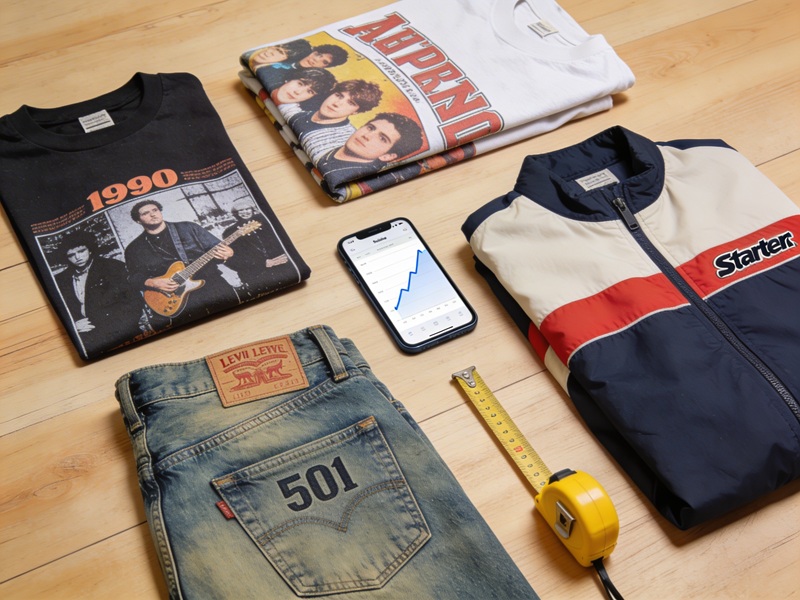
Vintage clothing reselling isn’t just another niche within the flipping world-it’s a full-blown specialization with its own knowledge base, pricing dynamics, and dedicated buyer communities. The global secondhand apparel market is projected to reach $350 billion by 2027, and vintage clothing commands some of the highest margins in the entire resale ecosystem. Experienced vintage sellers routinely see 300-800% returns on individual pieces, and the knowledge barrier to entry means less competition for those who invest in learning the craft.
But selling vintage isn’t as simple as grabbing old clothes at a thrift store and throwing them on eBay. It requires understanding fashion history, textile construction, label evolution, and the ebbs and flows of trend cycles. A 1970s polyester disco shirt you’d skip might be worth $120 to the right buyer. That faded '90s band tee with a hole in it? A Depop shopper might pay $85 for the “authentic wear.”
This guide covers everything you need to go from casual thrifter to serious vintage clothing reseller: what qualifies as vintage, how to date clothing accurately, the most profitable eras and brands, pricing strategies, platform selection, photography techniques, sourcing methods, and trend forecasting for 2026 and beyond.
What Actually Qualifies as “Vintage” Clothing?
Before you list a single item, you need to understand what “vintage” really means-because the definition directly affects your pricing, platform choice, and target audience.
The Industry Standards
| Term | Age Range | Examples | Price Premium |
|---|---|---|---|
| True Vintage | 20+ years old (pre-2006) | 1960s mod dresses, 1980s power suits | Highest, 3-10x original retail |
| Retro/Y2K | ~2000-2010 | Juicy Couture tracksuits, Von Dutch hats | High, 2-5x original retail |
| Antique Clothing | 100+ years old (pre-1926) | Victorian blouses, Edwardian corsets | Museum-grade pricing |
| Vintage-Style | New, made to look old | Modern reproductions | No vintage premium |
The general rule of thumb: clothing must be at least 20 years old to be considered vintage. In 2026, that means anything from 2006 and earlier qualifies. However, the most valuable pieces come from the 1950s through the 1990s-these are the decades with the strongest collector demand and nostalgia-driven buying.
Why Eras Matter More Than Age
Not all decades are created equal. A 1940s house dress might sell for $30, while a 1970s Halston disco dress could fetch $400+. Understanding which eras are hot helps you prioritize your sourcing:
- 1950s-1960s: Mid-century and mod. Strong demand for structured dresses, A-line skirts, Hawaiian shirts, and collegiate wear. Buyers: collectors, costume designers, rockabilly enthusiasts.
- 1970s: Disco, boho, and early punk. Maxi dresses, bell-bottoms, leather jackets, platform shoes. One of the most consistently valuable decades.
- 1980s: Power dressing, preppy, and New Wave. Oversized blazers, Members Only jackets, band tees, neon athletic wear. Currently trending heavily.
- 1990s: Grunge, minimalism, and streetwear. Flannel shirts, slip dresses, oversized denim, logo tees. The hottest era for Gen Z buyers right now.
- 2000s (Y2K): Low-rise everything, velour tracksuits, rhinestone-embellished tops, trucker hats. The fastest-growing vintage category in 2026.
Pro Tip: Trend cycles run roughly 20-30 years. In 2026, the Y2K revival is at peak demand, while 1980s pieces are seeing renewed interest. Start sourcing early 2010s “indie sleaze” pieces now-they’ll be the next vintage wave by 2028.
How to Date Vintage Clothing: Tags, Labels & Construction
The ability to accurately date a garment is the single most important skill for a vintage clothing reseller. This determines whether a piece is genuinely vintage (and commands a premium) or just secondhand (and sells at thrift prices). Here’s how the experts do it.
Union Labels: The Gold Standard for Dating
Before the 1990s, most clothing manufactured in the United States bore union labels. These labels changed at specific, documented dates-making them the most reliable dating method:
| Union Label | Date Range | What It Tells You |
|---|---|---|
| ILGWU (International Ladies’ Garment Workers’ Union) | 1900-1995 | Women’s clothing; label style changed every ~10 years |
| ACWA (Amalgamated Clothing Workers of America) | 1914-1976 | Men’s clothing |
| UNITE | 1995-2004 | Merger of ILGWU and ACTWU |
| UNITE HERE | 2004-present | Current union (rarely found on new garments) |
The ILGWU label is especially useful because each design iteration corresponds to a specific decade. A cursive ILGWU label with “AFL-CIO” dates a garment to roughly 1959-1974. A block-letter version with a different layout narrows it to 1974-1995.
Care Labels: The Legal Timeline
The Federal Trade Commission (FTC) mandated care labels at specific points:
- No care label at all: Pre-1971 (very likely true vintage)
- Care instructions present but no fabric content: 1971-1972 transitional period
- Both care instructions AND fabric content: Post-1972 requirement
- Symbol-only care labels (no text): Primarily post-2000
- “RN” or “WPL” numbers: Cross-reference these with the FTC database to identify the manufacturer and narrow the date range
Fabric Content Labels
The Textile Fiber Products Identification Act of 1960 required fabric content disclosure. If a garment has no fabric content label at all, it’s very likely pre-1960-and potentially quite valuable.
Also watch for terminology shifts:
- “Dacron” or “Terylene” instead of “polyester” = 1960s-early 1970s
- “Orlon” instead of “acrylic” = 1960s
- “Rayon” temporarily banned as a term (1952-1960); “viscose” was used instead
Construction Clues
Beyond labels, the garment itself tells a story:
- Metal zippers (pre-1960s for most garments)
- Nylon coil zippers (post-1960s)
- YKK zippers (became dominant after the 1970s)
- Flat-felled seams and French seams on casual wear = likely pre-1980s (higher construction quality)
- Serged/overlocked edges became standard on mass-market clothing from the 1980s onward
- Single-needle stitching on hems and collars = typically higher quality and often older
Pro Tip: Use the Vintage T-Shirt Tag Database to compare tag design, origin, company/RN identity, care details, stitching, and graphic dates. It records confidence rather than guaranteeing a year from one signal. For denim, the Vintage Levi’s Date Decoder provides a separate evidence checklist. For a full profitability breakdown, see Is Levi’s Worth Reselling?.
Most Valuable Vintage Brands: What to Look For
Not all vintage clothing is worth reselling. A 1990s no-name polyester blouse from Walmart might technically be vintage, but it’s not going to make you money. Here’s what to prioritize at the racks.
Tier 1: High-Value Vintage ($100-$1,000+)
These brands consistently command premium prices in vintage condition:
- Levi’s (especially pre-1985 501s, Big E, orange tab), $80-$2,000+
- Versace (Gianni-era, 1980s-1997), $150-$800
- Coogi (colorful knit sweaters as worn by Biggie Smalls), $100-$500
- Vivienne Westwood (punk/new wave era), $120-$600
- Comme des Garçons (any era), $80-$400
- Yves Saint Laurent (Rive Gauche line, 1970s-1990s), $100-$500
- Pendleton (wool shirts and blankets, especially Native patterns), $60-$300
- Harley-Davidson (1970s-1990s graphic tees), $50-$250
- Grateful Dead / Band tees (authentic 1970s-1990s tour shirts), $80-$1,500+
Tier 2: Solid Sellers ($40-$150)
Reliable profit with faster turnover:
- Ralph Lauren / Polo (vintage bear sweaters, stadium collection items)
- Champion (Reverse Weave, pre-2000 logo styles)
- Tommy Hilfiger (1990s big-logo pieces)
- Starter Jackets (NFL/NBA, 1990s satin varsity)
- Carhartt (union-made Detroit jackets, vintage chore coats)
- Patagonia (vintage fleece, Synchilla series)
- The North Face (Nuptse puffers, Denali fleece, Gore-Tex)
- Nike (vintage swoosh tees, ACG line, early Air Max)
- Adidas (trefoil-era track jackets, vintage soccer jerseys)
Tier 3: Worth Grabbing at the Right Price ($15-$50)
These won’t make you rich, but at $2-5 sourcing cost they’re reliably profitable:
- L.L. Bean (Made in USA pieces, vintage Norwegian sweaters)
- Lands’ End (rugby shirts, canvas bags)
- Eddie Bauer (vintage outdoor pieces)
- Woolrich (wool shirts, blanket coats)
- Members Only (classic racer jackets)
- Guess (1990s denim, triangle-logo pieces)
Brands to Generally Skip
Unless the piece is exceptionally unique or in perfect condition, these typically aren’t worth your time:
- Old Navy, H&M, Forever 21 (fast fashion, no vintage premium)
- Unbranded basics (no collector demand)
- Generic department store brands (JCPenney house brand, Sears house brand)
- Damaged designer (heavily stained or torn Tier 1 brands, exceptions exist for some distressed aesthetics)
If you’re reselling contemporary brand-name items alongside vintage, see our guide on where to sell brand-name clothes for platform recommendations.
Pro Tip: Not sure if a brand holds resale value? Check the Brand Resale Value Index to see average selling prices and demand levels before you buy.
If you’re sourcing vintage clothing, don’t overlook vintage accessories-our guide on where to sell vintage jewelry covers platforms and strategies for this high-margin category.
Pricing Vintage Clothing: What the Pros Know
Pricing vintage is different from pricing regular resale. Modern secondhand clothing is priced relative to retail, but vintage pieces are priced relative to rarity, demand, and cultural significance. Here’s the framework.
Condition Matters Enormously
Unlike sneakers or electronics, vintage clothing buyers have nuanced expectations about condition. A “flaw” on a modern shirt kills the sale. On a vintage piece, some flaws add character while others destroy value.
| Condition | Description | Price Impact |
|---|---|---|
| Deadstock/NOS | Never worn, original tags | 150-300% above market |
| Excellent | No flaws, minimal wear | Full market value |
| Very Good | Minor fading, light pilling | 70-85% of market value |
| Good | Some wear, small stains, minor holes | 40-60% of market value |
| Fair/Distressed | Visible damage, major flaws | 20-40% or premium if “grunge aesthetic” |
The critical distinction: certain buyers pay MORE for natural distressing. A thrashed, faded 1980s Metallica tour tee with holes might sell for $150 because of its authenticity. A pristine-looking reprint sells for $25. Know your audience.
The Pricing Formula
For each vintage piece, calculate your price using these factors:
- Base value, What comparable items have sold for (not listed for) on eBay, Depop, and Etsy
- Condition adjustment, Apply the percentages from the table above
- Trend multiplier, Is this piece trending on social media? Currently relevant in fashion? Add 20-50%
- Rarity factor, One of three on eBay? Add 30-100%. One of 300? Price at market
- Seasonal timing, Selling a vintage fur coat in January vs. July matters (see our Seasonal Pricing Strategies guide)
Real Pricing Examples
| Item | Sourcing Cost | Sold Price | Platform | ROI |
|---|---|---|---|---|
| 1990s Starter Bulls Jacket (XL, excellent) | $8 at GW | $165 on eBay | eBay | 1,963% |
| 1980s Grateful Dead Tour Tee (L, holes/fading) | $3 at estate sale | $185 on Depop | Depop | 6,067% |
| 1970s Levi’s Orange Tab Flares (32x32, good) | $6 at bins | $95 on eBay | eBay | 1,483% |
| Y2K Juicy Couture Velour Set (M, excellent) | $12 at thrift | $110 on Depop | Depop | 817% |
| 1990s Polo Bear Sweater (L, very good) | $15 at garage sale | $225 on eBay | eBay | 1,400% |
| 1980s Members Only Jacket (M, excellent) | $5 at GW | $55 on Poshmark | Poshmark | 1,000% |
| Vintage Pendleton Wool Shirt (L, great) | $7 at estate sale | $85 on eBay | eBay | 1,114% |
Use the Flip Profit Calculator to quickly determine your actual take-home profit after platform fees and shipping on any vintage piece you’re considering.
Pro Tip: Always research sold listings, not active ones. A vintage jacket listed at $500 means nothing if identical ones sold for $120. Use eBay’s “Sold Items” filter or tools like Underpriced to pull real market data instantly.
Best Platforms for Vintage Clothing (By Type)
Vintage clothing sells everywhere, but certain platforms dramatically outperform others depending on the type and era of the piece. Matching your inventory to the right platform is worth 20-40% more per sale.
Platform Comparison for Vintage Sellers
| Platform | Best For | Fees | Buyer Demographics | Avg. Sale Price |
|---|---|---|---|---|
| Depop | Y2K, 1990s, trendy vintage | US/USD sellers: no Depop selling fee, but payment processing still applies | Gen Z, 16-26 years old | $30-$80 |
| eBay | True vintage (pre-1990), rare/collectible | Category-based final value fee; eBay currently describes a 2.5% to 15.3% range plus order fee | Collectors, 30-55+ | $50-$300+ |
| Etsy | Curated vintage, 1950s-1970s | Listing, transaction, and payment fees vary by shop/country | Design-conscious, 25-45 | $40-$150 |
| Poshmark | Women’s vintage fashion | $2.95 under $15; 20% on $15+ sales in the current US help article | Fashion-forward women, 25-45 | $25-$75 |
| Grailed | Vintage menswear, streetwear, designer | Check current Grailed and payment fees before pricing high-ticket menswear | Fashion-conscious men, 18-35 | $60-$250 |
| High-end curated vintage | None (direct sale) | Followers/community buyers | $50-$500+ |
Sources checked July 27, 2026: Depop US fee update, eBay seller fees, and Poshmark selling fees.
Platform Selection Strategy
List on Depop if:
- The piece is Y2K or 1990s
- It photographs well in a “lifestyle” context
- Your target buyer is Gen Z
- The item is trendy (e.g., baby tees, low-rise jeans, chunky platforms)
List on eBay if:
- The piece is true vintage (pre-1990)
- It’s rare, collectible, or a known “grail” piece
- Measurements and exact condition matter more than aesthetics
- You want to reach international collectors
- Read our full eBay selling guide for listing best practices
List on Etsy if:
- You’re building a curated “shop” aesthetic
- The piece is 1950s-1970s with a mid-century or bohemian vibe
- Your pricing is $40+ (Etsy buyers expect quality curation)
- You can invest in branding and shop presentation
List on Grailed if:
- It’s menswear: vintage Polo, designer labels, or streetwear
- The brand has name recognition in fashion circles
- Check our detailed Grailed menswear guide for more
Crosslist everywhere if:
- You want maximum exposure and fastest sell-through
- Use the Crosslisting Platforms Comparison tool to see which platforms make sense for your inventory mix
Use the Platform Fee Calculator to compare your exact take-home amount across platforms before deciding where to list. Vinted is also worth considering for contemporary vintage pieces-check our Vinted fees breakdown to see how their zero-seller-fee model compares.
Pro Tip: Many top vintage sellers maintain presence on 3-4 platforms simultaneously. Cross-listing a $75 vintage piece on Depop, eBay, and Etsy triples your exposure at minimal effort. Just delist promptly when it sells to avoid double-selling headaches.
The 2026 vintage platform decision tree
Use this when a piece could fit several channels:
- If the value comes from exact proof - union label, RN/company history, single-stitch construction, true 1970s or earlier era - list on eBay first because collectors search precise terms and compare sold records.
- If the value comes from styling - Y2K silhouette, grunge outfit potential, baby tee, low-rise denim, cropped leather, or a strong model photo - test Depop first and cross-list to eBay after 7-10 days.
- If the value comes from curation - 1950s dress, 1970s boho blouse, wearable western, cottagecore, or a shop-aesthetic piece - Etsy can support a higher ask if your photos and measurements are polished.
- If the value comes from brand plus convenience - women’s denim, sweaters, coats, mall-vintage labels, or closet-cleanout bundles - Poshmark works when you can answer fit questions quickly.
- If the value comes from menswear culture - Polo, Carhartt, military surplus, designer archive, leather, or streetwear - Grailed deserves a comp check before you default to eBay.
The stop rule is simple: if a piece gets saves but no offers after two weeks, revise title/photos and lower 10-15%. If it gets no saves, the platform is probably wrong.
Photography for Vintage Clothing
Vintage photography differs significantly from photographing new or contemporary resale items. Buyers can’t touch the fabric, read the label, or check for flaws in person-your photos must do all of that work.
The Three Methods
Flat Lay: Best for: T-shirts, casual wear, items with graphic prints. Lay the item on a clean, contrasting surface (white for dark items, dark for light). Smooth wrinkles. Shoot directly from above. This is the standard for Depop and casual vintage.
Hanger/Mannequin: Best for: Structured pieces (blazers, coats, dresses). Use a sturdy wooden or velvet hanger-never wire. Mannequins show fit and drape better than hangers. Dress forms are ideal for fitted vintage dresses. This is the standard for Etsy and eBay vintage.
Modeled/Lifestyle: Best for: Fashion-forward pieces on Depop, Instagram, or TikTok Shop. Style the vintage piece with complementary items. Natural light, interesting backgrounds, and movement shots drive engagement. This approach builds followers and brand identity.
Required Photo Angles (Minimum 6 Per Listing)
- Full front view, Clean, well-lit, centered
- Full back view, Show all details
- Label/tag close-up, Brand, size, care label, union label (proves authenticity and era)
- Detail shots, Unique buttons, embroidery, prints, hardware
- Flaw documentation, Every stain, hole, or wear point (transparency builds trust)
- Measurement context, Lay flat with measuring tape, or state measurements in description
Photography Tips for Vintage Specifically
- Show the tag era details: Vintage buyers want to see the label. A clear photo of a 1970s ILGWU union tag adds $20+ in perceived value.
- Don’t over-edit colors: Vintage fabrics have unique color qualities. Heavy filtering misrepresents the piece and leads to returns.
- Steam, don’t iron: Many vintage fabrics can be damaged by direct heat. Steam wrinkles out.
- Show scale: Include a coin, hand, or known object for pieces where size context matters (especially for shrunken vintage tees).
For a deeper dive, see our complete Product Photography Guide.
Writing Vintage Descriptions: Measurements Over Size Tags
This is where many vintage sellers lose money. A modern “Medium” from Old Navy fits completely differently than a 1970s “Medium” from a department store. Vintage sizing is wildly inconsistent, and experienced buyers know this. They shop by measurements, not size tags.
The Essential Measurement Set
Every vintage listing must include (measured flat, in inches):
- Pit to pit (chest width, measured under the arms)
- Shoulder to shoulder (seam to seam across the back)
- Length (collar seam to hem for tops; waist to hem for bottoms)
- Sleeve length (shoulder seam to cuff)
- Waist (measured flat across the waistband, doubled for full circumference)
- Inseam (for pants/shorts)
- Rise (for pants, waistband to crotch seam)
Description Template for Vintage
Here’s a battle-tested template that covers everything vintage buyers need:
[Brand Name] [Era/Decade] [Item Type]
Color: [Accurate color name]
Tagged Size: [What the label says]
Measurements (laid flat):
- Pit to Pit: __ inches
- Length: __ inches
- Shoulder: __ inches
- Sleeve: __ inches

Era: [Decade, with dating evidence - e.g., "1980s based on ILGWU union label and care tag style"]
Fabric: [Content from label or best assessment]
Condition: [Honest assessment - see below]
Flaws: [List every flaw, no matter how minor]

[2-3 sentences about the piece's style, how it fits, or styling suggestions]
Condition Descriptions That Build Trust
Be brutally honest. The vintage community is small and well-connected. One dishonest listing can damage your reputation permanently.
- “Excellent vintage condition”, No flaws; fabric is strong with no thinning, holes, or stains
- “Very good vintage condition”, Minor signs of age; slight fading or light pilling consistent with age
- “Good vintage condition”, Wearable with noted flaws; small stain, repaired seam, minor hole
- “Fair/project piece”, Significant flaws but still desirable because of rarity or brand
Pro Tip: Use the Listing Title Optimizer to craft keyword-rich titles that rank high in search. Include the decade, brand, item type, and key features like “Made in USA” or “Single Stitch.”
For more on writing descriptions that convert, check our Listing Writing Guide.
Dealing with Condition Issues: When to Sell and When to Pass
Vintage clothing always has some degree of wear-that’s the nature of used garments that are 20-50+ years old. The skill is knowing which flaws buyers accept (or even prefer), and which flaws kill a sale.
Flaws That Are Usually Acceptable
These don’t significantly impact pricing for vintage-aware buyers:
- Consistent fading, Especially on band tees and denim. Often adds value (“sun-faded” is a selling point)
- Light pilling, On wool, cashmere, and knits. Expected for the age
- Minor hem wear, Small fraying at cuffs or bottom hem
- Missing buttons, IF the rest of the piece is valuable (note it and price accordingly)
- Slight musty/vintage smell, Can be resolved with OxiClean soak and air-drying
Flaws That Significantly Reduce Value
These need to be priced in or avoided entirely:
- Underarm stains/yellowing, Reduces value by 50-70%. Treatable with hydrogen peroxide + baking soda paste in some cases
- Large holes in visible areas, Unless the aesthetic is intentionally distressed
- Moth damage (multiple small holes in wool), Usually not worth selling unless the piece is extremely rare
- Set-in stains (oil, ink, rust), Very difficult to treat. Usually a pass unless the item is worth $100+ in clean condition
- Shrinkage, If a tagged “Large” measures as a modern “XS,” the buyer pool shrinks dramatically
The Restoration Decision Matrix
| Flaw | Fix Cost | Fix Time | Worth It If Item Value Is… |
|---|---|---|---|
| General odor | $2 (OxiClean) | 2 hours | $20+ |
| Light stains | $3 (Fels-Naptha, hydrogen peroxide) | 30 min | $30+ |
| Missing button | $1-3 | 15 min | $25+ |
| Broken zipper | $8-15 (tailor) | N/A (outsource) | $60+ |
| Moth holes (repair) | $5-20 (visible mending or patch) | 30-60 min | $80+ |
| Professional dry cleaning | $10-25 | N/A | $50+ |
For detailed restoration techniques, see our Cleaning & Restoration Guide.
Pro Tip: Always disclose every flaw, even minor ones. Photograph them clearly. This eliminates returns, builds trust, and positions you as a reputable seller. Many vintage buyers specifically seek sellers who are transparent about condition because it signals expertise.
Sourcing Vintage Clothing: Where to Find the Good Stuff
Finding consistent vintage inventory is the perennial challenge. Here are the top sourcing channels ranked by ROI potential.
1. Thrift Stores (Goodwill, Salvation Army, Local Shops)
Average ROI: 500-2,000% Time investment: High (1-3 hours per trip) Best for: All categories; the bread-and-butter sourcing method
Strategy: Visit stores in affluent neighborhoods first-the donation quality is dramatically better. Hit the racks systematically: feel fabrics (quality vintage has heft and texture that modern fast fashion lacks), check tags for union labels and Made in USA markings, and look for unique construction details.
Best days to go: Tuesday through Thursday (most restocking happens Monday night or Tuesday morning). Avoid weekends when competition peaks.
Use the local thrift color-tag sale planner to record a current store-specific markdown and test whether the discounted tag price fits your buy ceiling.
Also check our in-depth Thrift Store Flipping Guide for advanced techniques.
2. Estate Sales
Average ROI: 300-1,500% Time investment: Medium (2-4 hours including travel) Best for: Pre-1980s vintage, designer labels, complete wardrobes
Estate sales are a goldmine for vintage clothing because you’re accessing wardrobes that haven’t been picked over by resellers. A single estate sale from a fashion-conscious person born in the 1940s-1960s might yield 20-50 sellable vintage pieces from multiple decades.
Strategy: Check EstateSales.net and local listings. Arrive early for first-day pricing, or wait until the final day for 50% off deals. Focus on closets-many estate sale shoppers gravitate toward furniture and kitchenware, leaving clothing relatively untouched.
3. Goodwill Outlet (The Bins)
Average ROI: 800-3,000%+ Time investment: Very high (3-5 hours per trip) Best for: Volume sourcing, hidden gems priced by the pound
At Goodwill Outlets, clothing is sold by weight-typically $1.49-$2.49 per pound. A heavyweight vintage denim jacket might weigh 2 pounds, costing you $4. If it sells for $120 on eBay, that’s a 2,900% ROI.
The catch: it’s physically demanding, competitive, and time-intensive. But for vintage clothing specifically, the bins are unmatched because pricing isn’t based on brand recognition-the volunteer pricing items at a regular Goodwill might mark a vintage Coogi sweater at $15, but at the bins, it’s just weight.
Read our detailed Goodwill Outlet Bins Mastery Guide for tips on safety, strategy, and maximizing your bin runs.
4. Raghouses and Vintage Wholesalers
Average ROI: 200-600% Time investment: Low per piece (bulk buying) Best for: Scaling beyond thrifting
Raghouses are commercial-scale used clothing warehouses where dealers buy vintage in bulk-by the pound, by the bale, or by the bin. Prices range from $1-5 per piece for unsorted goods and $5-15+ per piece for pre-sorted premium vintage.
Major vintage wholesale regions include Los Angeles (the Brooklyn and Downtown Warehouse districts), Miami, and parts of the Midwest. Some raghouses ship bulk lots nationally.
5. Garage Sales and Flea Markets
Average ROI: 400-1,000% Time investment: Variable Best for: Menswear, workwear, denim, sportswear
Garage sales are excellent during summer months (June-August peak season). Most homeowners price clothing at $1-5 regardless of brand or era. A Sunday afternoon sweep of 5-8 garage sales can yield $200-500 in resale inventory for $20-30 in sourcing costs.
For more garage sale tips, see our Best Items to Resell From Garage Sales guide.
6. Online Sourcing
Average ROI: 100-400% Time investment: Low (but margins are thinner) Best for: Specific grails, filling inventory gaps
Platforms like Facebook Marketplace, Craigslist, eBay lots, and even other Depop sellers offer online sourcing opportunities. The margins are slimmer because sellers have some awareness of value, but you can find mispriced items-especially in “lot” listings where a seller bundles 20 items together and one piece is worth more than the whole lot.
Trend Forecasting for Vintage in 2026
Understanding where trends are heading helps you source proactively-buying today what will be in demand 6-12 months from now.
Currently Hot (Q1-Q2 2026)
- Y2K maximalism: Rhinestones, low-rise, velour, Baby Phat, Ed Hardy, Von Dutch
- 1980s prep revival: Izod, Lacoste, Ralph Lauren, rugby shirts, cable knits
- Vintage athletic: Starter jackets, vintage NBA/NFL jerseys, 1990s Nike ACG
- Gorpcore staying strong: Vintage Patagonia, Arc’teryx, Columbia, The North Face technical pieces
- Workwear crossover: Carhartt, Dickies, and Red Wing can work, but common pieces still need net math. Use the Dickies 874 and Eisenhower resale guide to compare style-specific sold records and verify tag claims.
Emerging Trends (Late 2026-2027)
- Indie sleaze (early 2010s): American Apparel, vintage festival fashion, neon pieces
- 1970s revival (round two): Flared trousers, crochet tops, platform shoes, earth tones
- Logomania fatigue: Subtle vintage (no-logo quality pieces) gaining interest among fashion-forward buyers
- Utility and military surplus: Vintage BDU pants, field jackets, flight suits
How to Track Trends
- Follow TikTok fashion creators (search #vintagefinds, #thriftflip, #vintagehaul)
- Monitor Depop’s trending searches (accessible in the app)
- Watch fashion runway shows-designers often reference specific decades that then trickle to vintage demand
- Track Lyst and Google Trends for rising search terms
Pro Tip: When a trend is “hot,” you’re already competing with every other reseller. The real money is in anticipating the next trend and sourcing before demand (and sourcing competition) spikes. Buy 1970s pieces now while everyone fights over Y2K.
Advanced Vintage Selling Strategies
Building a Brand Identity
The most profitable vintage sellers don’t just list individual pieces-they build recognizable shops with a curated point of view. This means:
- Choosing a niche: 1990s streetwear. 1970s boho women’s. Vintage workwear. 1980s designer.
- Consistent photography style: Same backgrounds, lighting, and editing across all listings
- Social media presence: Instagram and TikTok accounts showcasing new finds, styling ideas, and behind-the-scenes sourcing
- Return customers: Buyers who love your curation will check back regularly and buy repeatedly
Bulk Bundling Strategy
Not every piece justifies individual listing effort. For lower-value vintage ($10-25 pieces), consider:
- “Mystery bundle” lots, 5 vintage pieces for $45 (works especially well on Depop)
- Decade-specific bundles, “1990s Outfit Bundle” or “1980s Preppy Pack”
- Brand bundles, 3 vintage Ralph Lauren pieces packaged together at a slight discount
Knowing When to Hold vs. Sell
Some vintage pieces appreciate over time. A 2005-era Bape hoodie worth $200 today might be worth $350 in 18 months as Y2K demand escalates. But holding inventory has costs: storage space, capital tied up, and risk of trend reversal.
General rule: If you can make 300%+ ROI now, sell it. Speculation is for investors with deep pockets, not resellers who need cash flow. Use the ROI Calculator to quickly assess whether the current return justifies selling now versus holding.
Authentication Basics for Vintage Clothing
As vintage prices rise, so do counterfeits. You need to authenticate both what you buy (to avoid sourcing fakes) and prove authenticity to buyers (to justify premium pricing).
Red Flags for Fake “Vintage”
- Print quality too crisp: Authentic vintage screen prints show slight cracking, fading, or texture inconsistency. Ultra-sharp, smooth prints on “vintage” tees are likely modern reproductions.
- Incorrect tag styles: A “1970s” shirt with modern-style care symbols and barcode stickers is fake.
- Wrong fabric feel: Authentic vintage single-stitch tees are thinner and softer than modern reproductions printed on new Gildan or Fruit of the Loom blanks.
- Sizing inconsistency: Genuine vintage runs small. If a “vintage” shirt labeled XL fits like a modern XL, it’s probably not actually vintage.
- Tag font and printing: Vintage tags were screen-printed or woven. Modern reproductions often use digital printing with sharper, thinner fonts.
For specific brand authentication, check out our Authentication Guide.
When evaluating vintage athletic shoes, the Nike Style Code Lookup can organize style code, tag, box, and production-date evidence before you comp or escalate to authentication.
For Lululemon pieces entering the “vintage” category, the Lululemon Size Dot Finder can organize size-dot, tag/code, fabric, and label evidence before you map style or release period.
The Rack Test: How Experienced Vintage Sellers Decide Fast
Most profitable vintage sellers do not comp every single item they touch. They use a fast rack test to decide what deserves deeper research and what should stay on the hanger.
Pull the item if it clears these four checks
| Quick check | Why it matters | What usually makes it worth deeper research |
|---|---|---|
| Label tells a believable era story | The tag is often the fastest proof that the piece is not a modern repro | Union labels, older care tags, country-of-origin changes, era-correct fonts |
| Fabric feels better than mall-grade secondhand | Buyers will forgive some wear if the materials feel real and substantial | Heavy cotton, wool, rayon, mohair, sturdy denim, interesting blends |
| Silhouette matches current demand | A great old piece still needs a buyer pool | Boxy tees, wide denim, cropped outerwear, workwear, true Y2K shapes |
| Flaws look manageable, not terminal | Vintage value can survive wear, but not every problem is worth fixing | Fade, light pinholes, missing belt, mild wear, small repairable seam issues |
If a piece clears all four, then comp it. If it only clears one, it is usually not worth the time unless the buy cost is almost nothing.
Pass on good brands when the problem is expensive, not cosmetic
Some of the worst vintage buys come from strong labels with hidden downside. Walk away faster when you find:
- dry rot in old tees or nylon shells
- severe odor that survives one wash test
- shrinkage that makes the tagged size meaningless
- missing liners, detachable hoods, belts, or matching sets that buyers expect
- moth damage on wool in more than one area
- weak elastic or cracked coated fabric that will keep deteriorating after sale
That is the discipline newer sellers usually skip. A mediocre piece with honest condition and a clear buyer often performs better than a famous label with structural issues.
Measurement and Flaw Disclosure That Keeps Return Rates Low
Vintage buyers are usually more forgiving about wear than they are about surprises. The fastest way to lose trust is to describe a piece as “fits like modern large” and leave the buyer to guess the rest.
Minimum measurements that should be in every listing
- Tops and jackets: pit to pit, length, shoulder width, sleeve length
- Jeans and trousers: waist, rise, inseam, thigh, leg opening
- Dresses: bust, waist, hips, shoulder to hem
- Knitwear: pit to pit, length, sleeve, plus note any stretch or shrinkage
Flaws that deserve their own photo and sentence
- stains, even faint ones
- pinholes, seam pulls, or repairs
- fading that changes the overall tone of the garment
- missing buttons or replaced hardware
- fabric thinning at knees, elbows, collar, or underarms
If you want a simple rule, assume the buyer should be able to recognize every meaningful flaw without zooming in and guessing. That level of clarity improves conversions because it signals competence. It also cuts down on return claims from buyers who say the item was not as described.
For sellers who want tighter listing workflow, pair this with how to write listings that sell and how to photograph items for resale. The best vintage listings feel calm and complete. Buyers can tell when the seller has handled the item carefully.
Frequently Asked Questions
Q: How much money can you make selling vintage clothing online?
A: Income varies widely. Part-time sellers averaging 10 hours per week typically earn $500-$2,000 per month. Full-time vintage sellers with established shops and strong sourcing relationships report $3,000-$10,000+ per month. The key variables are sourcing quality, pricing accuracy, and platform choice. Margins of 300-800% per piece are standard for well-sourced vintage.
Q: What’s the best platform to sell vintage clothing on in 2026?
A: It depends on your inventory. Depop dominates for Y2K and 1990s fashion targeting Gen Z buyers. eBay is best for true vintage (pre-1990s), rare pieces, and items where measurements and detailed descriptions matter. Etsy works well for curated 1950s-1970s vintage with a polished shop aesthetic. Grailed is the go-to for vintage menswear and streetwear. Most successful vintage sellers crosslist on 2-3 platforms.
Q: How do I know if a piece of clothing is actually vintage?
A: Check union labels (ILGWU, ACWA), care-label format, fiber terminology, zipper type, construction, company or RN identity, and country of origin. Single-stitch hems can support an older date but do not create a universal cutoff. Cross-reference multiple details with known dating guides and preserve uncertainty. The Vintage T-Shirt Tag Database and Vintage Levi’s Date Decoder provide structured evidence checklists.
Q: Do I need to wash vintage clothing before selling?
A: Generally yes, but carefully. Use cold water and gentle detergent. Avoid machine drying vintage pieces-air dry only. For delicate or very old garments, hand washing or professional dry cleaning is safer. OxiClean soaks (cold water, 1-4 hours) are excellent for removing musty smells and light stains without damaging vintage fabrics.
Q: What vintage clothing sells the fastest?
A: In 2026, the fastest-selling vintage categories are: 1990s band tees, Y2K branded items (Juicy Couture, Baby Phat, Von Dutch), vintage Levi’s 501s, 1990s sportswear (Starter, Champion, Nike), and 1980s designer pieces (Versace, YSL). Additionally, vintage denim of any era sells consistently fast because denim doesn’t go out of style.
Q: Should I iron or steam vintage clothing before photographing?
A: Steam, never iron. Direct heat from an iron can scorch delicate vintage fabrics, leave shine marks on wool, and damage screen-printed graphics. A handheld steamer ($25-40) removes wrinkles safely. For extremely delicate pieces, hanging them in a steamy bathroom for 20 minutes works well.
Q: How do I price a vintage item I can’t find comparables for?
A: When you can’t find exact sold comps, work outward: search for the same brand from the same era, then similar items from the same era, then similar items from other eras. Factor in uniqueness (fewer results = higher potential price), brand prestige, condition, and current trend relevance. Start at a higher price and reduce every 2-3 weeks if it doesn’t sell. Read our Vintage Pricing Guide for a complete methodology.
Q: Is it worth selling vintage clothing with flaws?
A: Often yes-if the piece is rare, from a desirable brand, or has trending aesthetic value. Vintage band tees with natural wear (“thrashed” look) often sell for MORE than clean examples. However, you must fully disclose all flaws with close-up photos. Flaws that typically kill a sale include heavy underarm stains, strong permanent odors, and extensive moth damage on non-rare pieces.
Q: How do I handle sizing for vintage clothing?
A: Always provide exact measurements in your listing-never rely on the size tag alone. Vintage sizing varies wildly: a 1960s “Medium” might measure closer to a modern “XS.” Provide pit-to-pit, length, shoulder width, and sleeve length for tops; waist, inseam, and rise for bottoms. Many experienced vintage buyers won’t purchase without measurements, so including them also signals that you’re a knowledgeable seller.
Q: Do I need a business license to sell vintage clothing?
A: Requirements vary by state and locality, but generally once you’re regularly buying items for the purpose of reselling them at a profit, you’re operating a business-even if it’s a side hustle. Most states require a general business license and sales tax collection above certain thresholds. The IRS expects you to report reselling income regardless of amount. Consult our Tax Deductions Guide for specifics.
Start Selling Vintage Smarter Today
Vintage clothing reselling rewards knowledge above all else. The more you learn about fashion history, textile construction, brand timelines, and trend cycles, the more confidently (and profitably) you’ll source and sell.
Whether you’re just starting out or looking to take your vintage reselling to the next level, having the right tools makes the difference between guessing on prices and knowing your margins before you buy.
Underpriced gives you instant AI-powered deal analysis that compares your sourcing costs against real market data-so you know whether that vintage Starter jacket at $12 is a slam dunk or a pass before you reach the checkout. Start with 10 free AI deal analyses and see how data-driven sourcing transforms your vintage clothing profits.
The vintage market isn’t slowing down. Buyers are spending more, sustainable fashion is growing, and the knowledge moat that makes vintage selling profitable gets wider for those who invest in learning. The best time to start was last year. The second best time is today.