Vintage Levi's Value Guide 2026: What They're Worth
By the Numbers
Store ratings checked Sep 27, 2026. How we count
Reading time: 18 minutes
You’re standing in the denim section of your local Goodwill. There’s a wall of blue jeans, all crammed together, most of them modern fast-fashion pieces worth exactly the $4.99 on their tag. But buried somewhere in that rack, maybe one pair in fifty, maybe one in a hundred, there might be a pair of jeans that belongs in an entirely different conversation. A pair that a Japanese collector would pay $300 for without hesitation. A pair that, if it has the right label details, could fetch $500, $800, or more from the right buyer on eBay.
That pair is vintage Levi’s. And learning to spot them, date them, and price them correctly is one of the most reliable skills a thrift reseller can develop.
Here’s the reality of the market in 2026: a pair of 1960s Levi’s 501s with the right label details, found at a thrift store for $8, can realistically sell for $200 to $800 depending on condition, measurements, and which specific label characteristics they carry. Authentically worn 501s from the 1970s, the ones that look genuinely beat up, with natural fading down the thighs and at the knees, can sell for $150 to $400 specifically because that worn look is what serious denim collectors are hunting for. It is not a flaw. It is the product. And a Big E Levi’s trucker jacket from the early 1960s? That piece could make your week’s profit in a single listing.
Levi’s is the undisputed king of the vintage denim world. No other denim brand has the same combination of historical depth, global collector base, manufacturing consistency (meaning you can date pieces with real precision), and mainstream recognition that crosses over from denim nerds into casual vintage buyers. When someone finds old jeans in their grandfather’s closet, the first thing they do is check whether they’re Levi’s. When a vintage shop in Tokyo prices its denim section, Levi’s anchor the entire display. When serious resellers talk about what they’re hunting at estate sales, Levi’s 501s are almost always on the list.
This guide is going to teach you every skill you need. We’ll cover how to date a pair of Levi’s using nothing but the labels, buttons, and construction details. We’ll walk through every major style worth knowing, from the iconic 501 to the highly collectible trucker jacket variations. We’ll give you real sold prices from current eBay data so you know what the actual market looks like, not what someone on forums claims it looks like. And we’ll show you how condition, fit, measurements, and platform choice can double or triple what you get for the same pair of jeans.
Whether you’re a reseller who wants to add vintage denim to your inventory rotation, or someone who found a pile of old Levi’s in a storage unit and wants to know what they’re sitting on, this is the complete reference you need.
Why Vintage Levi’s Are the Most Valuable Denim Brand
Levi Strauss & Co. invented blue jeans. That’s not marketing copy, it’s historical fact. In 1873, Levi Strauss and tailor Jacob Davis received U.S. Patent No. 139,121 for the process of using metal rivets to reinforce the stress points on work pants. Those riveted pants, made from heavy indigo-dyed denim, became what we now call jeans. Every pair of jeans sold anywhere in the world in 2026 traces its lineage back to that 1873 patent. Levi’s is the origin point.
That 150-plus-year heritage matters enormously in collectibles markets. Vintage Levi’s aren’t just old clothing, they’re artifacts from the history of American manufacturing, American labor culture, and American style. A pair of 1950s 501s was worn by someone who might have worked a farm, built a road, or driven cross-country on Route 66. A Big E trucker jacket was on somebody’s back during the Summer of Love. That cultural weight is real and it translates directly into dollar value.
The Levi’s 501 is, by most accounts, the single best-selling garment in the history of fashion. Hundreds of millions of pairs have been produced over more than 150 years. That enormous production volume means there are old Levi’s out there in meaningful quantities, enough that resellers can regularly find them. But the paradox is that while many millions were made, the true vintage examples from before the 1970s are genuinely rare in wearable condition, because they were work clothes that got worn hard. Finding a preserved example is actually a meaningful find.
The global collector base for vintage Levi’s is unlike anything else in the vintage clothing world. American vintage buyers care about Levi’s, but the Japanese denim community takes the obsession to a level that would seem almost incomprehensible to someone outside the hobby. Japan developed an intense appreciation for vintage American workwear starting in the 1970s and 1980s, as Japanese denim manufacturers began reverse-engineering the construction details of vintage 501s to produce premium reproductions. In the process, they created a generation of experts who know these garments in extraordinary detail, and they pay accordingly. Japanese buyers regularly pay prices on international eBay and through proxy services that significantly exceed what American buyers will pay for the same piece, particularly for high-grade, well-preserved examples. If you’re selling premium vintage Levi’s, understanding that there is an international collector market, particularly in Japan, is critical to maximizing your returns.
The value differences between different generations of Levi’s can be startling, even when the jeans look nearly identical to an untrained eye. Two pairs of straight-leg 501 jeans sitting in a thrift store side by side might look essentially the same, same basic cut, same blue color, same brand name. But one pair could be worth $15 and the other $400. The difference comes down entirely to specific manufacturing details: the font on the red tab, the type of denim used, the construction methods on the pockets and seams, and whether there’s a care label sewn into the waistband. Learning to read those differences, at a glance, in a thrift store aisle, is the skill that separates profitable denim pickers from people who either overpay or pass on valuable pieces.
There’s also an important psychological element to the vintage Levi’s market. Unlike some collectibles that appeal to a narrow niche, vintage Levi’s have appeal that spans multiple buyer types. There are the serious historical collectors who only want the oldest, rarest pieces in museum-grade condition. There are the Japanese premium buyers who want authentically worn vintage with genuine character fades. There are the fashion-forward younger buyers on Depop and Grailed who want the 1990s baggy silhouettes or 1970s flares. And there are everyday vintage shoppers who just want a great-fitting pair of authentic vintage jeans to wear. This breadth of demand means there’s almost always a buyer for any era of Levi’s, across a wide range of conditions, if you price and present correctly.
The Levi’s Label Dating System: Your Most Important Tool
Every generation of Levi’s has distinctive label characteristics that allow you to date a piece with surprising accuracy. This is not guesswork, it’s a well-documented system that serious collectors have mapped out in detail over decades. Learning these markers is the single most valuable skill a vintage denim picker can develop. Here’s a systematic breakdown of each era.
1890s–1930s: The Two-Horse Paper Label Era
The earliest Levi’s carry what is known as a “two horse” paper label or leather patch on the back, depicting two horses trying unsuccessfully to pull apart a pair of riveted pants, an illustration designed to demonstrate the strength of the rivet construction. These pieces reference the patent year of 1873, often with “Patent 1873” or similar text. The leather patch version of this is the most iconic and most recognizable to collectors.
Genuine examples from this era are extraordinarily rare in any condition. These were work clothes worn by laborers, miners, railroad workers, and cowboys. The fact that any survive in wearable condition at all is remarkable. Most examples you’ll encounter in museum collections or auction records have significant wear; finding a well-preserved example is a generational lucky break at a thrift store. Values for authenticated examples from this era start in the hundreds of dollars and go into the thousands or even tens of thousands for exceptional pieces. A pair of 1890s XX 501s in any wearable condition would realistically bring $2,000 to $10,000 or more at the right auction.
You won’t find many of these at Goodwill. But knowing they exist is important because it establishes the baseline of why the vintage Levi’s collecting world takes pre-war examples so seriously.
There is also no care label on any piece from this era. Care labels, the sewn-in tags that tell you to machine wash cold, tumble dry low, did not become a legal requirement in the United States until the Federal Trade Commission mandated them in 1971. Any Levi’s without a care label could be pre-1971. Any Levi’s with a care label is definitively post-1971. This single detail is one of the most useful quick filters you’ll use.
1930s–1950s: The Red Tab and Selvedge Era
The 1930s and 40s brought several crucial developments to Levi’s construction and branding. Most importantly for collectors, Levi’s introduced the red tab sewn into the seam on the back right pocket in 1936. This small piece of red fabric with “LEVI’S” printed or woven on it is now one of the most recognized brand identifiers in fashion history, and its presence, along with the exact way it’s made, tells you a great deal about when a piece was made.
The back patch on jeans from the 1930s through the early 1950s is made from leather and shows “LEVI STRAUSS & CO.” in all capital letters, along with the two-horse illustration in variations that changed over the decades. The denim itself is selvedge, woven on traditional narrow shuttle looms that produce a self-finished edge on the fabric. This selvedge construction is a key quality marker we’ll discuss in detail in the authentication section.
Back pocket rivets tell another part of the story. Until 1937, the rivets on the back pockets were exposed on the outside, visible as metal dots. After 1937, Levi’s moved to hidden rivets on the back pockets, tucking them inside the pocket so they wouldn’t scratch saddles or furniture. Finding exposed back pocket rivets is a reliable indicator of pre-1937 production.
Pieces from the 1930s and 1940s are serious collectibles. A pair of selvedge 501s from the 1940s in good condition, meaning no major tears, with intact hardware and readable labels, can realistically bring $500 to $2,000 on eBay from the right buyers. The workwear aesthetic of this era, combined with authentic materials and construction, makes these highly prized. You won’t find many at thrift stores, but estate sales from families with long American working-class histories occasionally surface them.
1954–1971: The Big E Era (The Most Sought-After Consumer Vintage)
This is the era that most vintage denim collectors are hunting. The “Big E” designation refers to the red tab on the back pocket: before 1971, the word “LEVI’S” on the tab was written in all capital letters, with a noticeably large capital “E.” In 1971, Levi’s changed the tab to use a lowercase “e”, “LEVI’s”, a change so subtle that it looks like nothing if you don’t know to look for it, but which creates an enormous value difference.
A pair of Levi’s 501 jeans with a “Big E” red tab, capital E, is worth substantially more than an otherwise identical pair with a lowercase “e.” The Big E change in 1971 is the single most important dating marker in the vintage Levi’s world, and knowing it cold is worth real money to you.
The Big E era also broadly corresponds with some of the most desirable construction characteristics. Big E production of the flagship 501 line used selvedge denim milled in the United States through the early to mid-1960s. The construction was meticulous, single-stitched side seams, specific button types, and the distinctive “single stitch” detailing that collectors look for. The fit of genuine 1950s and 1960s 501s is different from modern versions, with a higher rise and a slightly different cut that vintage buyers specifically seek out.
Values for Big E 501 jeans in good wearable condition run from roughly $150 on the low end for smaller sizes or heavily worn pieces, up to $600 to $1,000 for well-preserved examples in mainstream sizes (30-34 waist) with desirable measurements. Outstanding examples, pristine selvedge Big E 501s in a popular size, can exceed $1,000 from Japanese buyers or at specialty vintage auctions.
There is a third category of Big E tab to know: the “tab” piece from 1936 to around 1950 was sewn on just one side (one edge attached, with the other side free). Around the 1950s, both sides were sewn down. This distinction, combined with the capital E, helps narrow dates further for serious authentication work.
1971–1980s: Small “e” and Care Labels
The year 1971 is a hard dividing line in vintage Levi’s dating for two simultaneous reasons. First, the Federal Trade Commission’s care labeling rule went into effect, meaning Levi’s (and all clothing manufacturers) were required to add permanent care instruction labels to their garments. Second, Levi’s changed the red tab from capital “E” to lowercase “e.” Both changes happened in the same year, making 1971 the easiest pivot point to identify.
Any pair of Levi’s with a sewn-in care label is post-1971. Any pair without one might be pre-1971 (though care labels in damaged pieces can sometimes be cut out, so absence alone isn’t proof, you need to verify with other markers). Any pair with a lowercase “e” on the red tab is post-1971.
Post-1971 small “e” Levi’s are still collectible, particularly from the early-to-mid-1970s when the manufacturing quality remained high and the jeans were still largely made in the United States. There’s also the appeal of specifically 1970s style details, wider leg openings, slightly different fits, and some very collectable variation pieces like the 646 bell bottoms and flares. Values for early-70s small “e” 501s in good condition generally run in the $60 to $200 range, with condition being the biggest variable.
The 1970s also saw Levi’s launch the Orange Tab line, a lower-priced second tier that used slightly less premium materials and finishing compared to the Red Tab flagship. Orange Tab pieces are identifiable by, naturally, an orange tab rather than the classic red one. Early Orange Tab pieces from the late 1960s and into the 1970s are legitimately collectible, just at lower prices than the equivalent Red Tab pieces. We’ll cover these more in the styles section.
1980s–1990s: Made in USA and the Transition
Throughout the 1970s and into the 1980s, Levi’s maintained substantial American domestic manufacturing. The company operated multiple factories across the United States, with the most storied location being the Valencia Street factory in San Francisco, which had been the heart of Levi’s manufacturing since the 19th century. The Valencia Street factory closed in 2002, and its closure marked something of an end to an era.
For vintage denim collectors, “Made in USA” is a significant quality and authenticity marker. American-made Levi’s from the 1980s generally retain higher construction quality standards than pieces made under licensed manufacturing agreements overseas. The denim fabric, the hardware, and the finishing details on US-made pieces are consistently valued higher by collectors.
Inside the pocket bag of vintage Levi’s, the cotton fabric lining inside the front pocket, you’ll often find a factory code printed or woven in. These factory codes can help identify which specific plant produced the jeans. San Francisco (SF) and specific US factory codes command the most interest from serious collectors. If you’re dating a piece that falls in the 1980s-90s era, checking for “Made in USA” in the care label or on the back patch is quick and worth doing.
Through the late 1980s and into the 1990s, Levi’s gradually moved more and more production overseas, eventually closing its last American factories in 2003. Pieces from the late 1980s that are still Made in USA carry a small premium over the equivalent internationally manufactured pieces. By the mid-1990s, most Levi’s production had moved to Mexico, Central America, and Asia.
The 1990s also saw the rise of what is now sometimes called the “90s fade” or “baggy vintage” market. Wide-leg, high-rise, or baggy-cut 501s from the 1990s have become genuinely fashionable on resale platforms like Depop, driven by nostalgia among younger buyers who grew up watching that decade’s pop culture. Ironically, the same era that serious vintage collectors might consider the bottom of the value hierarchy is now a growing category among fashion-forward resale buyers. We’ll address this segment more in the platform strategies section.
Post-1992: International Production
For general purposes, Levi’s produced under international manufacturing licenses from the early 1990s onward represent the lower end of the vintage value spectrum. This isn’t a statement about quality, Levi’s has maintained product quality standards under international production, but from a collectibility standpoint, the historical provenance factor largely disappears when you’re no longer dealing with American-made pieces using traditional construction methods.
International production pieces typically sell as used jeans rather than as vintage collectibles. A pair of 1990s Levi’s 501s made in Mexico will sell for $20 to $50 on most resale platforms, depending on condition and fit. They’re perfectly saleable secondhand goods, just not at the same price tier as the earlier eras.
The exception is the 504 and some specific 90s model variations that have developed their own nostalgia following, as well as the baggy-silhouette 501s from 1990-1993 that benefit from 90s fashion demand on Depop and Grailed. But as a general rule, identifying a post-1992 internationally produced piece should recalibrate your price expectations significantly compared to US-made examples.
Quick Reference: Levi’s Dating at a Glance
| Era | Key Label Identifiers | Construction Features | Value Range |
|---|---|---|---|
| 1890s–1930s | Leather/paper patch, Patent 1873, two-horse | Exposed back rivets (pre-1937), no red tab (pre-1936) | $500–$10,000+ |
| 1930s–1950s | Leather patch with “LEVI STRAUSS & CO.”, red tab (post-1936) | Selvedge denim, hidden back rivets (post-1937), donut buttons | $200–$2,500 |
| 1954–1971 | Red tab with capital “E” (Big E), no care label | Selvedge (through ~1968), single stitch, copper rivets | $100–$1,500 |
| 1971–1985 | Red tab lowercase “e”, care label present | Non-selvedge (mostly), bar tack pockets | $40–$250 |
| 1985–1992 | Care label, “Made in USA” or specific US factory | US manufacturing, declining selvedge | $30–$150 |
| Post-1992 | International production countries, no “Made in USA” | Licensed manufacturing | $15–$60 |
The Most Valuable Vintage Levi’s Styles
501 Straight Leg Jeans: The King of Vintage Denim
The 501 is not just a model number, it is the original jean, the garment that Levi Strauss and Jacob Davis patented in 1873 and that has been in continuous production ever since. Button fly, straight leg, high rise: the 501’s construction has stayed remarkably consistent across more than 150 years while the world of fashion changed entirely around it. That continuity is part of what makes vintage 501s so compelling to collectors and buyers alike.
What makes old 501s substantially more valuable than new ones goes beyond nostalgia. The materials and construction methods of vintage 501s are genuinely different and, in many measurable ways, superior to the modern versions. The selvedge denim used through the 1960s and into the early 1970s was woven on traditional shuttle looms that produced a dense, heavy fabric, typically 12 to 14 ounces per yard, that fades very differently and ages more characteristically than the modern ring-spun denim used in current production. The indigo dye used in vintage production was a different formulation that creates the distinctive fades and worn patterns that denim collectors call “character.” The single-stitched seams, the donut-style buttons, the specific rivet placement and construction, all of these details make authentic vintage pieces identifiably different.
For the 501 specifically, the key value variables from highest to lowest impact are:
Era / Label Generation: A Big E 501 (pre-1971) is worth roughly 2 to 5 times more than a comparable small-e 501 (1971-1985), which is itself worth more than a 1990s international production piece. This single factor drives more price variation than almost anything else.
Selvedge vs. Non-Selvedge Denim: Selvedge 501s carry a meaningful premium. The presence of selvedge denim confirms early production in most cases, and the fabric quality and aging characteristics it represents are specifically prized by the Japanese collector market.
Condition and Fade: There are actually two separate condition markets. For buyers who value preservation, particularly American buyers looking for “clean” vintage, darker denim with minimal fading in a well-preserved state commands the highest prices. For Japanese denim enthusiasts who prize authentic wear patterns, the fades and distress that develop from years of actual use, genuinely worn pieces with “golden age” fades (the characteristic fade patterns of the 1950s-1960s) can command very high prices from that specific buyer segment. Understanding which market you’re reaching matters for how you photograph and describe your listing.
Measurements: Vintage sizing is wildly inconsistent with modern sizing. A pair of vintage Levi’s labeled as 32x32 might actually measure 34x31 when measured flat. The difference between a measured waist of 30 inches and 34 inches can swing the value by $50 to $150, because the mainstream fit sweet spot for most buyers is in the 29-34 waist range. Very large or very small sizes are harder to sell and typically bring lower prices.
Specific Hardware Details: Donut buttons (plain metal with a central hole) versus logo buttons (stamped with the Levi’s script), the color of rivets (copper versus brass), and the specific back pocket construction (bar tacks versus rivets on the back pockets) all help collectors pinpoint manufacture dates with greater precision.
Real sold prices for 501s in early 2026, based on eBay completed listings:
- 1950s Big E 501, selvedge, good condition, 32-34 waist: $400–$900
- 1960s Big E 501, selvedge, good condition, mainstream size: $200–$600
- 1960s Big E 501, heavily worn/faded, mainstream size: $120–$300 (more from Japanese buyers)
- Early 1970s small-e 501, USA made, good condition: $80–$200
- Late 1970s–early 1980s 501, USA made: $50–$150
- 1980s–early 1990s 501, USA made, good condition: $35–$100
- Mid-90s 501, international production, good condition: $20–$55
- 1990s/early 2000s 501 “baggy” cut, good condition: $30–$75 (rising with 90s nostalgia)
The 501 is also produced in a shrink-to-fit (STF) variant, unwashed denim that the buyer is supposed to soak and wear to conform to their body, and a pre-shrunk variant. The STF version has traditionally been preferred by purists and is associated with older production, while pre-shrunk is more modern convenient. For vintage dating purposes, this is less critical than the label era.
The Levi’s Trucker Jacket: Types I, II, and III
If the 501 is the king of vintage denim bottoms, the Type I Levi’s trucker jacket is arguably the crown jewel of the entire vintage Levi’s collecting world. These jackets are rarer than jeans, since they’re less commonly found in thrift stores (jackets get kept longer, handed down, worn less day-to-day), and the construction details and historical significance of the early types make them extraordinarily collectible.
Levi’s went through three major design iterations of its denim jacket, each designated with a Roman numeral type:
Type I (506XX, 1905–1953): The original Levi’s denim jacket. Instantly identifiable by its single chest pocket on the left side (no right chest pocket) and the distinctive pleated front panels. The construction on a Type I is exquisitely detailed, the pleating, the hardware, and the overall silhouette reflect the pre-war American workwear aesthetic at its purest. Authentic Type I jackets in any reasonable condition are extremely valuable. Price range: $400 to $3,000+ depending on condition, with exceptional examples (particularly NOS, New Old Stock, or near-pristine examples) capable of exceeding this at major vintage auctions. These are not regular thrift store finds; they’re once-in-years discoveries when they do appear.
Type II (507XX, 1953–1962): The Type II introduced two chest pockets (one on each side), replacing the single-pocket Type I design. A key visual identifier for Type II is the distinctive diamond-shaped stitching pattern at the top of the front pockets, a detail that collectors specifically look for. The back panel on Type II jackets often has horizontal pleating across the upper back, creating a specific ruched look that is very recognizable. Type II production corresponds with the Big E era but predates some of the label changes that mark the later period. Values: $300 to $2,000+ in good condition.
Type III (1962–present, with the vintage versions being the most valuable): The Type III is the jacket design that most people think of when they picture a “Levi’s jacket.” It introduced the pointed pocket flaps, the trapezoid shape at the top of the chest pockets, that became the permanent design signature. The Type III has been in more or less continuous production from 1962 to the present day, which means that identifying the vintage versions is crucial. A Big E Type III (produced between 1962 and 1971) in good condition: $150 to $600. A small-e Type III from the early-to-mid 1970s in good condition: $80 to $250. Modern Type III from the 1990s onward: $30–$80.
For Type III dating, the same label system that applies to jeans applies to jackets, Big E versus small-e, care label presence or absence, selvedge denim on the early versions. Additionally, check the buttons: early Type III jackets use the donut-style button, while later versions use logo buttons. The inside pocket bag fabric and any factory codes adds further precision.
When you find a Levi’s denim jacket at a thrift store, the first thing you do is check the red tab. Capital E or lowercase e? From there, it’s worth taking 30 seconds to look at the pocket, single pocket (Type I), double pockets with diamond stitching (Type II), or pointed flap pockets (Type III)?
506XX and 507XX: The Type I and Type II Lot Numbers
The 506XX and 507XX aren’t a separate, earlier line. They’re Levi’s own lot numbers for the jackets above: the 506XX is the Type I, and the 507XX is the Type II that replaced it in 1953. “Type I/II/III” is the collector shorthand that came later. The “XX” marked Levi’s top-grade XX denim. If you see 506XX or 507XX on a vintage label, price it with the Type I or Type II ranges above, and check it isn’t a modern Levi’s Vintage Clothing reproduction, which reuses the old lot numbers.
Big E 646 Bell Bottoms and Flares
The cultural upheaval of the late 1960s and early 1970s made bell bottoms and flared jeans into iconic fashion statements, and Levi’s produced them alongside the straight-leg 501. The 646 model is particularly associated with the flare era. Big E 646s from the late 1960s and early 1970s carry the same dating value markers as 501s of the same period (Big E vs. small-e, care label, selvedge), but they also benefit from the specific appeal of the flare silhouette to fashion buyers who want period-accurate 1960s-70s pieces.
Values for Big E 646 bell bottoms in good condition: $100 to $400, with the best-preserved examples in popular sizes at the top of that range. Similar flare styles from the early 1970s with small-e labels run $50 to $150. The fashion revival of 70s aesthetics among younger buyers means this category has been appreciating through 2024 and into 2025-2026.
The Orange Tab Line
In the late 1960s, Levi’s introduced the Orange Tab as a second tier product line, distinguished from the flagship Red Tab by, as the name suggests, an orange tab on the back right pocket rather than red. The Orange Tab line was positioned as a more fashion-forward, slightly less premium product compared to the workwear-heritage Red Tab line. It was sold through department stores and fashion retailers rather than primarily work-clothing stores.
For collectors, Orange Tab pieces offer an interesting middle ground. An Orange Tab piece from the late 1960s or early 1970s is legitimately vintage and can carry selvedge denim construction, but it sells at a discount to equivalent Red Tab pieces because of its original second-tier market positioning. An Orange Tab Big E piece (from the roughly 1968-1971 period before the 1971 lowercase-e change) might sell for $50 to $150, when an equivalent Red Tab Big E piece would sell for $150 to $400.
Orange Tab pieces are nevertheless worth picking up at thrift prices because they are reliably saleable vintage pieces with a clear, identifiable collector market.
Levi’s Shorts, Cutoffs, and Other Bottoms
Vintage Levi’s shorts, particularly cutoff styles made from 501s, have their own collector market, driven by beachwear culture, 1970s nostalgia, and summer fashion demand. Vintage Levi’s cutoffs from the 1970s with wide leg openings and frayed hems in the correct measurements sell for $30 to $150 on Depop and Poshmark, with the best examples at the top of that range when the underlying jeans show Big E or early small-e label details.
There are also corduroy and other specialty fabrics, Levi’s has produced bell bottoms, chords, and other bottom styles in non-denim fabrics over the decades. These are worth knowing exist, though they sell at lower price points than the denim mainline and are less frequently sought by the most serious collectors.
Women’s Vintage Levi’s: An Underappreciated Category
One of the most significant trends in vintage Levi’s resale over the past two to three years has been the exploding demand for women’s vintage 501s and other vintage Levi’s in women’s cuts. The vintage 501 fit, with its high rise, straight leg, and authentic worn-in look, has become a key fashion item for women buyers, particularly through platforms like Depop and Poshmark. Junior-fit vintage Levi’s jeans (smaller sizes, labeled with the “juniors” designation) sell briskly, and even the relatively recent 1990s women’s-cut 501s have developed strong demand.
If you’re thrift shopping for vintage Levi’s, do not skip the women’s denim section. You may find vintage women’s cut 501s and other Levi’s styles there that carry the same label dating markers as men’s pieces but get priced without the searcher having checked them thoroughly. A Big E Levi’s 701 (the women’s counterpart to the 501) from the 1960s is just as valuable as an equivalent men’s piece and is, if anything, rarer.
How to Authenticate Vintage Levi’s
Authentication is critical with vintage Levi’s because the values involved are high enough to motivate fakes, and because minor label variations create significant price differences. Here is a systematic authentication process.
The Red Tab Check
The red tab is your first and most important checkpoint. Pick up the jeans, turn them around, and look at the back right pocket. There will be a small rectangular tab of red fabric stitched into the right edge of the pocket opening. Read what it says under natural light if possible.
Big E (pre-1971): “LEVI’S”, all capital letters. The “E” is distinctly capital. Small e (post-1971): “LeVI’S”, with a lowercase “e” while the other letters stay capitals. In practice, hold the tab and read it carefully: if the letter E is the same height as the other capital letters, it’s Big E. If the e is noticeably shorter than the surrounding letters, it’s the 1971-and-later version.
One side or both sides stitched: Early tabs (1936 to roughly 1970) were stitched on just one side, with the other side left free so the tab could be lifted. Post-1970 tabs are stitched closed on both sides. If you can lift the free end of the red tab, that’s consistent with earlier production. If it’s sewn shut all around, that suggests post-1970 manufacture.
Counterfeit warning: Because Big E Levi’s are worth significantly more, there are documented cases of people swapping red tabs from post-1971 pieces onto earlier jeans, or buying Big E tabs online and attaching them to non-Big E jeans. Always verify the era with multiple corroborating markers, not just the red tab. If the tab says Big E but there’s a care label, something is wrong.
Selvedge Denim Identification
Turn the jeans inside out at the outseam, the seam that runs down the outside of each leg. On selvedge denim, this seam will be finished with a clean, factory-woven edge. The woven edge will typically show a narrow color accent, on Levi’s selvedge denim, this is usually a white woven stripe down the edge, sometimes with a small red or blue thread accent. The fabric edge will be clean and finished without any overlocking or serging.
On non-selvedge denim (modern denim woven on projectile looms), the outseam edge will be finished by overlocking, a zigzag stitch that prevents fraying. This is the most common way modern jeans are finished, and there’s nothing wrong with it, but it’s immediately distinguishable from selvedge.
The presence of selvedge is most reliable as a dating indicator combined with other markers. Levi’s flagship 501 line used selvedge denim through approximately the late 1960s to early 1970s in US production. Finding selvedge on what you believe is a Big E pair confirms you’re in the right era.
Button and Hardware Dating
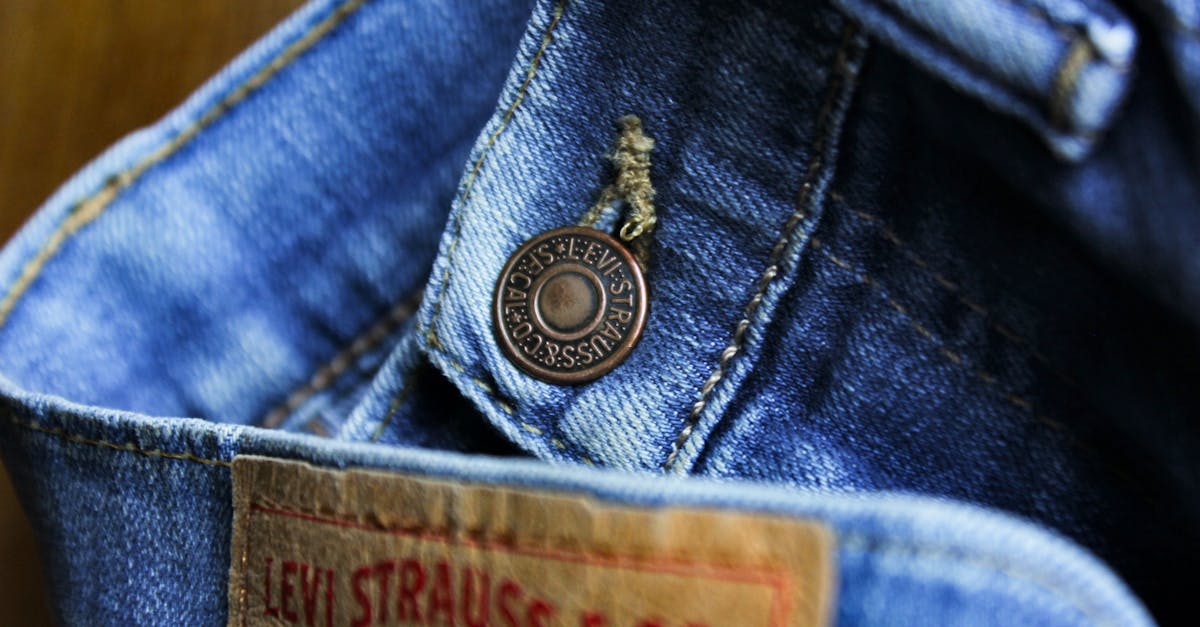
Levi’s buttons on the oldest pieces (1930s through early 1950s) are typically “donut” style, plain metal with a central punched hole, no logomark. Later production introduced buttons stamped with the Levi’s name or “LS&CO” or other logomarks. Moving from early donut buttons to logo buttons happened gradually through the 1950s, so this marker should be used in conjunction with others.
Rivets on the front pockets of all eras are copper. Back pocket rivets: exposed on the outside on pre-1937 pieces, hidden inside the back pocket post-1937. If you’re examining a very early piece and can press gently on the outside of the back pockets and feel a small raised circle, that’s a hidden rivet on the inside. Its presence (with the back pocket otherwise smooth on the outside) indicates post-1937 construction.
The crotch rivet: early Levi’s had a copper rivet at the base of the fly opening. This rivet was notoriously uncomfortable when working around fires or campfires (it conducted heat). Levi’s eventually eliminated it, and the elimination happened at a dateable period depending on which sources you reference (typically identified as 1941 for wartime material conservation). Presence of a crotch rivet indicates very early production.
Fabric Weight and Dye
Authentic vintage denim, particularly from the 1940s through the 1960s, was woven at a heavier weight, 12 to 14 ounces per square yard, compared to modern denim which typically runs 10 to 12 ounces. You can feel the difference. Heavy vintage denim has a substantial, stiff drape when held, even after years of washing, while modern denim often feels comparatively thin.
The indigo dye used before the 1970s was typically a pure indigo formulation that fades in a very characteristic way: the colored (surface) threads fade while the white core threads are exposed, creating the “slub” fading and the crisp contrast between faded and unfaded areas that denim enthusiasts call “high contrast” or “crunchy” fades. Post-1970s denim often includes sulfur dyes which create a slightly different fade pattern-more uniform, less high-contrast. Experienced pickers can often distinguish these fade types by eye.
Care Label Dating
No care label: piece is almost certainly pre-1971. Check every other marker to confirm the era within the pre-1971 period.
Care label present: piece is 1971 or later. The care label itself can help narrow the date, very early care labels (1971-1975) often had simpler text and fewer symbols, while later labels added more international washing symbols over the decades. The font, format, and information density on the care label can help a knowledgeable collector estimate a range within the post-1971 period.
The care label is typically sewn into the inner waistband or side seam. On early post-1971 pieces, the care label was often on a separate small tab at the inner waistband. The format evolved over time.
The Back Patch
From the 1950s through the 1970s, Levi’s used a leather back patch depicting the two-horse illustration with text that varied over time. The font, layout, and exact text of this patch changed across eras. “LEVI STRAUSS & CO.” in all caps with specific line arrangements and border treatments help date pieces. The leather used also changed from thick, vegetable-tanned leather on early pieces to a thinner, more pliable leather in later decades, eventually transitioning to a card or faux-leather patch in more recent production.
If the leather patch is intact and legible on a vintage piece, it’s one of your most information-rich dating tools. If it’s worn or missing, you rely more heavily on the other markers described above.
Condition and Its Massive Impact on Value
Condition is always important in resale, but vintage Levi’s present a more nuanced picture than most categories because there are actually two separate condition markets with partially opposite preferences.
The Preservation Market: American buyers, Canadian buyers, and European buyers generally prize preservation. Darker denim, meaning the jeans haven’t been washed extensively and retain their original indigo depth, commands a premium in this market. No holes, no repairs, minimal fading, intact hardware and labels. A Big E 501 in near-mint condition (meaning it looks like it was barely worn, with deep indigo color and sharp construction details) is the holy grail for this buyer segment. These pieces command the highest dollar amounts.
The Authentic Wear Market: Japanese collectors and denim enthusiasts worldwide specifically seek out pieces with what they call “authentic wear patterns”, the fades, whiskers (the radiating fade lines from the crotch), honeycombs (the compressed fade patterns at the back of the knee), and overall patina that develops from years of actual daily wear. For this market, a heavily faded, worn Big E 501 with beautiful authentic patina is not a damaged piece, it’s a document of the denim’s real life, and it commands substantial money. The specific fade patterns of vintage denim (driven by the pre-synthetic indigo formulation and the selvedge weave structure) cannot be replicated exactly by modern distressing techniques, which gives authentic vintage wear genuine value to this market.
Understanding which market you’re reaching with your listing changes how you photograph and describe the piece. For preservation buyers, you emphasize originality, depth of color, and condition. For the wear market, you photograph the fade patterns carefully, describe the specific whisker and honeycomb details, and use Japanese-collector vocabulary like “golden fade” or “even fade.”
Condition grades and their practical value impact:
Pristine / Near Mint (deeply colored, no visible wear, no damage, all hardware intact): A Big E 501 in this condition is worth 2x to 4x a heavily worn example in the same era and size. A 1960s Big E 501 in near-mint selvedge condition might be worth $500–$1,000. These are rare enough that they’re actively sought and buyers will pay for them.
Good / Very Good (natural light-moderate fading from washing and wear, original color still apparent, no holes or major repairs, hardware intact): This is the most common condition for street-priced vintage Levi’s. Values cited in this guide’s price ranges generally assume this condition tier. This is what most wearable vintage 501s actually look like.
Well Worn (significant fading, possible small holes or thin spots, all major construction intact): This is where the two markets diverge most. American/European buyers might pay 40-60% of the “good” condition price. Japanese fade-market buyers might pay 80-120% of the “good” price if the fade patterns are particularly good. Photograph extensively and list carefully.
Distressed / Damaged (holes, repairs, tears, heavy wear): The piece may still be sellable, particularly if the underlying label is Big E and the fade is authentic. But price realistically, the preservation market will largely pass, and you’re selling to either repair/restoration buyers or to buyers who specifically want the distressed aesthetic. $30–$120 for era-appropriate distressed pieces in mainstream sizes.
Specific damage types to disclose always: holes (size and location), thin spots (which can become holes), repairs (especially jeans with obvious patching or darning), staining, missing hardware, non-original button replacements, removed or replaced care labels.
Vintage Levi’s with any kind of undisclosed damage are a significant customer service risk. Buyers in this category are often knowledgeable, pay close attention to photos, and will leave negative feedback or initiate returns if condition is misrepresented.
Where to Find Vintage Levi’s
The thrift store is the primary hunting ground for most vintage denim pickers, and for good reason, Golds-end consumers donate their old clothing in massive volumes, and vintage Levi’s regularly turn up in the mix. But knowing where to look within the thrift environment, and which types of thrift locations yield the best finds, significantly increases your efficiency.
Thrift stores: Check both the men’s and women’s denim sections thoroughly. Don’t just look at the front of each pair, you need to flip the back pocket and check the tab. This takes seconds once you’ve practiced it, and it’s the difference between passing a Big E pair at $6 and paying $6 for a Big E pair. High-volume thrift stores in areas with older demographics (established suburbs, smaller towns, college towns with long histories) tend to yield more vintage pieces because there are more people who’ve been holding onto old clothing from the 1960s and 70s.
Goodwill Bins / By-the-Pound Outlets: The Goodwill outlet bins guide covers this in detail, but for vintage denim specifically, the bins are high-risk/high-reward. You’re digging through unsorted merchandise by the pound, which means prices are extremely low but finding specifically what you want requires either luck or a lot of time. Some pickers dedicate specific visits exclusively to denim digging at the bins. The ROI can be exceptional, a Big E pair found in the bins for $1.50 by weight and sold for $300 is a real scenario.
Estate Sales: This is arguably the best source for high-quality vintage Levi’s. When a household from the 1950s-1970s era is being liquidated, you’re accessing clothing that was stored rather than donated. Pieces found at estate sales are often better preserved than thrift store finds, less picked over, and sometimes accompanied by context (a family member or estate sale worker who knows the history of the pieces). The estate sale buying guide covers the strategies for maximizing estate sale finds, but for denim specifically: hit estate sales from homes that appear to be from Baby Boomer or earlier generations, look for garages, basements, and stored boxes rather than just the visible clothing racks.
Garage Sales and Yard Sales: Similar logic to estate sales but typically less curated. The challenge with garage sales is that the hosts often have already checked eBay for anything they recognize as valuable, so true vintage pieces at garage sale prices are becoming less common as general awareness of vintage clothing value has increased. That said, Boomer-era households regularly don’t recognize the specific markers that make vintage Levi’s valuable (Big E vs small-e means nothing to most non-collectors), so you can still find mispriced pieces.
eBay Lots: Buying eBay lots of vintage denim can be profitable if you know what you’re doing. Sellers often bundle multiple pairs together with a mix of valuable and basic pieces, pricing the lot based on average value. If you can identify from the listing photos that there are Big E pieces in the lot, you may be able to buy a lot that contains one piece worth more than the entire lot price you paid.
Vintage Clothing Stores: The markup is already there, vintage shops know what they have. You won’t find $15 Big E pairs at a curated vintage boutique. But vintage stores are useful for reconnaissance: seeing what prices hold in person (not just on eBay), examining construction details on dated pieces, and occasionally finding a mispriced piece that the shop didn’t fully research.
College Town Sales and Move-Outs: End-of-semester and move-out sales near college campuses sometimes surface vintage pieces that students inherited from parents and grandparents. The student might not realize what they have and be pricing old jeans at $5-10 to get rid of them quickly.
For sourcing context related to overall thrift store picking strategy, see the thrift store flipping complete guide.
How to Price Vintage Levi’s
The only real market for vintage Levi’s is what buyers actually paid for comparable pieces. Not what sellers are asking, what buyers paid. The difference matters enormously in a category where aspirational pricing leads sellers to list Big E 501s at $1,200 when the actual sold price for that piece is $350.
eBay Sold Listings: This is your primary data source. Go to eBay, search for the specific piece you’re trying to price (e.g., “vintage 501 big E selvedge 32×32”), filter for “Sold” listings, and look at what items actually closed at rather than what they’re currently listed for. eBay’s sold listing database goes back 90 days and gives you a meaningful sample of real market transactions.
When searching sold listings, be specific enough to get relevant comps. A search for “vintage Levi’s” will return thousands of wildly varied results. A search for “vintage 501 big E selvedge 32” narrows to comparable pieces. Use the eBay Sold Link Generator to build targeted search URLs quickly.
For a full breakdown of how to use this research method, see the how to use eBay sold listings price research guide.
Terapeak: If you have access to eBay’s Terapeak tool (included with eBay seller subscription), it extends the historical window beyond 90 days and allows more sophisticated analysis of market trends. This is useful for understanding whether a specific item type has been appreciating or declining in value over the past year, which helps with buy/hold decisions on high-value pieces.
International Market Consideration: For high-grade Big E pieces, Japanese platform pricing is important context. Mercari Japan and Yahoo Auctions Japan often show prices for vintage Levi’s that exceed US eBay sold prices by 50-150% for the same pieces. This doesn’t directly tell you what your piece will sell for on US eBay, but it tells you about the existence of a higher-paying buyer base. Some US-based sellers do export to Japan through forwarding services, and understanding the international price premium can help you price more aggressively on US eBay for the highest-quality pieces, knowing that international buyers are watching.
Condition Quartiles: Rather than a single price point, think in quartiles based on condition. Find 8-10 recently sold comps and sort them by condition. The top 25% by condition represent your target price if your piece is pristine. The bottom 25% by condition represent your floor if your piece is heavily worn. Most pieces will fall in the middle 50%.
Size and Measurements: Always measure the actual dimensions of vintage jeans, waist, inseam, rise, thigh, knee, and leg opening, before pricing. These differ from the label size. The mainstream sweet spot for most vintage 501 buyers is a measured waist of 28 to 34 inches. Pieces outside this range sell, but the pool of buyers shrinks and prices typically run 20-40% lower than equivalent pieces in mainstream measurements.
Platform Fees in ROI Calculation: Don’t forget to account for platform fees when calculating your margin. Use the eBay, Mercari, Poshmark Fee Calculator to model your net proceeds accurately. eBay takes roughly 13.25% all-in for most clothing and shoes. Grailed takes 9%. Poshmark takes 20% on sales over $15. The difference meaningfully affects which platform makes sense for which price point.
Also factor in the Flip Profit Calculator to ensure your sourcing prices make sense for the value tier you’re in.
Best Platforms for Selling Vintage Levi’s
Different platforms attract different buyer types for vintage Levi’s. Optimizing which platform you use for which piece can materially affect your final price.
eBay: The largest marketplace for vintage clothing globally, with the highest reach for rare or high-value pieces. eBay is the definitive platform for any Big E piece or rare type of jacket where you want to reach the widest possible audience including international buyers and serious collectors. The ability to reach Japanese buyers through international shipping is particularly valuable for premium Big E pieces. Use detailed condition descriptions, multiple photos (we’ll cover photo strategy below), and accurate measurements. Auction format with a realistic starting bid for rare pieces; Buy It Now for more common inventory. For the full picture on eBay fee structures and best practices, see our tools pages.
Grailed: A menswear-focused resale platform with a strong community of fashion-conscious buyers who specifically appreciate vintage and designer pieces. Grailed’s user base trends younger and more fashion-forward than eBay’s denim buyer segment, making it excellent for 1990s baggy vintage, 1970s flares, and pieces where the style and silhouette is the selling point rather than purely historical rarity. For a complete overview of the platform, see the Grailed menswear reselling guide. Grailed takes 9% plus payment processing, which is competitive with eBay.
Depop: Depop’s audience skews young (primarily Gen Z and younger Millennials) and is highly aesthetically driven. This platform is excellent for vintage 1990s to early 2000s Levi’s, women’s vintage jeans, 70s flares with fashion appeal, and any vintage Levi’s piece that photographs well. It’s less effective for the serious collector/historical pieces where the buyer needs detailed label and construction information. The Depop selling complete guide breaks down the specific strategies for this platform. Note that Depop’s fee structure has changed over time; check current rates before pricing.
Poshmark: A good secondary platform for women’s vintage Levi’s, particularly in sizes and styles that appeal to fashion rather than collector buyers. Poshmark’s 20% fee on sales above $15 is its significant drawback for lower-priced items. For pieces you’d list at $100+, Poshmark’s reach among women’s vintage buyers can make it worthwhile despite the higher fee.
Etsy: Etsy has a growing vintage clothing section and attracts buyers who specifically want authentic vintage pieces for wearing. For well-described, appropriately priced vintage Levi’s at the $50-$200 price point, Etsy is a viable platform. The buyer demographic tends to lean toward artisan and vintage aesthetics, and they appreciate detailed provenance information in listings.
Japanese Platforms (Mercari Japan / Yahoo Auctions Japan): Accessing Japanese buyers for premium vintage pieces requires using a proxy service to accept Japanese payments and navigate the platform language, but the price premium can be substantial enough to justify the extra steps for high-value items. A Big E 501 selvedge in good condition that might sell for $350 on US eBay might sell for $500-700 through Yahoo Auctions Japan from the right buyer. For very high-value pieces (Big E Type I or II jackets, exceptional selvedge 501s), exploring this channel is worth researching.
Instagram: For serious pickers who want to build a direct-to-buyer vintage business, Instagram has become an effective sales channel for premium vintage denim. Building a following by consistently posting well-photographed vintage pieces and explaining their history and details attracts the collector audience who will pay premium prices. This requires more marketing effort than simply listing on existing platforms, but the absence of platform fees and the ability to develop repeat buyers makes it worth considering for sellers focusing on the top tier of the market.
Listing Tips: Keywords That Make Vintage Levi’s Sell
How you title and describe your vintage Levi’s listing has a direct impact on how many buyers find it and at what price it closes. Here is a systematic approach to listing effectively across platforms.
Title Keywords for eBay and Cross-Platform Search:
The words that trigger the searches serious vintage Levi’s buyers use are well established. Your title should contain as many of these as space allows:
- “Big E” (if applicable), this is searched constantly by collectors
- “Selvedge” or “selvedge denim” (if applicable)
- “Made in USA” (if applicable)
- “Single stitch” (if applicable, indicates old construction)
- “501” or whatever the specific model number is
- The waist and inseam (e.g., “32×32” or “32 32”)
- The decade when possible (e.g., “1960s” or “1970s”)
- “Vintage”, always include this
- “Levi’s” or “Levis”, both spellings are searched
- The color if distinctive (black, white, etc.)
- “hidden rivets” or “donut buttons” if present and relevant
Example of a strong eBay title: “Vintage Levi’s 501 Big E Selvedge Made in USA 1960s 32×32 Single Stitch Denim Jeans”
This title hits every major buyer search term and will surface in filtered searches for “big e selvedge” as well as general “vintage Levi’s 501” searches.
Description Must-Haves:
- Actual measurements (waist, inseam, rise, thigh, knee, leg opening) measured flat and doubled for waist, include both inch and metric measurements to capture international buyers
- Specific label details (what the red tab says, what the back patch says, whether there’s a care label and what it says)
- Hardware condition (all buttons present and original, rivet condition)
- Fabric details (selvedge or not, any unusual features)
- Condition specifics, be precise about any wear, thinning, fading, or damage; include close-up photos of any issues
- Interior details (pocket lining condition, any factory codes)
International Buyers:
Include both imperial and metric measurements in your description. A 32-inch waist is an 81 cm waist. A 32-inch inseam is an 81 cm inseam. Many serious vintage denim buyers are in Japan, Europe, or Australia, they think in centimeters. Including “32/81cm” style measurements dramatically improves your search visibility and conversion rate with international buyers. Consider offering international shipping to unlock this buyer pool; see the shipping for resellers guide for cost-effective international shipping options.
Photography Strategy:
Vintage Levi’s should be photographed flat-lay on a clean light or neutral background (shows color accurately), on a hanger, and where possible styled on a person (even just modeled on yourself) to give buyers a sense of fit and proportions. Essential shots:
- Full front view, flat
- Full back view, flat
- Close-up of red tab (critical, buyers need to read this)
- Close-up of back patch/label
- Inner waistband (care label or lack thereof)
- Selvedge edge (if present, photograph the outseam turned out)
- Buttons, hardware
- Any wear, fading, or condition notes
- Front pockets and hardware detail
- Waist measurement shot (with tape measure visible at the waist)
For a complete treatment of the vintage clothing selling process including photography, description, and pricing, see the vintage clothing flipping guide and the vintage clothing labels dating guide for additional authentication context.
Pricing strategy summary: Start with eBay sold comps, adjust for your specific condition and measurements, account for platform fees using the fee calculator, and set a Buy It Now price that acknowledges the international buyer pool for premium pieces. For rare Type I or II jackets and pristine Big E selvedge 501s, consider running a 7-day auction with a realistic starting bid to let the market price the piece, you may be surprised at the result.
Vintage Levi’s Washing and Restoration
The question of whether to wash vintage Levi’s before selling is a genuine decision with legitimate arguments on both sides.
Arguments for washing before listing: Clean pieces photograph better, smell better (important for the buyer experience), and remove any surface dirt that might make condition look worse than it is. Most buyers want clothing that’s ready to wear immediately. Removing an unpleasant odor through washing often unlocks buyers who would have passed on an unclean piece.
Arguments against washing (or for very careful washing): Vintage denim, particularly pieces from the 1950s and 1960s, can shrink significantly when exposed to hot water or the dryer. Shrinkage of 1-2 inches in the waist and inseam is possible even on pre-washed vintage pieces. Additionally, washing can accelerate fading, the specific patina on an authentically faded Big E pair can be altered by aggressive washing. Serious collector buyers for premium pieces often prefer to receive unwashed pieces and clean them according to their own preferences.
Practical guidelines:
If you’re going to wash vintage Levi’s before selling, use cold water only, hand wash or gentle machine cycle, no dryer, lay flat to air dry or hang. Avoid hot water entirely. Never use bleach on vintage denim under any circumstances, it instantly damages the indigo and degrades the fabric.
For odor removal without washing: expose to sunlight for several hours (sunlight is a natural disinfectant and deodorizer), use cedar blocks in a sealed container overnight, or place activated charcoal near (not touching) the garment in a sealed bag for 24-48 hours.
For very valuable pieces, pristine Big E selvedge 501s worth $400 or more, we’d recommend not washing at all and noting in the listing that the piece is unwashed, with appropriate photos showing the current condition and any fading.
Small holes and repairs: Whether to disclose small holes or attempt basic repair depends on size and location. A small pin-sized hole in an inconspicuous location is better disclosed and photographed than hidden. A thin spot that hasn’t broken through yet should be disclosed as “thinning at [location].” Buyers have the right to know these issues exist, and non-disclosure leads to disputes and returns.
For more substantial denim repair, visible mending, Japanese boro-style patching, there is actually a market for artfully repaired vintage denim, particularly among fashion-forward buyers who appreciate visible mending aesthetics. A well-repaired vintage Big E 501 with elegant visible mending can be disclosed positively and priced accordingly. But disclose the repair clearly; never attempt to hide a repair in photographs or description.
Professional cleaning: For very high-value pieces (Big E jackets or pristine selvedge 501s worth $500+), professional vintage clothing cleaning services exist and are worth considering. Specialists in vintage denim cleaning understand how to remove odors and surface dirt without damaging the fabric or altering the fade characteristics. The cost of professional cleaning ($30-80 typically) is easily justified if it increases the selling price of a $600 piece to $800.
FAQ: Vintage Levi’s Value Questions
Are vintage Levi’s women’s jeans worth money?
Yes, increasingly so. Women’s vintage Levi’s have become one of the fastest-growing segments of the vintage clothing resale market, driven by demand for the authentic vintage 501 silhouette (high rise, straight leg, raw denim) from women buyers on Depop and Poshmark. Vintage women’s Levi’s 701s and 505s with Big E labels in good condition should be priced using the same era-based logic as men’s pieces, though the market knowledge among buyers is slightly less specialized. Women’s vintage Levi’s in smaller sizes (measured waist 24-30 inches) can actually command premium prices due to the difficulty of finding vintage denim in small sizes that fits modern women’s sizing expectations.
Are 1990s Levi’s worth anything?
Yes, with important caveats. 1990s internationally made Levi’s sell as used clothing at typical thrift resale prices ($20-60 for most pieces). However, there’s a growing fashion market for specifically 1990s silhouettes, baggy-cut 501s, high-rise women’s jeans, and other decade-specific fits that have become fashionable on Depop and Grailed driven by Gen Z nostalgia. “90s Levi’s” as a fashion category (rather than historical vintage) can command $40-100 on the right platforms if the fit is on-trend. The Y2K and 90s resale market is well worth understanding, see the Y2K fashion reselling guide for current trends in that specific category.
Are Orange Tab Levi’s worth less than Red Tab?
Generally, yes. Orange Tab was Levi’s second-tier product line, and pieces from the same era sell for a discount compared to equivalent Red Tab pieces. A Big E Orange Tab piece from the late 1960s might sell for $40-100 when an equivalent Big E Red Tab piece would sell for $150-400. Orange Tab pieces are still legitimately collectible vintage items, especially the early examples from the late 1960s and early 1970s, but they don’t carry the same historical and quality premium as the Red Tab mainline.
What’s the most valuable vintage Levi’s ever sold?
The most exceptional vintage Levi’s have sold for extraordinary amounts through specialized auctions. A pair of 1880s Levi’s found in an abandoned mine shaft sold at an auction in New Mexico in 2022 for $87,400, buyer’s premium included. Pairs from the gold rush era with provenance and authenticity documentation have sold in the $10,000 to $40,000 range. For more realistic reference: outstanding Big E selvedge 501s in pristine condition regularly sell for $1,000 to $3,000 on specialist vintage platforms, and exceptional Big E Type I trucker jackets can fetch $2,000 to $5,000 from serious collectors.
The Bottom Line: Vintage Levi’s in 2026
The vintage denim market in 2026 is not just healthy, it’s one of the most reliable segments of the vintage clothing resale world. The Big E era pieces from the 1950s and 1960s have been consistently appreciating in value year over year as they become rarer in the wild and as the global collector base (particularly in Japan) maintains solid demand. The knowledge required to find and identify value is genuinely a learnable skill, and the window between public knowledge of vintage Levi’s value and what actually gets donated to thrift stores is still wide enough that informed pickers regularly uncover extraordinary finds.
Here is what the vintage Levi’s landscape looks like right now, in practical terms:
The Big E 501s from the 1960s in selvedge with pristine preservation continue to be the most valuable items regularly sold at the consumer collector level, bringing $400 to $1,000+ when they surface. The Type I and Type II trucker jackets remain the trophies of the category, pieces that serious collectors will pay $1,000 to $3,000+ for when they find examples in good condition. The early 1970s small-e USA-made pieces represent the accessible entry point for buyers who want the real vintage heritage without the Big E premium pricing, and they sell consistently in the $80-200 range with relatively little effort to source.
The 1970s-80s American-made pieces continue to hold solid mid-market positions, particularly as the Baby Boomer household estate sales that feed the thrift supply become an increasingly reliable source. The post-1992 international production pieces are effectively the used clothing tier of the market, saleable, but not vintage in the collector sense.
The 1990s and Y2K fashion angle is a growing market overlay on top of the historical collector market, meaning pieces from the 1990s that wouldn’t have interested a historical denim collector five years ago are now moving well on style-focused platforms like Depop due to fashion trend demand. This is a genuine market opportunity that will likely persist for several more years as Gen Z’s nostalgia for the decade of their early childhood continues to intensify.
The skill that pays the most in this category remains what it’s always been: the ability to walk down a thrift store denim aisle and identify a Big E pair in five seconds or less. The difference between the $8 price and the $350 eBay sale is entirely in knowing what you’re looking at. That knowledge, built from this guide and reinforced by handling real pieces, is one of the most valuable things you can develop as a reseller working in the vintage clothing space.
Use the tools at your disposal. Run your sourcing finds through the Flip Profit Calculator before committing to purchase. Generate targeted eBay research links with the eBay Sold Link Generator. Model your platform fees accurately with the eBay, Mercari, Poshmark Fee Calculator. And when the Big E pair materializes at the bottom of a bin, hesitate for exactly zero seconds. That’s the one you’ve been looking for.
The market rewards knowledge. In vintage Levi’s, that knowledge pays.
Related guides: Thrift Store Flipping Complete Guide · Estate Sale Buying Guide 2026 · vintage clothing flipping guide · Vintage Clothing Labels Dating Guide · Goodwill Outlet Bins Mastery Guide · Y2K Fashion Reselling Guide 2026 · Depop Selling Complete Guide · Grailed Menswear Reselling Guide · Is Levi’s Worth Reselling?
Related articles
vintage clothing flipping guide
Vintage clothing flips for $20-300 per piece. Master era dating (60s-90s), brand recognition (band tees, sportswear), condition grading, and sourcing at thrift stores and estate sales.
finding vintage denim at thrift stores
Finding luxury brands at Goodwill or Salvation Army is like finding at treasure map. Here are the tips I use to spot designer labels in a sea of fast fashion.
vintage clothing label dating guide
Learn how to date vintage clothing from labels, union tags, RN numbers, country-of-origin clues, and database-style checks for resale pricing.
Tools that help with this topic
vintage Levi's date decoder for tabs and tags
Check Levi's Big E, small e, blank tabs, care tags, origin, selvedge, button stamps, condition, and sold comps before buying or listing vintage denim.
denim brand resale value rankings
Turn exact clothing-brand sold comps, active listings, fees, shipping, and target profit into a transparent reseller buy ceiling without invented brand scores.
condition impact on vintage denim value
Estimate resale value by condition using sold comps, defects, fees, and repair costs. Compare repair ROI and net payout before pricing.
sold comps for vintage Levi's pricing
Build source-backed sold-comp research links for eBay Advanced Search, eBay Product Research, Mercari, and Poshmark, plus a 7-comp pricing worksheet.