Best Items to Resell in 2026: Small Parts & More
By the Numbers
The best items to resell in 2026 are not random hot products. They are categories where sold comps are easy to verify, condition risk is manageable, shipping does not erase the spread, and buyers search every week: game consoles and controllers, outdoor clothing, small electronics, high-margin replacement parts, power tools, premium kitchen appliances, LEGO, trading cards, vintage Pyrex, used books, and furniture for local pickup.
Here is the fast version before the full category guide:
| Rank | Best item category | Typical buy-in | Typical net profit | Best exit channel | Skill needed |
|---|---|---|---|---|---|
| 1 | Game consoles and controllers | $10-180 | $25-120 | eBay, Marketplace | Testing |
| 2 | Outdoor clothing and workwear | $3-35 | $20-80 | eBay, Poshmark | Brand knowledge |
| 3 | Power tools and batteries | $10-100 | $30-150 | Marketplace, eBay | Testing |
| 4 | Small electronics | $5-150 | $25-125 | eBay, Mercari | Model lookup |
| 5 | LEGO sets and minifigures | $5-200 | $20-200+ | eBay, BrickLink | Completeness check |
| 6 | Vintage Pyrex and kitchenware | $2-50 | $25-150 | eBay, local | Pattern ID |
| 7 | Books and textbooks | $1-15 | $8-60 | eBay, Amazon | ISBN scanning |
| 8 | Trading cards and collectibles | $1-100 | $15-250+ | eBay, Whatnot | Authenticity/grading |
| 9 | Furniture and exercise gear | $20-250 | $75-400 | Marketplace, Craigslist | Local pricing |
| 10 | Smart home devices | $10-80 | $25-90 | eBay, Marketplace | Reset/testing |
The most reliable beginner path is one fast-turn category plus one higher-margin category. For example: video games for cash flow and outdoor clothing for margin, or books for low-risk practice and power tools for bigger local-profit swings.
Small Replacement Parts: When Parting Out Beats Selling Whole
Small replacement parts can be a profitable eBay niche because one broken donor item may contain several model-specific pieces that buyers cannot easily replace at retail. The opportunity is not “small parts” in general. It is an exact compatibility problem: the buyer needs the right OEM part number, model family, dimensions, connector, or mounting pattern.
| Part type | Sourcing cue | What proves demand | Main risk |
|---|---|---|---|
| Appliance knobs, shelves, trays, and bins | Incomplete or nonworking appliances priced for disposal | Exact model and part number with recent sold comps | Cracked mounts, yellowing, expensive dimensional shipping |
| Vacuum attachments and brush heads | Donor units missing a motor or battery | Brand, series, attachment type, and a clean compatibility list | Wear, odor, sanitation, or a part that fits fewer models than expected |
| OEM remotes and power adapters | Electronics separated from their accessories | Printed model number, voltage, connector, and a basic function test | Untested units, counterfeit replacements, or unsafe voltage assumptions |
| Console covers, stands, caddies, and battery doors | Damaged consoles with intact external pieces | Console generation, region, color, and matching photos | Broken tabs, subtle revisions, and low-dollar returns |
| Sewing-machine feet, bobbins, and plates | Older machines sold cheaply because a major component failed | Shank type, machine family, part number, and close-up measurements | Compatibility mistakes and slow-moving generic pieces |
| Tool chargers, guards, cases, and handles | Incomplete tool lots and dead donor tools | Battery platform, model number, condition, and a safe test | Recalled parts, damaged wiring, and shipping a low-value bulky case |
Part-out decision rule: Part out an item only when the sum of realistic sold-price net proceeds, after fees, shipping, testing time, and unsold pieces, clearly beats the whole-item net. If you cannot identify the exact fit or show a recent sold comp, sell the donor item as a repair lot instead of guessing.
Last week I bought a used PS5 controller at a garage sale for $12. It had minor stick drift, fixable with a $3 replacement module from Amazon. Total investment: $15. Sold on eBay for $52 three days later. Net profit: $32 after fees and shipping.
ROI: 213%. Time invested: 30 minutes.
That’s what smart flipping looks like in 2026: buying low and selling high on items with predictable demand, minimal fix costs, and consistent sell-through.
This guide covers 40+ best things to flip for profit in 2026, organized by profit potential, difficulty, and sell speed.
In this guide, you’ll discover:
- How to evaluate flip opportunities using the 4-factor profitability matrix
- A merged buy/sell margin checkpoint table for categories that need quick comp math
- Tier 1 categories with $100-300+ profit per item (high skill required)
- Tier 2 categories with $30-80 consistent profits (medium skill)
- Tier 3 niche markets with $50-150 profits (specialized knowledge)
- Tier 4 beginner-friendly categories with $15-40 profits (low risk, fast learning)
- What NOT to flip (oversaturated or high-risk categories)
- Sourcing strategies for each category
Table of Contents
- The Best Flip for Your Situation
- Small Replacement Parts: When Parting Out Beats Selling Whole
- The Profitability Matrix: How to Evaluate Any Item
- The 60-Second Buy-or-Pass Filter
- Tier 1: High-Profit Categories ($100-300+ Per Item)
- Tier 2: Consistent Profit Categories ($30-80 Per Item)
- Tier 3: Niche Markets ($50-150 Per Item)
- Tier 4: Beginner-Friendly Categories ($15-40 Per Item)
- What NOT to Flip (Oversaturated or High-Risk)
- Sourcing Guide by Category
- The Quick-Flip Strategy (Under 7 Days)
- The Long-Game Strategy (30-90 Days, Higher Margins)
- Seasonal Opportunities Throughout 2026
- Common Mistakes That Kill Profits
- Frequently Asked Questions
The Best Flip for Your Situation
Most readers don’t need 40 ideas. They need the right 2-3 categories for their budget, skill level, and sourcing environment.
Use this table to narrow the list fast:
| If you want… | Start with… | Why it works | Avoid for now |
|---|---|---|---|
| Fastest cash flow | Game consoles, controllers, power tools | Strong year-round demand, easy comps, quick turnover | Designer furniture, rare sneakers |
| Lowest starting budget | Video games, books, home decor | $1-10 buy-in, easy shipping, fast learning loop | Laptops, premium appliances |
| Best thrift store categories | Outdoor clothing, Pyrex, books/textbooks | Commonly mispriced, easy to spot once trained | Mall brands, generic glassware |
| Best garage sale categories | Tools, kitchen appliances, retro gaming | Sellers price to clear space, bundles create margin | Common DVDs, baby gear |
| Best local-pickup flips | Furniture, exercise equipment, large tools | No shipping, less national competition, larger ticket size | Low-value items under $20 |
| Best shipped flips | Clothing, modern games, LEGO, smart home devices | Easy to box, broad buyer pool, predictable fees | Fragile decor, bulky appliances |
| Best beginner combo | Video games + outdoor clothing | One easy category, one higher-margin category | Authenticity-heavy niches |
The best setup for most part-time resellers is one fast-turn category plus one higher-margin category. Example: game consoles for cash flow and outdoor clothing for easy thrift-store upside. Or books for low-risk practice and Pyrex for occasional high-margin wins.
If buyer demand starts getting more price-sensitive, pair this category list with the reselling during a downturn guide so you can tighten buy prices, prioritize cash-flow categories, and pause categories that need too much discretionary spending.
Beyond physical sourcing, local Facebook buy-sell-trade groups are underrated for furniture, tools, and exercise equipment — motivated sellers often price to clear space fast, not to maximize. Add Facebook groups alongside Marketplace to your regular sourcing rotation.
If you’re sourcing in person and an item doesn’t clearly fit one of these profiles, that’s usually a warning sign. The strongest flips are obvious once you check sold comps, fees, and condition risk.
The Profitability Matrix: How to Evaluate Any Item
Not all flips are created equal. Before diving into specific categories, here’s the framework I use to evaluate any potential flip:
The 4 Factors
1. Profit Potential ($ per item)
- Low: $10-25
- Medium: $25-75
- High: $75-200
- Very High: $200+
2. Difficulty/Knowledge Required
- Easy: Anyone can identify and evaluate
- Medium: Requires brand knowledge or testing
- Hard: Requires authentication, specialized knowledge, or repairs
3. Competition Level
- Low: Few resellers targeting this category
- Medium: Some competition but room for profit
- High: Oversaturated, margins compressed
4. Time to Sell
- Fast: 1-7 days
- Medium: 7-30 days
- Slow: 30-90 days
The Ideal Flip Profile
The sweet spot: High profit + Medium difficulty + Low competition + Fast sale
Example: Vintage Patagonia fleeces
- Profit: $40-80 per item ✅
- Difficulty: Medium (need brand knowledge) ✅
- Competition: Medium (not everyone knows what to look for) ✅
- Time to sell: 3-10 days ✅
Category Comparison Table
| Category | Avg Profit | Difficulty | Competition | Time to Sell | Overall Rating |
|---|---|---|---|---|---|
| Designer Furniture | $150-400 | Hard | Low | Slow (30-60d) | ⭐⭐⭐⭐ |
| Game Consoles | $40-120 | Medium | Medium | Fast (3-7d) | ⭐⭐⭐⭐⭐ |
| Outdoor Clothing | $30-80 | Medium | Medium | Fast (5-10d) | ⭐⭐⭐⭐⭐ |
| Sneakers (Collectible) | $50-200 | Hard | High | Medium (10-30d) | ⭐⭐⭐ |
| Books/Textbooks | $8-40 | Easy | High | Fast (2-7d) | ⭐⭐⭐ |
| Vintage Pyrex | $40-150 | Medium | Low | Medium (10-20d) | ⭐⭐⭐⭐⭐ |
| Power Tools | $30-100 | Medium | Low | Fast (5-14d) | ⭐⭐⭐⭐ |
| Video Games | $10-30 | Easy | High | Fast (3-7d) | ⭐⭐⭐ |
Buy/Sell Margin Checkpoints From the Retired Margin List
The old standalone buy/sell margin article has been folded into this owner page because a separate zero-impression listicle was weaker than one consolidated guide. Keep the useful part: fast margin checkpoints that force a sold-comp lookup before you buy.
| Category | First comp query | Normal buy ceiling | Hidden cost to subtract | Pass signal |
|---|---|---|---|---|
| Controllers and consoles | exact model + condition + included cables/controllers | 35-55% of realistic sold price | drift repair, missing cables, shipping box, returns | cannot test power, account lock, liquid damage |
| Outdoor clothing and packs | brand + model + size + condition | 30-50% of sold price | cleaning, zipper repair, dimensional shipping for packs | delamination, odor, missing size/model tag |
| Power tools and batteries | brand + model number + battery platform | 30-45% of sold price | replacement battery, charger, local delivery time | dead battery, missing charger, sparks, recalled model |
| LEGO and toys | set number or exact figure + completeness | 25-50% of sold price | missing pieces, sorting time, replacement parts | no set number, incomplete high-piece set, fake minifigs |
| Books and media | ISBN/title + edition + condition | under 25-40% of sold price | Media Mail eligibility, storage time, slow turnover | no ISBN, water damage, outdated textbook edition |
| Furniture and exercise gear | exact style/model + local sold comps | 20-40% of local resale value | truck time, storage, cleaning, delivery risk | particle board damage, smoke odor, no safe pickup plan |
Use the eBay sold link generator, flip profit calculator, and ROI calculator before treating any row as a buy signal. The row only says where the math usually starts; the exact item in your cart still has to prove itself.
The 60-Second Buy-or-Pass Filter
Before you buy anything in this guide, run it through these five questions:
- Are there at least 3 recent sold comps for the exact model or a close equivalent? If not, you’re guessing.
- After fees, shipping, and replacement parts, can you still clear at least $25 or a 30% margin? Percentage alone is not enough.
- Do you know why this item is underpriced? Dirty photos, vague title, moving sale, missing category, minor repair, seller urgency.
- Can you test the main failure point in under 2 minutes? If not, risk goes up fast.
- Do you already know the best exit platform? eBay, Marketplace, Whatnot, Depop, or local pickup should be obvious before you pay.
Automatic pass signals:
- No sold comps in the last 90 days
- Missing parts you can’t replace cheaply
- Counterfeit or authenticity risk beyond your skill level
- Shipping cost wipes out the spread
- Slow sell-through on a low-dollar item
Field rule: If you need 10 minutes of research to justify a flip that might make you $20, pass. Your best buys usually become clear very quickly.
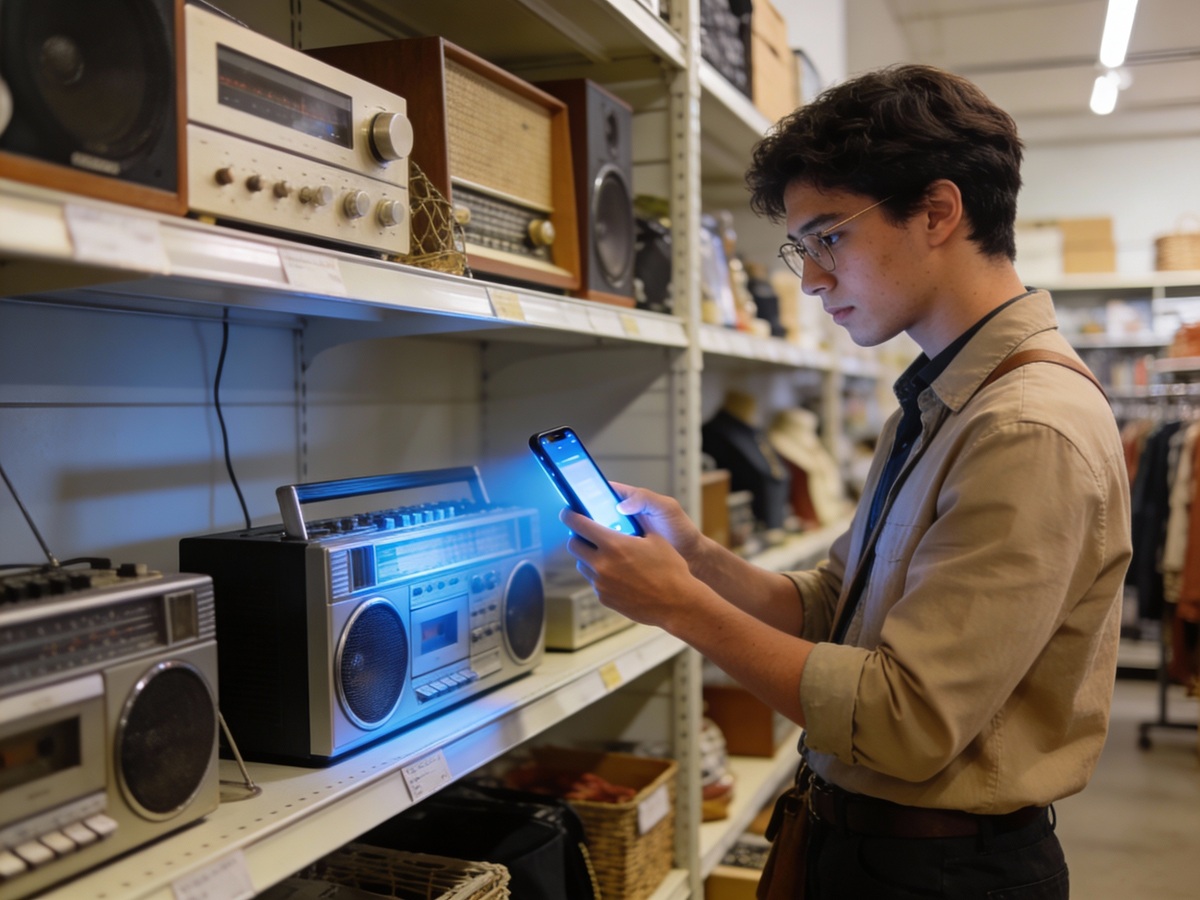
This is also where AI can genuinely help. Paste the listing or snap a photo into Underpriced and verify sold comps, likely fees, and margin before you commit cash. That’s much more useful than trying to memorize every category in this guide.
Now let’s break down the best items by tier…
Tier 1: High-Profit Categories ($100-300+ Per Item)
These categories require more knowledge and sourcing effort, but deliver the highest profits per transaction.
1. Designer Furniture & Mid-Century Modern
Why it’s profitable: High retail prices ($500-5,000+), wealthy buyers pay premium for authentic pieces, ships poorly (less eBay competition).
What to look for:
- Brands: Herman Miller, Knoll, Eames, Saarinen, Wegner, George Nelson
- Pieces: Office chairs (Aeron, Mirra), lounge chairs, dining tables, credenzas
- Authentication: Look for manufacturer stamps, original hardware, construction quality
Profit examples:
- Herman Miller Aeron chair: Buy $150-250 → Sell $400-600 = $200-300 profit
- Eames lounge chair (authentic): Buy $800-1,200 → Sell $2,000-3,500 = $1,000+ profit
- Mid-century credenza (Broyhill Brasilia): Buy $75-150 → Sell $400-700 = $250-500 profit
Sourcing:
- Estate sales (older homeowners more likely to have authentic MCM)
- Facebook Marketplace (“mid century” “retro” “vintage furniture”)
- Craigslist (many sellers don’t know what they have)
Challenges:
- Heavy/bulky (local sales only or expensive shipping)
- Requires vehicle for pickup
- Need space to store
- Condition issues (scratches, veneer damage)
Best for: Resellers with vehicle, storage space, and furniture knowledge. If you’re flipping patio sets or outdoor pieces locally, our guide on where to sell outdoor furniture covers the best platforms and pricing strategies.
2. High-End Electronics (Laptops, Tablets, Monitors)
Why it’s profitable: Consistent demand, predictable pricing, fast sales.
What to look for:
- Laptops: MacBook Pro/Air (2018+), ThinkPad X1 Carbon, Dell XPS, Surface Laptop
- Tablets: iPad Pro, iPad Air, Surface Pro
- Monitors: Dell Ultrasharp, LG UltraFine, Gaming monitors (ASUS ROG, Alienware)
Profit examples:
- MacBook Air M1 (2020): Buy $400-500 → Sell $650-750 = $150-200 profit
- iPad Pro 11" (2020): Buy $300-400 → Sell $500-600 = $150-180 profit
- Dell Ultrasharp 27" 4K: Buy $150-200 → Sell $350-450 = $150-200 profit
Testing checklist:
- Powers on without issues
- No cracked screen or dead pixels
- Battery health >80% (laptops/tablets)
- No iCloud/activation lock (Apple devices)
- All ports functional
- No liquid damage indicators
Sourcing:
- Corporate liquidations (companies upgrade every 3-4 years)
- Facebook Marketplace (people upgrading)
- Pawn shops (test thoroughly)
Challenges:
- Need to test thoroughly (risk of buying broken units)
- Data wiping required (privacy/security)
- Higher buy-in cost ($300-500)
Best for: Tech-savvy resellers comfortable with testing/troubleshooting. Once you’ve sourced electronics, knowing where to sell old electronics helps you pick the highest-net platform. Cameras are another strong subcategory, see where to sell used cameras for platform-specific tips.
3. Collectible Sneakers & Athletic Shoes
Why it’s profitable: Hype culture, limited releases, global market.
For a current-tier breakdown of what actually still works in Dunk flipping, use this Nike Dunk resale value 2026 guide before buying any pair.
What to look for:
- Brands: Nike (Jordan, Dunk, SB), Adidas (Yeezy), New Balance (990, 550, 2002R)
- Condition: New/deadstock = highest profit, used clean = still profitable
- Authentication: Check StockX sold prices, use CheckCheck app for authentication
Profit examples:
- Jordan 1 Retro High (popular colorway): Buy $120-150 → Sell $220-300 = $80-150 profit
- Nike Dunk Low (hyped release): Buy $90-110 → Sell $180-250 = $80-120 profit
- New Balance 990v5 (grey): Buy $60-80 → Sell $140-180 = $70-100 profit
Sourcing:
- Nike/Adidas outlets (clearance racks)
- Thrift stores (older stock, vintage heat)
- Facebook Marketplace (people cleaning closets)
- Retail arbitrage (sale prices flip to StockX/GOAT)
Challenges:
- Counterfeit risk (must authenticate)
- Sizing matters (some sizes more valuable)
- Seasonal trends (hype changes fast)
- High competition (many resellers)
Best for: Sneakerheads who know the market and can authenticate. Need to move a pair fast? Our guide to where to sell sneakers online breaks down every platform option. If you source luxury accessories at estate sales, also check where to sell luxury handbags, similar authentication skills apply.
4. Premium Outdoor & Athletic Clothing
Why it’s profitable: Brand loyalty, durable goods hold value, year-round demand.
What to look for:
- Brands: Patagonia, Arc’teryx, The North Face (vintage), lululemon, Outdoor Voices
- Items: Fleeces, puffer jackets, softshell jackets, leggings (lululemon), backpacks
Profit examples:
- Patagonia Synchilla fleece: Buy $12-20 → Sell $55-75 = $35-50 profit
- Arc’teryx Beta AR jacket: Buy $80-120 → Sell $250-350 = $140-200 profit
- lululemon Align leggings: Buy $15-25 → Sell $60-80 = $35-50 profit
Condition check:
- No holes, stains, or pilling
- Zippers work smoothly
- Drawstrings present
- Tags/logos intact
Sourcing:
- Thrift stores (Goodwill, Savers)
- Facebook Marketplace
- Garage sales (outdoor enthusiasts upgrading)
Challenges:
- Sizing (need wide range to sell fast)
- Seasonal demand (winter jackets sell better Sept-Feb)
- Condition issues (pilling, fading, odors)
Best for: Resellers who can identify brands quickly at thrift stores. For help choosing the right selling platform for your finds, see our guide on where to sell brand-name clothes.
Tier 2: Consistent Profit Categories ($30-80 Per Item)
Medium skill required, reliable profits, faster turnover than Tier 1.
5. Game Consoles & Accessories
Why it’s profitable: Steady demand, easy to test, predictable pricing.
What to look for:
- Consoles: PS5, Xbox Series X/S, Nintendo Switch (OLED), PS4 Pro, retro consoles
- Accessories: Controllers (DualSense, Xbox Elite), VR headsets, special editions
Profit examples:
- PS5 Digital: Buy $280-320 → Sell $380-420 = $50-80 profit
- Nintendo Switch OLED: Buy $220-250 → Sell $300-330 = $50-70 profit
- Xbox Elite Controller Series 2: Buy $80-100 → Sell $140-160 = $45-55 profit
Testing protocol:
- Powers on and loads to menu
- Disc drive works (if applicable)
- Controllers sync and respond
- Check firmware (PS4 firmware matters for jailbreaking)
- No banned consoles (verify serial not banned)
Sourcing:
- Facebook Marketplace (parents selling kids’ old consoles)
- Pawn shops (test before buying)
- Garage sales (bundles = better deals)
PS4 Firmware Value Guide
Console Price Cycle Tracker
6. Kitchen Appliances (Premium Brands)
Why it’s profitable: High retail prices, people upgrade frequently, easy to ship small appliances.
What to look for:
- Brands: KitchenAid (stand mixers), Vitamix, Ninja, Instant Pot, Breville, Cuisinart
- Items: Stand mixers, blenders, espresso machines, air fryers, food processors
Profit examples:
- KitchenAid Artisan stand mixer: Buy $80-120 → Sell $200-250 = $80-120 profit
- Vitamix 5200: Buy $120-150 → Sell $250-300 = $100-130 profit
- Breville Barista Express: Buy $200-250 → Sell $400-500 = $150-200 profit
Condition check:
- All parts present (paddles, lids, attachments)
- No cracks in plastic/glass
- Motor runs smoothly (no grinding)
- Clean (no food residue)
Sourcing:
- Thrift stores (Goodwill often has kitchen appliances)
- Estate sales (older couples downsizing)
- Facebook Marketplace (“moving sale” listings)
Best for: Resellers near estate sales or thrift stores
7. Professional Tools & Equipment
Why it’s profitable: Contractors pay premium for name brands, tools last decades, high retail prices.
What to look for:
- Brands: Milwaukee, DeWalt, Makita, Festool, Snap-on
- Items: Drills, impact drivers, saws, multi-tools, tool sets, laser levels
Profit examples:
- Milwaukee M18 drill kit: Buy $60-80 → Sell $140-180 = $65-95 profit
- DeWalt miter saw (12"): Buy $150-200 → Sell $350-450 = $150-220 profit
- Festool track saw: Buy $300-400 → Sell $550-700 = $200-250 profit
Testing:
- Battery tools: Check battery charges and holds charge
- Corded tools: Plug in and run (listen for motor issues)
- Check for rust, cracks in housing
- Verify all parts present (chargers, batteries, blades)
Sourcing:
- Estate sales (retired contractors)
- Pawn shops (negotiate bundles)
- Facebook Marketplace (people leaving construction trades)
Challenges:
- Heavy shipping costs (price accordingly)
- Need to test electrical/battery function
- Counterfeit batteries (DeWalt/Milwaukee fakes common)
Best for: Resellers with tool knowledge or willing to learn. For a breakdown of the best platforms for each tool type, see where to sell used power tools.
8. Toys & Collectibles (LEGO, Funko, Pokemon)
Why it’s profitable: Nostalgia market, global collectors, retired sets increase in value.
What to look for:
LEGO:
- Retired sets (check Brickset for values)
- Star Wars, Harry Potter, Creator Expert lines
- Sealed > used complete > incomplete
Funko Pops:
- Vaulted pops (no longer produced)
- Convention exclusives
- Chase variants (1/6 ratio special editions)
Pokemon:
- Vintage cards (1st edition Base Set, Neo, etc.)
- Sealed booster packs/boxes (modern sets appreciate)
- Graded cards (PSA 9-10)
Pro tip: For trading cards and Funko Pops, consider selling on Whatnot via livestream auctions when you already have an audience or a strong lot. The live format can outperform fixed-price listings, but verify current Whatnot and eBay category fees before deciding that the spread is worth the extra show work. Learn more in our complete Whatnot selling guide.
Profit examples:
- LEGO Star Wars UCS set (retired): Buy $150-200 → Sell $350-500 = $150-280 profit
- Funko Pop (vaulted exclusive): Buy $8-12 → Sell $45-80 = $35-65 profit
- Pokemon booster box (modern sealed): Buy $85-100 → Sell $140-180 = $45-75 profit
For the best selling platforms, check our guides on where to sell LEGO sets, where to sell Pokemon cards, and where to sell sports cards.
Where to sell: eBay works for search-driven demand, while Whatnot livestream auctions can work for trading cards, Funko Pops, and Pokemon when you can create urgency. Compare the current seller fee pages before assuming one channel nets more than the other.
Sourcing:
- Garage sales (parents selling kids’ old toys)
- Thrift stores (occasionally find gold)
- Facebook Marketplace (lot deals = best value)
Funko Pop Sticker Guide
Pokemon Card Shadowless Detector
Tier 3: Niche Markets ($50-150 Per Item)
Specialized knowledge required, but low competition = higher margins.
9. Vintage Pyrex & Kitchenware
Why it’s profitable: Collectors pay premium for rare patterns, low competition (most resellers don’t know patterns).
What to look for:
- Valuable patterns: Lucky in Love, Eyes, Butterprint, Gooseberry, Pink Stems
- Condition: No chips, DWD (dishwasher damage), or fading
- Size matters: Larger pieces (4qt bowls) worth more
Profit examples:
- Pyrex Eyes 443 bowl (2.5qt): Buy $3-8 → Sell $80-120 = $70-110 profit
- Butterprint cinderella bowl set: Buy $15-25 → Sell $120-180 = $95-155 profit
- Lucky in Love 475 (2.5qt): Buy $5-10 → Sell $150-250 = $140-240 profit
Sourcing:
- Thrift stores (most employees don’t know values)
- Estate sales (older homes more likely to have vintage)
- Garage sales (bundles of “old Tupperware”)
For more thrift store opportunities, check out our Goodwill finds worth money guide. Starbucks tumblers can attract collectors, but release, size, material, condition, completeness, and shipping all change the valid comp set. Use the Starbucks tumbler sold-comp and buy-ceiling tool before treating a thrift or estate-sale cup as valuable.
Best for: Resellers willing to study patterns (15-20 hours to learn high-value patterns)
10. Vintage Audio Equipment
Why it’s profitable: Audiophile market, tubes/components appreciate, retro aesthetics trending.
What to look for:
- Brands: McIntosh, Marantz, Sansui, Pioneer (silver-face era), Technics
- Items: Tube amplifiers, receivers, turntables, reel-to-reel
Profit examples:
- Marantz 2270 receiver: Buy $150-250 → Sell $500-700 = $300-400 profit
- McIntosh MC275 tube amp: Buy $1,000-1,500 → Sell $3,000-4,000 = $1,500-2,000 profit
- Technics SL-1200 turntable: Buy $300-400 → Sell $700-900 = $350-500 profit
Testing:
- Powers on without smoke/burning smell
- All channels work (left/right audio)
- No crackling (unless fixable with DeoxIT)
- Tubes glow (if tube amp)
Sourcing:
- Estate sales (older generation had high-end stereos)
- Craigslist (“vintage stereo” “old receiver”)
- Thrift stores (occasionally)
Challenges:
- Heavy shipping
- Need to test audio equipment
- Repairs sometimes needed (capacitors, tubes)
Best for: Audiophiles or resellers willing to learn audio testing. Musical instruments follow a similar pattern, see where to sell used musical instruments for platform recommendations.
11. Vintage Technology & Retro Gaming
Why it’s profitable: Nostalgia market, sealed/new-old-stock appreciates, collectors pay premium.
What to look for:
- Computers: Apple II, Commodore 64, vintage Macs (beige/colorful), IBM ThinkPads (retro)
- Gaming: CIB (complete in box) retro games, special editions, Japanese imports
- Accessories: Original cables, controllers, memory cards
Profit examples:
- Nintendo 64 (CIB with inserts): Buy $60-80 → Sell $180-250 = $100-170 profit
- Original iPod (sealed): Buy $50-80 → Sell $200-400 = $120-320 profit
- Pokemon HeartGold (CIB with Pokewalker): Buy $40-60 → Sell $120-160 = $70-100 profit
Sourcing:
- Garage sales (people don’t know retro value)
- Thrift stores (occasionally find games)
- Facebook Marketplace (parents cleaning out basements)
Tier 4: Beginner-Friendly Categories ($15-40 Per Item)
Low risk, fast learning curve, consistent small profits.
12. Video Games (Modern)
Why it’s profitable: Fast sales (gamers buy constantly), easy to ship, predictable pricing.
What to look for:
- Platforms: PS5, Xbox Series X/S, Nintendo Switch
- Condition: CIB (complete in box) > loose disc
- Popular titles: AAA games, Nintendo first-party, sports games (recent years)
Profit examples:
- The Legend of Zelda: TOTK (Switch): Buy $30-35 → Sell $48-52 = $12-18 profit
- God of War Ragnarok (PS5): Buy $25-30 → Sell $45-52 = $15-20 profit
- Madden NFL 2024 (Xbox): Buy $10-15 → Sell $28-35 = $13-18 profit
Sourcing:
- Thrift stores (Goodwill gaming section)
- Garage sales (bundles of 5-10 games)
- Facebook Marketplace (people upgrading to digital)
Challenges:
- High competition
- Lower margins
- Sports games depreciate fast (buy recent years only)
Best for: Beginners learning to list, ship, and manage inventory. For platform-by-platform options, see where to sell used video games.
13. Books & Textbooks
Why it’s profitable: Low buy-in cost ($1-5), fast sales, easy to find.
What to look for:
- Textbooks: College textbooks (under 5 years old), medical/nursing, engineering
- Fiction: First editions, signed copies, specific collectible series
- Non-fiction: Business, self-help, technical manuals
Profit examples:
- Medical textbook (current edition): Buy $3-8 → Sell $40-80 = $30-70 profit
- Popular business book (hardcover): Buy $1-2 → Sell $12-18 = $10-15 profit
- Vintage cookbook (1960s-70s): Buy $1-3 → Sell $15-30 = $12-25 profit
Sourcing:
- Library sales (annual book sales, $1-2 per book)
- Thrift stores (check ISBN with BookScouter app)
- Garage sales (bundles)
Use BookScouter app: Scan ISBN, instantly see buyback prices
Challenges:
- Heavy (shipping costs for textbooks)
- Media Mail only (slower shipping)
- Textbook editions matter (old editions worthless)
Best for: Beginners with access to library sales. For a full breakdown of book-selling platforms and buyback services, see where to sell used books.
Media Mail Eligibility Checker
14. Home Decor & Wall Art
Why it’s profitable: Low sourcing cost, high perceived value, ships flat.
What to look for:
- Art: Original paintings (signed), vintage prints, mid-century art
- Mirrors: Ornate frames, vintage sunburst, Art Deco
- Decor: Brass candlesticks, ceramic vases (signed pieces), wall hangings
Profit examples:
- Vintage oil painting (signed): Buy $5-15 → Sell $45-80 = $35-65 profit
- Mid-century sunburst mirror: Buy $8-12 → Sell $40-60 = $30-48 profit
- Brass candlestick set: Buy $3-6 → Sell $25-40 = $20-32 profit
Sourcing:
- Thrift stores (art/decor sections often overlooked)
- Estate sales (last-day discounts)
- Garage sales
Challenges:
- Condition (frames crack, glass breaks)
- Shipping fragile items (pack carefully)
- Subjective value (art is taste-dependent)
Best for: Resellers who enjoy treasure hunting. Vintage and estate jewelry is another overlooked category with strong margins and minimal shipping costs, see where to sell vintage jewelry for platform breakdowns.
15. Sports Equipment & Outdoor Gear
Why it’s profitable: High retail prices, people upgrade frequently, durable goods.
What to look for:
- Golf: Clubs (TaylorMade, Callaway, Ping), bags, rangefinders
- Fitness: Weights, resistance bands, yoga mats (Manduka, Liforme)
- Camping: Tents (REI, Big Agnes), sleeping bags, backpacks (Osprey, Gregory)
Profit examples:
- TaylorMade driver (2-3 years old): Buy $50-80 → Sell $120-180 = $60-95 profit
- Osprey backpack (60L): Buy $40-60 → Sell $110-150 = $60-85 profit
- Adjustable dumbbells (Bowflex): Buy $100-150 → Sell $250-320 = $120-170 profit
Sourcing:
- Play It Again Sports (used sports equipment stores)
- Facebook Marketplace (people decluttering garages)
- Garage sales (spring cleaning season)
What NOT to Flip (Oversaturated or High-Risk)
These categories are tempting but often waste time:
1. Fast Fashion Clothing (H&M, Forever 21, Shein)
Why to avoid:
- No resale value (most sell for $5-10)
- Oversaturated (millions of resellers)
- Poor quality (falls apart quickly)
Exception: If you find it for $0.50 and can bundle
2. Printer/Ink Cartridges
Why to avoid:
- Printers break constantly (high return rate)
- Ink cartridges have expiration dates
- Technology changes fast (old models worthless)
3. CRT TVs / Old Tube TVs
Why to avoid:
- No demand (everyone wants flatscreens)
- Heavy shipping costs
- Disposal fees if they don’t sell
4. Mattresses / Pillows / Stuffed Animals
Why to avoid:
- Hygiene concerns (buyers won’t purchase used)
- Difficult to ship
- Liability issues (bedbugs, allergens)
5. Unlocked/Financed Phones
Why to avoid:
- IMEI blacklist risk (phones get reported stolen)
- Carrier locks (may not work on all networks)
- High fraud/scam rate
Exception: If you can verify clean IMEI and test thoroughly
6. Cosmetics / Makeup / Skincare
Why to avoid:
- Expiration dates
- FDA regulations
- Health/safety liability
- Low resale value
Note: Some categories that seem risky are actually very flippable with the right approach. Baby gear like strollers, high chairs, and carriers has strong demand, see where to sell used baby gear for the best platforms and safety tips.
Sourcing Guide by Category
Where to find each category:
| Category | Best Sources | 2nd Best | Avoid |
|---|---|---|---|
| Furniture | Estate sales, FB Marketplace | Craigslist | Thrift stores (picked over) |
| Electronics | FB Marketplace, Pawn shops | Corporate liquidations | eBay (too expensive) |
| Sneakers | Thrift stores, Outlets | FB Marketplace | Retail (no margin) |
| Clothing | Thrift stores, Garage sales | FB Marketplace | Consignment (priced high) |
| Game consoles | FB Marketplace, Pawn shops | Garage sales | GameStop (trade-in prices high) |
| Kitchen appliances | Estate sales, Thrift stores | FB Marketplace | Retail stores |
| Tools | Estate sales, Pawn shops | FB Marketplace | Hardware stores (no margin) |
| Toys/LEGO | Garage sales, FB Marketplace | Thrift stores | Toy stores (retail price) |
| Trading cards | Garage sales, Estate sales | FB Marketplace | Card shops (know values) |
| Funko Pops | Garage sales, Thrift stores | FB Marketplace | Hot Topic (retail) |
| Pyrex | Thrift stores, Estate sales | Garage sales | Antique stores (know value) |
| Audio equipment | Estate sales, Craigslist | Thrift stores | eBay (competitive bidding) |
| Video games | Thrift stores, Garage sales | FB Marketplace | Game stores (priced at market) |
| Books | Library sales, Thrift stores | Garage sales | Bookstores |
The Quick-Flip Strategy (Under 7 Days)
For fast cash flow, focus on these categories:
Best for quick flips:
- Game consoles (3-5 day average sale time)
- Video games (2-7 days)
- Popular sneakers (5-10 days)
- Power tools (5-14 days)
- Outdoor clothing (5-10 days)
Quick-flip pricing strategy:
- Price at 5-10% below market (sells faster)
- Accept offers within 15% of asking (speed > profit)
- List same day you buy (fresh inventory = momentum)
Example:
- Buy PS5 controller for $25 on Monday
- List for $55 Monday evening (market value $58-62)
- Sell by Thursday for $52 (accepted offer)
- Net: $22 profit in 3 days
Annual income potential: Flip 2-3 items/week × $25 avg profit = $3,000-4,000/year part-time. If speed is your top priority, our guide on how to sell your stuff fast covers the fastest-moving platforms and pricing tactics.
The Long-Game Strategy (30-90 Days, Higher Margins)
For maximum profit, patience pays:
Best for long-game:
- Designer furniture (30-60 day average)
- Vintage Pyrex (10-30 days)
- Vintage audio equipment (20-60 days)
- Collectible sneakers (rare pairs, 30-90 days)
- Retro gaming (CIB rare titles, 30-60 days)
Long-game pricing strategy:
- Price at market value or 5% above (no rush)
- Only accept offers 90%+ of asking
- Wait for the right buyer (collectors pay premium)
Example:
- Buy Herman Miller Aeron chair for $180 in January
- List for $550 (market value $520-580)
- Sell in March for $540
- Net: $330 profit over 60 days
Annual income potential: Flip 1-2 high-ticket items/month × $200 avg profit = $2,400-4,800/year
Combined strategy: Mix quick-flips (cash flow) with long-game (big profits)
Seasonal Opportunities Throughout 2026
Timing matters. Here’s what sells best each season:
Q1 (Jan-Mar): Post-Holiday Deals
What to flip:
- Exercise equipment (New Year’s resolutions)
- Unused gift items (people selling unwanted presents)
- Gaming consoles (post-Christmas deals)
Sourcing: Facebook Marketplace, return pallets, Craigslist
Q2 (Apr-Jun): Spring Cleaning & Outdoor Season
What to flip:
- Camping gear (summer trips)
- Bikes (spring riding season)
- Lawn equipment (mowers, weed eaters)
- Furniture (people moving)
Sourcing: Garage sales (peak season), estate sales
Q3 (Jul-Sep): Back-to-School
What to flip:
- Textbooks (college students)
- Laptops (students need computers)
- Dorm decor (mini fridges, lamps, bedding)
- Backpacks (school year prep)
Sourcing: Thrift stores, FB Marketplace, library sales
Q4 (Oct-Dec): Holiday Shopping
What to flip:
- Toys (Christmas gifts) - buy in summer, sell Oct-Nov
- Electronics (gift season)
- Video games (holiday releases)
- Collectibles (gifts for collectors)
Sourcing: Year-round accumulation, sell Oct 1-Dec 10 (before shipping deadlines)
Pro tip: Buy toys/games in summer at garage sales ($1-5), store them, sell at 3-5× markup in Q4.
Common Mistakes That Kill Profits
These are the mistakes that turn good categories into bad flips. Use this section as a pre-buy checklist before you load a cart, make a Marketplace offer, or accept a bundle deal.
Mistake 1: Chasing Trends Too Late
The error: Seeing a “hot item” on YouTube/TikTok, then sourcing it after everyone else
The cost: Oversaturated market, compressed margins, slow sales
Fix: Source items BEFORE they trend, or avoid hyped categories entirely
Mistake 2: Ignoring Fees & Shipping
The error: Calculating profit as (sell price - buy price)
The cost: Surprise losses after fees and shipping
Fix: Use the real formula:
Profit = Sell Price - (current platform fees + shipping cost + buy price)
For a detailed platform fees comparison across eBay, Mercari, Poshmark, and more, see our dedicated guide and verify current rates before listing high-volume inventory.
Mistake 3: Buying Incomplete Items
The error: Game console without controller, LEGO set missing pieces, appliance missing parts
The cost: Can’t sell for full value, or can’t sell at all
Fix: Only buy complete items, or factor in replacement part costs
Mistake 4: No Specialization (Flipping Everything)
The error: Buying random items across 15 different categories
The cost: Slow evaluation, pricing mistakes, no expertise
Fix: Pick 2-3 categories, become expert, scale up
Mistake 5: Holding Inventory Too Long
The error: Refusing to lower price on slow-moving items
The cost: Capital tied up, no cash flow, dead inventory
Fix: If it hasn’t sold in 60 days, reduce price 15-20%. If still no sale by day 90, donate and take tax write-off.
2026 Market Trends & Emerging Opportunities
The reselling landscape has shifted significantly heading into 2026. Here are the trends smart flippers are capitalizing on right now:
AI Tools Are Changing How Resellers Source
The biggest efficiency gain in 2026 isn’t a new product category, it’s how fast you can evaluate items. AI-powered tools like Underpriced can identify items from photos, pull sold-comps context, and calculate true profit before you commit cash. The advantage is not magic category prediction; it is fewer bad buys and faster pass/buy decisions in the aisle.
The competitive advantage isn’t just speed-it’s accuracy. AI catches model variations, condition-based pricing differences, and seasonal demand patterns that manual research misses. If you’re still manually searching eBay sold listings for every item, you’re leaving money and time on the table.
Higher New-Item Prices Can Lift Used Electronics
When new electronics prices move up, used prices often get pulled higher too. Do not assume every used laptop or monitor is suddenly worth more; compare the exact model against current sold comps, replacement cost, battery condition, and whether buyers can still buy a newer unit on sale.
What this means for flippers:
- A used MacBook Air M2 that sold for $620 in early 2025 now consistently sells for $700-750
- Gaming monitors (ASUS, LG) have seen used prices jump $40-60 across the board
- Mechanical keyboards from brands like Keychron and Logitech are fetching 15-20% more used
Buyers who would normally buy new are shopping used to avoid the tariff-inflated prices. This is a window of opportunity-source used electronics aggressively while the price gap between new and used remains wide.
The “Vintage Premium” Trend: Gen Z Is Driving Up Y2K Prices
Gen Z buyers (born 1997-2012) are the largest demographic on Depop, Mercari, and Poshmark. Their nostalgia sweet spot? Late 1990s and early 2000s items. This “Y2K aesthetic” trend has been building for two years and shows no signs of slowing in 2026.
Hot Y2K items right now:
- Baby Phat, Von Dutch, Juicy Couture clothing: $25-80 per piece (up from $10-30 two years ago)
- Early iPods (1st-4th gen): $80-200 depending on condition and color
- Razr flip phones (original Motorola): $40-90 as display/collector items
- Vintage Nike Shox, Adidas Superstar (early 2000s colorways): $60-150
- PlayStation 2 consoles (CIB with original box): $80-140
If you’re sourcing at estate sales or thrift stores and passing over 2000s-era items, stop. That Von Dutch trucker hat sitting in a bin for $3 sells for $35-50 on Depop.
Smart Home Devices: A Growing Flip Category
The smart home market is booming, and people upgrade their devices frequently-creating a steady stream of used inventory at thrift stores, garage sales, and Facebook Marketplace.
Best smart home flips:
- Ring Video Doorbells (Gen 2/3): Buy $20-35 → Sell $55-75 = $25-35 profit
- Nest Learning Thermostat (3rd gen): Buy $40-60 → Sell $100-130 = $50-65 profit
- Ecobee Smart Thermostat: Buy $35-50 → Sell $90-120 = $45-65 profit
- Sonos speakers (One, Beam): Buy $50-80 → Sell $120-160 = $50-75 profit
- Philips Hue starter kits: Buy $25-40 → Sell $65-85 = $30-40 profit
Why this category works: Smart home devices are durable, easy to test if you can reset and pair them, and buyers trust used units when the photos show the exact model and included accessories. The profit risk is account lock: never buy a smart device you cannot factory reset before listing.
EV Accessories & Chargers: The Emerging Niche
Electric vehicle adoption continues to accelerate, and the accessories market is creating a flip opportunity that few resellers have noticed yet.
What’s selling:
- Level 2 home chargers (ChargePoint, Grizzl-E, JuiceBox): Buy $100-180 → Sell $250-350 = $100-150 profit
- Tesla to J1772 adapters: Buy $20-30 → Sell $50-70 = $25-35 profit
- Portable EV chargers (Level 1): Buy $40-60 → Sell $90-120 = $40-55 profit
- EV cable organizers and wall mounts: Buy $10-15 → Sell $30-45 = $18-28 profit
Why it’s emerging now: EV owners who leased early models (2021-2023) are returning vehicles and selling their home charging setups. Meanwhile, new EV buyers need these accessories and prefer to save $100-200 buying used. This niche has very low competition because most resellers don’t think to look for EV accessories at garage sales or on Marketplace.
Vintage Sports Jerseys Are Surging
Authentic vintage sports jerseys-especially NBA and NFL jerseys from the 1990s and 2000s-have seen a massive price surge. Mitchell & Ness retro jerseys retail for $130-300+ new, which has pushed the value of authentic vintage originals even higher.
Profit examples:
- Authentic vintage Michael Jordan Bulls jersey (Champion/Nike): Buy $15-30 → Sell $80-150 = $55-115 profit
- Mitchell & Ness throwback NBA jersey: Buy $25-40 → Sell $75-120 = $45-75 profit
- Vintage NFL starter jacket (90s): Buy $20-40 → Sell $80-160 = $55-115 profit
- Authentic vintage MLB jersey (Russell Athletic, Majestic): Buy $10-20 → Sell $45-80 = $30-55 profit
Authentication tips: Look for official tags (Champion, Starter, Nike, Russell Athletic), proper stitching (screen print vs heat press vs embroidered), and era-correct sizing labels. Fakes exist but are usually easy to spot once you know what to look for. Stick to jerseys from the 90s and early 2000s-this is where the premiums are highest.
3D Printers & Filament as a Flip Opportunity
The consumer 3D printing market has matured enough that there’s now a healthy used market. People buy 3D printers (often as gifts or hobby impulse purchases), use them a few times, and then sell them.
What’s flipping well:
- Bambu Lab A1/P1S: Buy $150-250 → Sell $300-400 = $100-150 profit
- Creality Ender 3 V3: Buy $60-90 → Sell $130-170 = $50-70 profit
- Prusa MK4: Buy $300-450 → Sell $550-700 = $180-230 profit
- Unopened filament spools (PLA, PETG): Buy $5-10 → Sell $18-25 = $10-14 profit per spool
Sourcing tip: Watch Facebook Marketplace for listings like “barely used 3D printer” or “used once.” These sellers bought on impulse and just want the thing out of their house. Bundles that include filament, tools, and upgrade parts are especially profitable because you can part them out.
Frequently Asked Questions
These quick answers cover the decisions most beginners face after they pick a category: budget, sell-through, platform choice, and when to pass.
What’s the single best category for beginners?
Video games or books.
Both have:
- Low buy-in cost ($1-10)
- Fast learning curve
- Predictable pricing (check sold comps easily)
- Easy to ship
- Fast sales
Start here, build confidence, then expand to higher-margin categories.
How much money do I need to start flipping?
$100-300 is ideal for beginners.
Budget breakdown:
- $80-250: Inventory (8-15 items at $5-20 each)
- $20-50: Shipping supplies (boxes, tape, bubble wrap)
As you sell, reinvest profits. Most successful resellers start with under $500.
What if I buy something and it doesn’t sell?
Options:
- Lower the price (10-20% reduction every 2 weeks)
- Different platform (eBay → Mercari, or local on Marketplace)
- Bundle it (add to lot with similar items)
- Donate after 90 days (tax write-off)
Prevention: Always check sold comps before buying. If there are no sold comps, it probably won’t sell. Learn the complete framework in our pricing guide.
How do I know if an item is worth flipping?
Use the 3× rule for beginners:
As a beginner rule, only flip if sell price is at least 3x your buy price or the deal still clears your minimum dollar profit after current platform fees, shipping, and return risk.
Examples:
- Buy for $10 → Must sell for $30+
- Buy for $50 → Must sell for $150+
Advanced formula (50% profit margin):
Minimum sell price = (Buy price + Shipping) ÷ 0.50
If you can’t hit this, pass on the item.
What should I check first at a thrift store or garage sale?
Start with the areas where pricing mistakes are largest, not where inventory is easiest to browse.
At thrift stores, hit these first:
- Jackets and outerwear racks (Patagonia, Arc’teryx, lululemon, vintage Nike)
- Small electronics shelf (game consoles, graphing calculators, smart home devices)
- Tool section or locked case (Milwaukee, DeWalt, Makita)
- Glassware and kitchenware (Pyrex, Le Creuset, vintage barware)
- Media shelves only after that (video games, textbooks, boxed sets)
At garage sales, start here:
- Garage/workbench area for tools and electronics
- Folding tables with gaming items and small appliances
- Clothing racks for outerwear and premium athletic wear
- Boxes under tables where sellers throw undervalued accessories and cables
The first 5 minutes should be about finding asymmetric upside, not casually browsing everything. If you’re unsure whether something is a real opportunity, run it through Underpriced on the spot and compare the likely net profit against the next item waiting for your attention.
Should I focus on high-volume low-margin or low-volume high-margin?
It depends on your goals:
High-volume low-margin:
- Flip 50-100 items/month at $10-25 profit each
- More work, more listings, more shipping
- Income: $500-2,500/month
- Good for: Building feedback, learning systems
Low-volume high-margin:
- Flip 5-15 items/month at $80-200 profit each
- Less work, fewer listings
- Income: $400-3,000/month
- Good for: Experienced resellers, side hustle
Best approach: Mix both. Quick-flip small items (cash flow) + patient-flip big items (big profits).
What categories have the least competition?
Low-competition niches:
- Vintage Pyrex (requires pattern knowledge)
- Vintage audio equipment (requires testing knowledge)
- Designer furniture (requires vehicle and space)
- Professional tools (requires brand knowledge)
- Mid-century decor (requires authentication skills)
Why they’re low-competition: Barriers to entry (knowledge, space, testing ability).
How long does it take to make $1,000/month flipping?
Realistic timeline:
Months 1-3: Learn systems, make $200-500/month
- Flip 15-30 items/month
- $15-25 avg profit per item
- Focus on easy categories (games, books, clothing)
Months 4-6: Optimize, make $600-1,000/month
- Flip 20-40 items/month
- $30-50 avg profit per item
- Add higher-margin categories (electronics, tools)
Months 7-12: Scale, make $1,200-2,000/month
- Flip 25-50 items/month
- $50-80 avg profit per item
- Specialize in 2-3 high-profit categories
Key: Reinvest profits to scale faster.
Where’s the best place to sell flipped items?
It depends on the item:
eBay → Best for: Electronics, collectibles, vintage items (national market = higher prices). Master eBay listing optimization for faster sales.
Poshmark → Best for: Clothing, shoes, accessories (fashion-focused buyers)
Mercari → Best for: General items, toys, home goods (low fees, younger buyers)
Facebook Marketplace → Best for: Furniture, appliances, local pickup items (no fees). Protect yourself from fraud with our guide to Facebook Marketplace scams.
Whatnot → Best for: Trading cards, Funko Pops, collectibles, vinyl records when you can run a compelling live sale; verify current seller fees before choosing it over eBay.
OfferUp → Best for: Local items that didn’t sell on FB Marketplace
Depop → Best for: Vintage clothing, Y2K fashion, streetwear (Gen Z buyers)
Pro tip: Cross-list high-value items on multiple platforms. The extra 10 minutes listing can add $20-50 in profit. For trading cards and collectibles, try Whatnot livestreams-the auction format often beats fixed-price eBay listings.
Is flipping still profitable in 2026?
Yes, and in some ways it’s actually better than 2024-2025.
What’s changed (in your favor):
- Higher new-item prices make used electronics, appliances, and imported consumer goods more attractive when the exact model still has demand.
- AI sourcing tools like Underpriced help you evaluate sold comps and net margin faster, which matters most when you are scanning dozens of borderline items.
- Live selling platforms like Whatnot give collectibles sellers another channel, but the advantage depends on audience, category, show quality, and current platform fees.
- New niches are opening up-EV accessories, smart home devices, and vintage Y2K fashion are all categories with strong demand and low reseller competition
What’s harder:
- More resellers overall (YouTube/TikTok continue to bring new entrants)
- Sellers on Facebook Marketplace are savvier about checking eBay before pricing
- Some legacy categories are oversaturated (vintage tees, low-end clothing, common Funko Pops)
What still works:
- Specialized knowledge (Pyrex patterns, audio equipment, designer furniture)
- Speed (being first to new listings, using AI tools to decide in seconds)
- High-effort categories (items that require testing, repairs, bulky shipping)
- Emerging categories that most resellers haven’t discovered yet
Bottom line: The resellers who adapt by using better comp tools, exploring less crowded categories, and choosing the right exit channel per item have the best shot at protecting margins. The ones still manually researching common categories are getting squeezed.
Should I flip full-time or keep it a side hustle?
Side hustle if:
- You have a stable job
- You’re building skills and capital
- You want extra income ($500-2,000/month)
Full-time if:
- You’re consistently making $3,000+/month part-time
- You have 6 months emergency savings
- You have systems and suppliers in place
- You enjoy the work
Reality check: Most successful full-time resellers took 12-24 months of side hustling before going full-time.
What are the hottest new flip categories in 2026?
Five categories are gaining serious momentum right now:
1. EV Accessories & Chargers Level 2 home chargers (ChargePoint, JuiceBox) flip for $100-150 profit. Tesla adapters, portable chargers, and cable organizers are easy to ship and have almost zero competition from other resellers. Source them on Facebook Marketplace from people returning leased EVs.
2. Smart Home Devices Ring doorbells, Nest thermostats, Ecobee units, and Sonos speakers all flip for $30-65 profit per item. They’re durable, easy to test, and constantly being upgraded by homeowners. Tariff-driven price increases on new units make used ones even more appealing.
3. Vintage Y2K Fashion Gen Z is driving prices up on Baby Phat, Von Dutch, Juicy Couture, early Nike Shox, and other late-90s/early-2000s brands. A $3 thrift store find can sell for $35-80 on Depop. This trend has been building for two years and shows no signs of slowing.
4. Retro Gaming Handhelds Devices like the Miyoo Mini Plus ($35-50 buy → $65-85 sell), Anbernic RG35XX ($40-55 buy → $75-95 sell), and Retroid Pocket 4 ($80-110 buy → $140-170 sell) are in high demand. Retro gaming enthusiasts want these pre-configured handheld emulators, and supply is often limited. Watch for bundles that include cases, screen protectors, and SD cards loaded with games.
5. AI-Related Tech Accessories The AI boom has created demand for accessories: GPU riser cables, external GPU enclosures (Razer Core X: buy $80-120 → sell $180-240), high-wattage power supplies (850W+), and USB AI accelerators (Google Coral: buy $30-45 → sell $65-85). As more people build AI workstations at home, these accessories flip quickly.
Final Thoughts: Profit is in the Buy
I’ve flipped over 4,000 items in three years. The biggest lesson?
You make your profit when you buy, not when you sell.
A $50 item bought for $10 will make you $30+ profit. The same item bought for $35 makes you $5. Same sell price, different outcome.
Your competitive advantages:
- Knowledge - Know which brands, models, patterns are valuable
- Speed - Be first to new listings (alerts, daily sourcing)
- Systems - List same day, price competitively, ship fast
- Patience - Wait for the right deals, don’t chase mediocre flips
Start with beginner categories (video games, books, basic clothing). Build confidence. Learn to evaluate items in under 60 seconds. Then scale up to higher-margin categories (electronics, furniture, vintage collectibles).
Your action plan:
- Pick 2 categories from this guide (start with Tier 4 beginner-friendly)
- Study sold listings for 1 week (learn actual market values)
- Source 10 items under $10 each (low risk)
- List, sell, learn from the process
- Reinvest profits and scale
Do this consistently for 90 days, and $1,000-2,000/month is completely achievable.
Ready to source this article in the real world? The fastest way to use this guide is simple: pick 2 categories, open Marketplace or walk a thrift store, and analyze every borderline item instead of trusting your memory.
Try Underpriced Free, paste a listing or upload a photo to check comps, fees, and likely profit before you buy.
Related Tools:
- ROI Calculator for Resellers - Calculate flip profit before buying
- eBay Fee Calculator - See exact fees on any sale
- Break-Even Price Calculator - Find minimum profitable price
- Clothing Brand Index - Check if a brand is worth flipping
Related Guides:
Frequently Asked Questions
What are the best items to resell for profit in 2026?
The best items to resell in 2026 depend on your budget and sourcing environment, but five categories consistently deliver the strongest combination of margin, velocity, and sourcing availability. Game consoles and controllers average $40–120 profit, sell in 3–7 days, and are easy to test before buying. Premium outdoor clothing from Patagonia, Arc'teryx, and lululemon returns $30–80 per item at thrift store buy prices of $10–20. Power tools from Milwaukee, DeWalt, and Makita deliver $65–220 profit per item at estate sales. Vintage Pyrex in collectible patterns like Eyes, Butterprint, and Lucky in Love generates $70–240 profit on $3–25 buys. Smart home devices — Ring doorbells, Nest thermostats, Sonos speakers — flip for $30–65 profit and are easy to test. For beginners, video games and books offer the lowest buy-in with fast learning curves.
What items are easiest to resell as a beginner?
Video games and books are the easiest items for beginners to resell because both categories have low buy-in costs ($1–10), predictable pricing through PriceCharting and BookScouter, fast sales, and simple shipping via USPS Media Mail or Ground Advantage. Neither requires authentication knowledge or specialized testing. After 30–60 days building a feedback base and learning the listing process, add one higher-margin category — premium outerwear or power tools — where your research skills translate directly to better sourcing decisions. The mistake beginners make is trying to flip too many categories at once before they have a system. Two categories done well beats 10 categories done poorly.
Which reselling categories have the highest profit margins?
Vintage Pyrex and kitchenware lead on percentage margins — a Lucky in Love 2.5qt bowl bought for $8 sells for $180–250, an ROI above 2,000%. Premium outdoor clothing runs 200–400% ROI consistently: a Patagonia Synchilla bought for $12 sells for $55–75. Books and textbooks are the sleeper category at 400–800% ROI on sourcing costs, though the absolute dollar profit is smaller. Power tools, game consoles, and vintage audio equipment deliver the strongest combination of high absolute profit ($80–300 per item) and repeatable sourcing opportunity at estate sales and Facebook Marketplace. Electronics have the lowest margins due to testing requirements and return risk — successful electronics flippers run 25–35% net margins, which is healthy but below the best categories.
What are the hottest new items to resell in 2026?
Five categories are gaining serious traction in 2026 with low reseller competition. EV accessories — Level 2 home chargers from ChargePoint and JuiceBox — flip for $100–150 profit as EV lease returns create supply. Smart home devices are rising because new tariffs on Chinese-manufactured electronics pushed retail prices up 10–12%, making used alternatives more attractive to buyers. Y2K fashion items — Baby Phat, Von Dutch, early Nike Shox, Juicy Couture — are being driven up by Gen Z demand, with $3 thrift finds selling for $35–80 on Depop. 3D printers from abandoned hobbies flip for $50–180 profit. AI-related tech accessories — external GPU enclosures, high-wattage power supplies, USB accelerators — are moving quickly as home AI workstations proliferate. All five share the same advantage: low reseller competition because most flippers have not noticed the opportunity yet.
How much money do I need to start reselling?
$100–300 is enough to start reselling profitably. At $200, you can buy 10–20 items at $5–20 each from thrift stores or garage sales, which generates enough inventory to understand the listing and shipping process before scaling. Start with the lowest buy-in categories — video games, books, and home decor — to minimize risk while learning. Reinvest every dollar of profit into inventory rather than spending it, and within 60–90 days you can have $500–800 in active inventory working for you. The critical mistake is starting with one high-ticket item at $300 instead of spreading across 15 low-risk items. Diversification at the start reduces the cost of inevitable early mistakes.
Is reselling still profitable in 2026?
Reselling is profitable in 2026, and in some ways the environment is better than 2024–2025. Tariffs on new electronics, appliances, and imported consumer goods have raised retail prices 8–15%, making used items more attractive to buyers and widening the spread between what you source for and what buyers pay. AI sourcing tools like Underpriced let resellers evaluate items 3–4x faster per sourcing trip, which directly increases the number of profitable deals found per hour. New niches — EV accessories, smart home devices, Y2K fashion — offer strong margins with low competition. What has gotten harder: sellers on Facebook Marketplace are savvier about checking eBay prices before listing, some legacy categories are oversaturated, and the total number of resellers has grown from YouTube and TikTok exposure. Resellers who specialize, use data, and target emerging categories are making more than ever. Those still manually searching common categories at generic thrift stores are getting squeezed.
Related articles
track your reselling profits with a sales tracker
Build a free Google Sheets sales tracker for resellers with net profit formulas, sell-through targets, category reports, and app-vs-spreadsheet rules.
easy items to flip for beginners
15 specific low-risk, high-reward items perfect for first-time flippers. Where to find each item, what to pay, what it sells for, which platform to use, and real profit examples.
how to test whether an item is worth flipping
Use the 5-minute worth-flipping test with thrift-aisle examples, profit traps, sold comps, condition checks, and category floors before you buy.
reseller profit margin guide
Learn how to calculate real reseller profit margins after ALL costs. Fee breakdowns, hidden expenses, worked examples, and margin targets by category.
Tools that help with this topic
calculate ROI before you buy
Calculate reseller ROI after fees, buyer shipping, seller shipping, packing, reserve, labor, hourly target, days to sell, and target buy price.
flip profit calculator
Calculate net profit, ROI, margin, break-even price, and target sale price after marketplace fees, shipping, reserves, and labor. Free calculator included.
break-even price calculator
Calculate the resale price that covers item cost, seller-paid shipping, supplies, risk reserve, platform fees, labor value, and offer buffer.
compare platform fees on any sale
Calculate Poshmark fees around the $15 threshold, compare eBay managed-payment profit with PayPal, and audit Mercari and marketplace payouts.