Wedding Dress Flipping: 40–70% Margins on Bridal Gowns 2026
By the Numbers
Store ratings checked Sep 27, 2026. How we count
Wedding dresses are one of the most emotionally charged purchases a person will ever make-and that emotion translates directly into margin. A bride spends $1,500 to $10,000 or more on a gown she wears for a single day, then tucks it into a closet where it sits untouched for decades. Meanwhile, the next bride-to-be is hunting for her dream dress at a fraction of retail. That gap between what the original buyer paid and what the next buyer will happily spend is where resellers thrive.
If you’ve been flipping clothing or accessories and want to move into a higher-margin niche, bridal gowns deserve serious attention. The average profit per flip is significantly higher than everyday apparel, the supply is steady year-round, and the competition is surprisingly thin once you learn the sourcing channels. This guide covers everything you need to start flipping wedding dresses profitably in 2026-from brand knowledge and condition grading to photography, shipping, and platform selection.
Quick Stats: Wedding Dress Flipping at a Glance
| Metric | Range |
|---|---|
| Typical Margins | 40–70%, sometimes 100%+ on designer |
| Average Sell-Through Time | 14–60 days |
| Startup Capital Needed | $200–$1,500 |
| Average Resale Price | $350–$3,000 |
| Average Sourcing Cost | $50–$800 |
| Skill Level | Intermediate |
| Best Sourcing Channels | Consignment shops, estate sales, post-wedding sellers, bridal shop liquidations |
| Top Selling Platforms | Stillwhite, Nearly Newlywed, Poshmark, eBay |
Why Wedding Dresses Are Incredibly Profitable
The economics of bridal reselling are unlike almost any other clothing category. Here’s what makes the math work so well:
Extreme original MSRP. Wedding dresses retail from $1,500 for mid-tier brands up to $10,000+ for high-end designers. Even a conservative 50% margin on a $2,000 resale means $1,000 profit on a single transaction. Compare that to flipping a $30 thrift store jacket for $80-you’d need 20 of those jackets to match one dress flip.
Worn once, then forgotten. Unlike everyday clothing, wedding dresses have virtually zero wear. Most gowns see 6–10 hours of use on the wedding day itself. Many have been professionally cleaned and preserved immediately after the event. You’re essentially selling like-new merchandise.
Emotional pricing on the buy side. Brides set budgets, then exceed them. A bride shopping for her dream Vera Wang isn’t comparing it to a $40 dress at Target-she’s comparing it to the $8,000 retail price. Paying $2,500 for a gown that retailed at $6,000 feels like a steal to the buyer, while you sourced it for $600 from a post-wedding seller.
Consistent, predictable demand. Roughly 2.1 million weddings happen in the U.S. each year. Engagement season (November through February) drives a reliable wave of dress shopping from March through June every single year. Demand doesn’t disappear during recessions either-people still get married, they just become more receptive to pre-owned gowns.
Low competition relative to opportunity. Most resellers stick to mainstream categories like sneakers, streetwear, or electronics. The bridal niche has specialized knowledge requirements (sizing, preservation, designer tiers) that keep casual flippers out. That specialization is your moat.
Designer Brands That Command the Highest Premiums
Not all wedding dresses are created equal. Designer labels carry the strongest resale values because brides search for them by name. Learn these brands and their typical resale ranges:
Top-Tier Designers ($800–$5,000+ Resale)
- Vera Wang – The most recognized name in bridal. Resale prices range from $800 to $3,000 depending on the collection and condition. Her mainline gowns (not the White by Vera Wang diffusion line for David’s Bridal) hold value exceptionally well. Signature details include dramatic silhouettes, luxe fabrics, and minimalist sophistication.
- Monique Lhuillier – Known for romantic, heavily embellished gowns. Resale typically $1,000–$3,500. Celebrity associations drive strong name recognition among brides.
- Oscar de la Renta Bridal – Ultra-luxury. Retail prices start around $4,000 and climb past $12,000. Resale sits between $1,500 and $5,000+. These are rare finds but massive profit opportunities.
- Jenny Packham – British designer famous for beaded and art-deco-inspired gowns. Kate Middleton’s association with the brand drives consistent interest. Resale $700–$2,500.
- Hayley Paige (Blush by Hayley Paige) – Trendy, Instagram-friendly designs with strong demand among younger brides. Resale range $600–$2,000. The “Markle” effect of social media visibility keeps these moving fast.
Mid-Tier Designers ($400–$1,200 Resale)
- Pronovias – Spanish heritage brand with global distribution. Consistent resale demand at $500–$1,500. Well-constructed gowns that photograph beautifully.
- Maggie Sottero – Huge variety of styles spanning classic to modern. Resale $300–$900. High volume brand, meaning more sourcing opportunities but slightly thinner margins.
- Allure Bridals – Solid mid-range option. Resale $250–$700. Often found at consignment shops.
- BHLDN (Anthropologie’s bridal line) – Appeals to the bohemian, non-traditional bride. Distinctive aesthetic commands resale of $300–$900. The Anthropologie brand association carries real weight.
- Sottero and Midgley – Sister brand to Maggie Sottero. Resale $400–$1,000. Slightly more upscale positioning.
Budget-Friendly Brands That Still Flip
Don’t overlook lower-priced brands. They won’t deliver four-figure profits per flip, but they move quickly and the volume play can be very real:
- David’s Bridal – The largest bridal retailer in the U.S. Gowns retail $300–$1,500. Resale is typically $100–$400, giving you $50–$200 profit per flip. The key is sourcing at estate sales or thrift stores for $20–$80 each. At that cost basis, even David’s Bridal gowns yield strong percentage margins.
- ASOS Bridal – Fashion-forward, affordable gowns. Resale $60–$200. Move fast if priced right.
- Lulus – Popular for simple, elegant dresses. Lower price points but very recognizable to budget-conscious brides. Resale $50–$150.
- Reformation Wedding – Sustainable fashion angle drives interest. Resale $150–$350. Appeals to eco-conscious brides willing to buy secondhand.
Pro tip: Use the Underpriced app to instantly check recent sold prices for any bridal brand before you buy. Knowing the comps before you commit capital is non-negotiable in this niche.
Condition Assessment: What to Look For
Condition is everything in bridal reselling. A flawless gown commands premium pricing; a stained or heavily altered dress may not be worth your time. Here’s how to assess what you’re buying:
Yellowing
Yellowing is the number-one condition issue with stored wedding dresses. It happens when gowns are stored in non-acid-free packaging, exposed to sunlight, or simply age over time. Light yellowing on vintage gowns (20+ years old) is generally acceptable to buyers and expected. Moderate to heavy yellowing on modern gowns (under 10 years) is a deal-breaker for most buyers and slashes value by 40–60%.
Quick test: Hold the fabric against a sheet of white printer paper. Any visible contrast means yellowing is present.
Stain Types
- Makeup stains (foundation on the neckline, lipstick on the bodice) – Usually removable with professional cleaning. Discount your purchase price but don’t walk away.
- Red wine stains – Difficult to remove completely, especially on pure white fabrics. Heavy wine stains typically make the dress unsellable unless the price reflects it.
- Grass stains (common on trains) – Professional cleaning removes these about 80% of the time. Worth the gamble if the purchase price is right.
- Sweat/deodorant stains – Often appear as yellow discoloration in the underarm area. Professional cleaning handles most cases.
- Hemline dirt – Standard wear mark. Almost always cleanable. Do not overpay to avoid it.
Alterations
Alterations are a critical value factor that many new resellers overlook:
- Shortened hems reduce resale value by 20–30% because they limit the pool of potential buyers. A bride who’s 5’9" can’t wear a gown hemmed for someone 5’3". Always ask about hem alterations.
- Taken-in bodice is less damaging to value-a skilled seamstress can often let it back out if seam allowance remains.
- Added bustle hooks/buttons are neutral or even positive, since most brides need a bustle for the reception.
- Removed sleeves or straps – Significant structural change. Reduces value and limits buyer pool.
Preservation Status
- Professionally preserved (sealed box): Best condition indicator. These gowns were professionally cleaned and sealed in acid-free packaging. Premium pricing justified.
- Professionally cleaned but not preserved: Still excellent. The dress was properly cleaned after the wedding but stored in a garment bag or closet.
- Uncleaned, stored in closet: Inspect carefully. Stains may have set over time. Often the best sourcing deals because the seller considers the dress “ruined” when it may just need a $200 cleaning.
- Stored in plastic garment bag: Plastic traps moisture and causes yellowing. Common problem. Inspect thoroughly.
Sizing Considerations: The Bridal Sizing Trap
This trips up every new bridal reseller. Bridal sizing runs 2–4 sizes smaller than standard retail sizing. A woman who wears a street size 8 will typically be a bridal size 12. A street size 4 is often a bridal size 8.
This matters for two reasons:
- Your listings must clearly state both the labeled bridal size and the approximate street size equivalent. If you list “size 12” without context, many buyers will skip the listing thinking it’s too large.
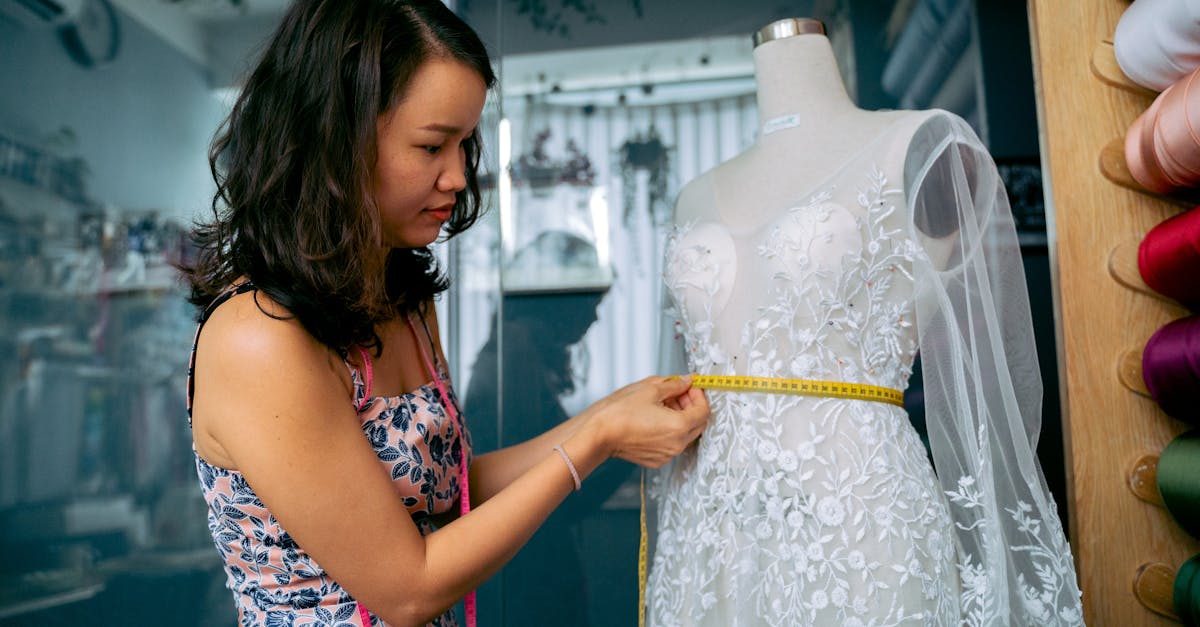
- Designer-specific sizing varies significantly. A Vera Wang size 10 fits differently than a Pronovias size 10. Always include exact measurements (bust, waist, hips, hollow-to-hem) in every listing.
Key Measurements to Include
- Bust – Measured at the fullest point
- Waist – Measured at the natural waistline (narrowest point)
- Hips – Measured at the fullest point, usually 7–9 inches below the waist
- Hollow-to-hem – Measured from the hollow of the throat straight down to the hem. This is the single most important measurement for brides because it determines if the length works.
Always measure the dress itself, not the size chart. If the gown has been altered, the labeled size is meaningless.
Preservation, Cleaning, and Storage
How you store and present your inventory directly impacts your profit margins. Proper care between purchase and sale can mean the difference between a $500 and $1,500 sale.
Professional Cleaning: When It’s Worth the Investment
Professional wedding dress cleaning costs $150–$300 depending on the gown’s complexity (heavy beading and lace cost more). This is one of the best ROI investments in flipping:
- A dress sourced for $200 that’s dirty or stained might sell for $400 as-is
- That same dress, professionally cleaned, can sell for $800–$1,200
- The $200 cleaning investment generated $400–$800 in additional profit
When to skip cleaning: If the total of your purchase price plus cleaning cost exceeds 60% of the expected resale value, the math doesn’t work. Also skip cleaning on gowns that are already in excellent condition-unnecessary spending.
Storage Best Practices
- Acid-free tissue paper – Stuff the bodice and layer between folds to prevent creasing and yellowing. Available at craft stores for $5–$10 per pack.
- Breathable garment bags – Use cotton or muslin garment bags, never plastic. Plastic traps humidity and accelerates yellowing. Breathable fabric bags cost $15–$25 each.
- Horizontal storage when possible – Hanging heavy gowns for extended periods stresses the shoulder seams and can distort the shape. If you have the space, store dresses flat in acid-free boxes.
- Climate control – Store in a cool, dry area away from direct sunlight. Basements (moisture risk) and attics (heat risk) are both poor choices.
- Limit handling – Oils from your hands transfer to white fabric. Wear clean cotton gloves when handling high-value gowns, or at minimum wash your hands thoroughly before touching the dress.
Photography Tips: Selling the Dream
Wedding dress photography can make or break your listing. Brides are shopping emotionally-they want to envision themselves in the gown. Flat-lay photos on a bed don’t inspire that feeling.
Use a Dress Form or Mannequin
This is the single highest-impact investment for bridal reselling. A quality dress form costs $80–$200 and transforms your photos. The dress has shape, movement, and dimension on a form. It looks like a real dress someone would wear, not a pile of fabric.
If you can’t invest in a form immediately, hang the dress on a padded hanger against a clean, light-colored wall. Stuff the bodice with tissue paper to give it shape.
Lighting for White Fabrics
White fabric is notoriously difficult to photograph. Here’s how to get it right:
- Natural daylight is king. Shoot near a large window during the golden hours (morning or late afternoon). Overcast days provide ideal diffused light.
- Avoid warm/yellowish artificial lighting. Incandescent bulbs cast a yellow tone that makes white fabric look cream or yellowed. Use daylight-balanced LED bulbs (5000K–6500K) if shooting indoors.
- Slightly overexpose. Bump exposure up by +0.3 to +0.7 stops to keep whites bright and clean. Check your phone camera’s manual exposure controls.
- Use a white or light gray backdrop. Dark backgrounds can fool your camera’s auto-exposure into blowing out the dress details.
Detail Shots That Convert
Include at least 8–12 photos per listing:
- Full front view on form/mannequin
- Full back view (backs are often the dress’s best feature-buttons, lace-up, low-back designs)
- Train spread out on a clean floor
- Bodice close-up showing beading, lace, or embroidery detail
- Label/tag photo with designer name and size
- Any flaws – Stains, tears, alterations, missing buttons. Transparency builds trust and prevents returns.
- Fabric texture close-up showing material quality
- Side profile showing silhouette shape
Best Platforms for Selling Wedding Dresses
Where you list dramatically affects your sell-through time and final price. Different platforms attract different buyers.
Stillwhite – The Specialist
Stillwhite is the largest online wedding dress marketplace, and for good reason. It’s purpose-built for this exact niche.
- Fee structure: One-time listing fee of approximately $20 per dress, plus 3.5% commission on sale. No monthly subscription required.
- Audience: Millions of brides actively shopping for pre-owned gowns. These are motivated buyers with purchase intent.
- Advantages: The audience is pre-qualified. Every visitor is there specifically to buy a wedding dress. Sell-through rates are higher than general marketplaces.
- Best for: Designer gowns priced $500+. The Stillwhite buyer expects quality and is willing to pay for it.
Nearly Newlywed – Consignment Model
Nearly Newlywed operates as a consignment platform. You ship them the dress, they photograph it, list it, and handle the sale.
- Fee structure: They take approximately 40–50% of the sale price.
- Advantages: Zero work after shipping the dress. Professional photography and listing optimization.
- Disadvantages: High commission eats into margins. Best for high-value gowns where even 50% of the sale price is a strong profit.
- Best for: Sellers who want passive income from bridal or have designer gowns where 50% still means $1,000+ profit.
Poshmark
Poshmark’s social selling model works surprisingly well for bridal.
- Fee structure: 20% commission on sales over $15.
- Advantages: Huge user base, social sharing drives visibility, simple shipping process.
- Disadvantages: Poshmark’s audience skews toward bargain hunters. You may face more lowball offers than on Stillwhite.
- Best for: Mid-range gowns ($300–$1,500 resale). Share to wedding-themed “Posh Parties” for targeted visibility.
eBay
eBay offers the largest overall audience and strong search visibility for bridal terms.
- Fee structure: Varies by category, typically 12–15% total fees. Run your numbers through the eBay fee calculator before listing to know your exact net profit.
- Advantages: Massive audience. International buyers. Auction format can drive prices up on rare/designer gowns.
- Disadvantages: Higher fees than Stillwhite. Buyer base isn’t bridal-specific, so conversion rates are lower.
- Best for: Vintage gowns, rare designer pieces, and auctions on highly sought-after dresses.
Facebook Wedding Resale Groups
Facebook has dozens of large, active wedding resale groups with tens of thousands of members each. Search for “wedding dress resale,” “bridal gown buy sell,” and similar terms.
- Fee structure: No platform fees (Facebook Marketplace has minimal fees if you use their checkout).
- Advantages: Zero or near-zero selling fees. Direct communication with buyers. Local pickup eliminates shipping hassles.
- Disadvantages: More time-intensive communication. Higher flake rate. No seller protections on direct transactions.
- Best for: Local sales, quick flips, and sellers comfortable with direct negotiation.
Multi-Platform Strategy
For maximum exposure and fastest sell-through, list on Stillwhite + one general marketplace (Poshmark or eBay) + Facebook groups simultaneously. Remove listings from other platforms once the dress sells. This approach typically cuts your average days-to-sell from 45 to under 25.
Bridal Accessories: The Overlooked Profit Center
Don’t ignore the accessories market. Bridal accessories offer lower per-item profit but move faster and require almost zero storage space.
Veils
- Sourcing cost: $10–$50 at thrift stores and estate sales
- Resale price: $60–$250 depending on length and embellishment
- Profit per unit: $50–$200
- Cathedral-length veils with lace trim command the highest prices. Simple fingertip veils are the fastest sellers. Custom or designer veils (Vera Wang, Marchesa) can sell for $300+.
Bridal Belts and Sashes
- Sourcing cost: $5–$30
- Resale price: $40–$150
- Crystal/rhinestone belts are the most popular. Vintage pearl sashes have a dedicated collector market. These ship in a padded envelope for under $5.
Headpieces and Hair Accessories
- Bridal tiaras, crystal hair combs, and floral crowns resale for $30–$200.
- Vintage headpieces from the 1940s–1960s have strong demand in the cottagecore/vintage bridal market.
Bridal Shoes
- Jimmy Choo Bridal – Resale $100–$300. Iconic brand recognition.
- Badgley Mischka – Resale $40–$120. High volume, consistent demand.
- Manolo Blahnik – Resale $150–$400. The “Sex and the City” effect endures.
- Condition is critical-check soles for wear. Shoes worn only at an indoor reception may be nearly new.
Jewelry Sets
Bridal jewelry sets (necklace + earrings, or full sets with bracelet) resale for $20–$150. Sourcing at estate sales and thrift stores for $5–$20 makes these excellent add-on items. Bundle with a dress listing for a higher total sale.
Seasonal Timing: When to Buy and When to Sell
Timing your inventory purchases and listings around the bridal cycle dramatically improves your results.
The Bridal Calendar
- November–February: Engagement season. Roughly 40% of engagements happen during the holidays and Valentine’s Day. Brides start shopping for dresses almost immediately.
- March–June: Peak dress shopping season. This is when demand (and resale prices) are highest. List your best inventory during this window.
- June–October: Wedding season. Post-wedding sellers flood the market with used gowns. This is your prime sourcing window-supply is high and sellers are motivated to clear the dress from their closet.
- October–November: Transitional period. Good for sourcing stragglers at deep discounts before engagement season ramps demand back up.
Actionable Timing Strategy
- Source aggressively July–November when post-wedding sellers want their gowns gone. Negotiate hard-many sellers just want the closet space.
- Clean, photograph, and prep inventory November–February so listings are polished and ready.
- List and promote heavily March–June when engagement-driven demand peaks.
- Maintain “evergreen” listings year-round on Stillwhite and eBay since brides shop at all times of year, but expect fastest movement in spring.
Sourcing Wedding Dresses: Where to Find Inventory
Consignment Shops and Bridal Consignment Stores
Dedicated bridal consignment shops are goldmines because they pre-screen for quality. Many rotate out inventory that hasn’t sold in 90–120 days at deep discounts (50–70% off their already reduced prices). Build relationships with shop owners-some will call you before putting clearance items on the floor.
General consignment shops (Goodwill, Salvation Army, local thrift stores) occasionally receive wedding dresses as donations. These are hit-or-miss but the sourcing cost is incredibly low ($20–$75). Check the formal wear section regularly.
Estate Sales
Estate sales are an underrated channel for bridal. When a household is liquidated, wedding dresses often sell for $25–$100 regardless of the original value. Estate sale companies want quick turnover and aren’t specialists in bridal pricing. Arrive early on the first day for best selection, or wait until the last day for half-price deals.
Post-Wedding Sellers (Facebook, Craigslist, Nextdoor)
Brides selling their own dresses 3–12 months after the wedding are your most consistent source. Search Facebook Marketplace, Craigslist, and Nextdoor for “wedding dress” regularly. Many of these sellers are motivated-they’ve already tried to sell on their own without success, or they simply want the dress gone. Offer 40–60% of the asking price and negotiate from there.
Key negotiation advantage: The seller has emotional attachment but no expertise in resale value. A dress she’s asking $500 for might resell for $1,200 on Stillwhite. Your knowledge of the market is your edge.
Bridal Shop Closures and Liquidations
When a bridal boutique closes, the remaining inventory must be sold-fast. These liquidation events are rare but enormously profitable. Dresses that retailed for $2,000–$5,000 may sell for $200–$800 in bulk.
How to find them:
- Set Google Alerts for “bridal shop closing” + your state/region
- Follow local business news
- Network with other resellers who may share leads
- Check auction sites like HiBid and AuctionZip for bridal inventory lots
A single bridal shop liquidation can generate $5,000–$20,000 in inventory at pennies on the dollar.
Online Liquidation Platforms
Sites like Liquidation.com and B-Stock occasionally list bridal inventory lots from retailers and overstock. These require careful evaluation-shipping costs on large lots can eat margins-but the per-dress cost can be remarkably low.
Shipping Wedding Dresses Safely
Shipping a $1,500 gown requires more care than tossing a t-shirt in a poly mailer. Damage during transit doesn’t just cost you a sale-it can result in a distraught bride leaving a devastating review.
Packaging Materials
- Oversized garment box: Use a large, sturdy box (at least 24" x 18" x 8"). Double-wall corrugated is ideal for heavy gowns with beading.
- Acid-free tissue paper: Layer between every fold. Stuff the bodice to maintain shape. This prevents creasing and protects delicate embellishments.
- Breathable garment bag inside the box: An extra layer of protection against moisture and dust during transit.
- Padding: Fill empty space with tissue paper or clean packing material. The dress should not shift inside the box.
Shipping Methods and Costs
- USPS Priority Mail Large Flat Rate Box: $22.45 as of early 2026. Works for lighter gowns (under 20 lbs) that can be carefully folded into the large flat rate dimensions. Good cost-effective option.
- UPS/FedEx Ground: Better for heavy gowns (beaded dresses can weigh 15–25 lbs). Expect $25–$55 depending on weight, dimensions, and distance.
- USPS Priority Mail (by weight): For medium-weight gowns that don’t fit flat rate. Typically $18–$40.
Insurance
Insurance is mandatory on high-value shipments. A $2,000 dress lost or damaged in transit with no insurance is a catastrophic loss.
- USPS includes $100 of insurance with Priority Mail. Add additional coverage through USPS or a third-party insurer like Shipsurance or Pirate Ship.
- For gowns valued over $1,000, consider requiring signature confirmation as well.
- Factor insurance cost ($3–$15 depending on declared value) into your pricing.
Shipping Cost Strategy
Most successful bridal resellers build shipping into the item price and offer “free shipping.” A $1,200 listing with free shipping converts better than a $1,150 listing + $50 shipping, even though the buyer pays the same total. Brides respond positively to the perceived value of free shipping.
Common Pitfalls to Avoid
1. Ignoring alterations. A gorgeous Vera Wang hemmed 6 inches for a 5’1" bride has a dramatically limited buyer pool. Always ask about alterations before purchasing.
2. Overpaying for David’s Bridal. The brand is recognizable but resale values are modest. Never pay more than $80–$100 for a David’s Bridal gown you’re planning to resell.
3. Skipping professional cleaning. Listing a stained dress and disclosing “stain on hem” crushes your resale price far more than the $200 cleaning would cost. When the math works, clean it.
4. Poor photography. This cannot be overstated. A $3,000 Monique Lhuillier photographed with a phone camera in a dimly lit room will sell for less than a $500 Maggie Sottero photographed professionally on a dress form in natural light.
5. Not disclosing flaws. Bridal buyers are detailed and emotional. An undisclosed stain or alteration will result in a return, a negative review, and potential platform penalties. Full transparency builds repeat customers and protects your seller reputation.
6. Storing in plastic. Plastic garment bags from dry cleaners are the enemy of white fabric. They trap moisture and off-gas chemicals that cause yellowing. Always switch to breathable fabric bags.
Scaling Your Bridal Reselling Business
Once you’ve completed 10–15 successful flips and understand the market, consider scaling:
- Specialize in 2–3 designer brands. Deep expertise in Vera Wang, Pronovias, and Hayley Paige (for example) makes you faster at evaluating deals and more authoritative in your listings.
- Build an Instagram presence. Post your dress inventory with styled photography. Brides actively search Instagram for wedding dresses. Use hashtags like #preownedweddingdress, #usedweddingdress, and brand-specific tags.
- Develop sourcing relationships. Bridal shop owners, estate sale companies, and other resellers can become consistent inventory pipelines once you’ve proven you’re a reliable buyer.
- Consider bridal consignment as a service. Offer to sell brides’ dresses on their behalf for a 30–40% commission. This eliminates your upfront capital risk entirely while maintaining strong per-transaction profit.
- Track your numbers religiously. Use the Underpriced app to monitor your cost basis, selling prices, fees, and net margins across every platform. The resellers who scale are the ones who know their numbers cold.
Related reading: Vintage clothing resale guide.
Frequently Asked Questions
How do I price a wedding dress for resale?
Research recent sold listings on Stillwhite, Poshmark (filter by “sold”), and eBay completed sales for the same designer, style number, and similar condition. Use the Underpriced app for quick comparable analysis. As a general rule, pre-owned wedding dresses sell for 40–65% of their original retail price in excellent condition. Gowns with alterations (especially shortened hems) should be priced 20–30% below comparable unaltered dresses.
Do I need a business license to sell wedding dresses?
Requirements vary by state and locality. In most jurisdictions, if you’re regularly buying and selling for profit (even part-time), you technically need a business license and may owe sales tax. Consult a local accountant or your state’s small business portal. Many resellers operate as sole proprietors with a simple business license, which costs $50–$200 annually in most states.
How do I ship a wedding dress without damaging it?
Use an oversized garment box (minimum 24" x 18" x 8"), layer acid-free tissue paper between every fold, stuff the bodice to maintain shape, and fill all empty space so the dress doesn’t shift. Always purchase shipping insurance proportional to the dress’s value. USPS Priority Mail Large Flat Rate works for lighter gowns, while UPS/FedEx Ground is better for heavy beaded dresses.
What tools help me evaluate wedding dress deals quickly?
Speed matters when a great deal pops up. The Underpriced app is built for exactly this-check recent sold comps instantly so you can evaluate profit potential before committing your capital. For eBay-specific deals, the eBay fee calculator shows your exact net after fees so there are no surprises. Additionally, bookmark Stillwhite’s search page and Poshmark’s sold filter for quick manual lookups when you need a second data point.
Final Thoughts
Wedding dress flipping sits at a unique intersection: high emotional value for buyers, consistent supply from post-wedding sellers, and relatively low competition compared to mainstream reseller categories. The barriers to entry-bridal sizing knowledge, preservation expertise, quality photography-are exactly what protect your margins once you’ve developed those skills.
Start with 2–3 dresses to learn the process. Invest in a dress form and good lighting setup. Master condition assessment and accurate measurements. Build sourcing relationships. And let the math do the rest-when your average profit per flip ranges from $300 to $1,500, it doesn’t take many transactions per month to build a genuinely meaningful income stream.
The brides-to-be are searching right now. Make sure your inventory is ready for them.
Related articles
vintage clothing flipping guide for formalwear sellers
Vintage clothing flips for $20-300 per piece. Master era dating (60s-90s), brand recognition (band tees, sportswear), condition grading, and sourcing at thrift stores and estate sales.
reselling on multiple platforms for niche apparel
Compare eBay, Poshmark, Mercari, Depop, Etsy, Facebook, and Shopify routing with inventory controls, tool choices, and double-sale prevention.
thrifting wealthy neighborhoods for designer bridal finds
Why thrift stores in wealthy neighborhoods have dramatically better inventory. Top affluent zip codes for thrifting, what wealthy donors give away, and strategies for finding designer items.
Tools that help with this topic
wedding dress sold comps on eBay
Build source-backed sold-comp research links for eBay Advanced Search, eBay Product Research, Mercari, and Poshmark, plus a 7-comp pricing worksheet.
bridal gown flip profit calculator
Calculate net profit, ROI, margin, break-even price, and target sale price after marketplace fees, shipping, reserves, and labor. Free calculator included.
optimize bridal gown listing titles
Build factual marketplace titles with source-checked limits, emoji cleanup, missing-field warnings, and crosslisting variants across six platforms.