Trading Cards Flipping Guide: Comps, Grading & Profit
By the Numbers
Store ratings checked Sep 27, 2026. How we count
Trading cards are not one resale market. A vintage baseball card, a modern Pokemon single, a Magic staple, and a low-numbered football parallel have different identity fields, buyers, condition language, grading economics, and exit routes. The dependable process is the same: identify the exact card, find matching sold evidence, grade its actual condition, calculate net proceeds, and choose the most liquid realistic exit.
If the inventory is Magic: The Gathering, identify the cards here, then use the where to sell Magic cards guide to compare buylists with marketplaces, check current venue terms, route bulk or collections, normalize quotes, and document custody.
Use this page as the cross-category decision hub. It will route you to the right specialist guide and show the evidence that must be recorded before you buy, grade, or list. It does not promise a universal margin, minimum card value, or grading premium because those claims break as soon as the card, grade, fee tier, or buyer pool changes.
Quick Decision Screen
| Question | Evidence required | Stop or downgrade when |
|---|---|---|
| What exact card is it? | Game or sport, year, set, card number, player or character, language, parallel, serial number, autograph, and variation | The listing depends on an unverified rarity, error, autograph, or first-edition claim |
| What does it sell for? | Recent sold records for the exact identity and comparable condition or grade | Only asking prices, different parallels, or different grades are available |
| What will you net? | Expected sale price minus platform fees, shipping, insurance, packaging, grading, taxes, and acquisition cost | Profit exists only at the highest sale or a perfect grade |
| How liquid is it? | Relevant sold count, sale dates, active competition, and buyer venue | A high guide price has little or no matching sold activity |
| Should it be graded? | Raw sold comps, exact-company grade comps, current service cost, realistic grade range, and cash-lockup tolerance | A lower plausible grade loses to selling raw |
| How should it exit? | Buyer fit for a single, team or player lot, playset, set, slab, sealed item, or bulk lot | Listing labor and shipping risk consume the expected spread |
Source Check for This Guide
The following official pages were checked on August 26, 2026. Fees, service availability, turnaround estimates, marketplace access, and condition rules can change, so open the source again before acting.
- eBay Product Research says sellers can research up to three years of sales data, including actual accepted-offer prices, sold ranges, shipping, and sell-through metrics. Use exact identifiers and condition filters rather than a broad card name.
- TCGplayer’s Card Conditioning Overview defines marketplace lanes from Near Mint through Damaged and explains that the number and severity of imperfections determine condition. It does not provide a Mint or Gem Mint marketplace condition.
- PSA’s trading-card service page showed Value services temporarily paused. Its Standard tier is listed at $59.99 per card with a $1,000 maximum insured value and an estimated 90-100 business days, and Priority at $79.99 with a $1,500 maximum and 70-80 business days; PSA says turnaround estimates and terms can change. PSA prices verified Oct 1, 2026 (PSA pricing).
- CGC Cards services and fees listed different value limits, fees, minimums, and estimated working days by tier. Match the card’s declared value and submission size to the current page instead of copying an old bulk fee.
Choose the Correct Card Lane
| Inventory lane | Identify before comping | Useful next guide | Common comp mistake |
|---|---|---|---|
| Baseball | Year, maker, set, card number, player, rookie designation, variation or error proof, and grade | Baseball card values guide | Comparing a reprint, different set, or unverified error |
| Basketball | Year, product line, card number, player, rookie, parallel, serial number, autograph, and grade | Basketball trading cards value guide | Mixing base cards with Prizm parallels or numbered variants |
| Football | Year, brand, set, card number, player, rookie, parallel, serial number, autograph, and grade | Football trading cards value guide | Treating every quarterback rookie or insert as the same card |
| NASCAR and racing | Year, manufacturer, set, driver, card number, promo or parallel, serial number, autograph or memorabilia, and grade | NASCAR trading cards value guide | Pricing a base card from a promo, scarce parallel, autograph, memorabilia card, or different grade |
| Pokemon | Set, collector number, language, print or edition, rarity, finish, promo status, and condition | Pokemon cards flipping guide | Comparing English and Japanese copies or different printings |
| Magic and other playable TCGs | Set code, collector number, language, finish, printing, legality or demand context, and TCGplayer condition | Magic grading worksheet | Using a different printing or Near Mint comp for a played card |
| Marvel non-sports cards | Year, publisher, product, card number, character, insert or parallel, serial number, and grade | Marvel trading cards value guide | Pricing a base card from a hologram, scarce insert, or top-grade sale |
| Star Wars cards | Year, publisher, product, set, card number, character, variant, serial number, and grade | Star Wars trading cards value guide | Mixing vintage Topps, modern parallels, Star Wars: Unlimited, or different grades |
| Mixed collections | Inventory every candidate card, isolate stars or chase cards, then route each item to its lane | Where to sell sports cards or where to sell Pokemon cards | Pricing the whole box from its best visible card |
Why Some Trading Card Flips Work
Some flips work because a seller prices a collection broadly while a buyer can identify individual cards precisely, or because a card is offered in the wrong venue, lot structure, or condition lane. That is an evidence advantage, not guaranteed arbitrage. The advantage disappears when the seller has already matched the exact variant, accounted for condition, and priced against recent sales.
The strongest candidates usually have three characteristics: exact identity is provable, multiple relevant buyers have completed recent purchases, and conservative net proceeds leave room after every cost. A large guide value without matching sales is not the same as liquidity. Likewise, opening sealed product is an entertainment decision unless the sealed resale value and downside are modeled separately; expected pulls should not be treated as owned inventory.
When the decision depends on grading fees, turnaround risk, population reports, or PSA/BGS/CGC submission rules, use the trading card grading and market analysis guide as the deeper workflow. This page is the broad flipping guide; that one is the grading math and pop-report layer.
If the stack is specifically NFL inventory, use the football trading cards value guide to separate quarterback rookies, parallels, graded candidates, team lots, and skips before you price the collection.
What to Look For
High-Value Categories
Sports Cards: Baseball, basketball, and football cards dominate the sports card market. Focus on rookie cards of star players, vintage cards from the 1950s-1970s, and modern parallels with low serial numbers. Key brands include Topps, Panini, Upper Deck, and Bowman. Basketball cards of players like Michael Jordan, LeBron James, and Luka Doncic command premium prices, while baseball collectors seek Mickey Mantle, Mike Trout, and Shohei Ohtani.
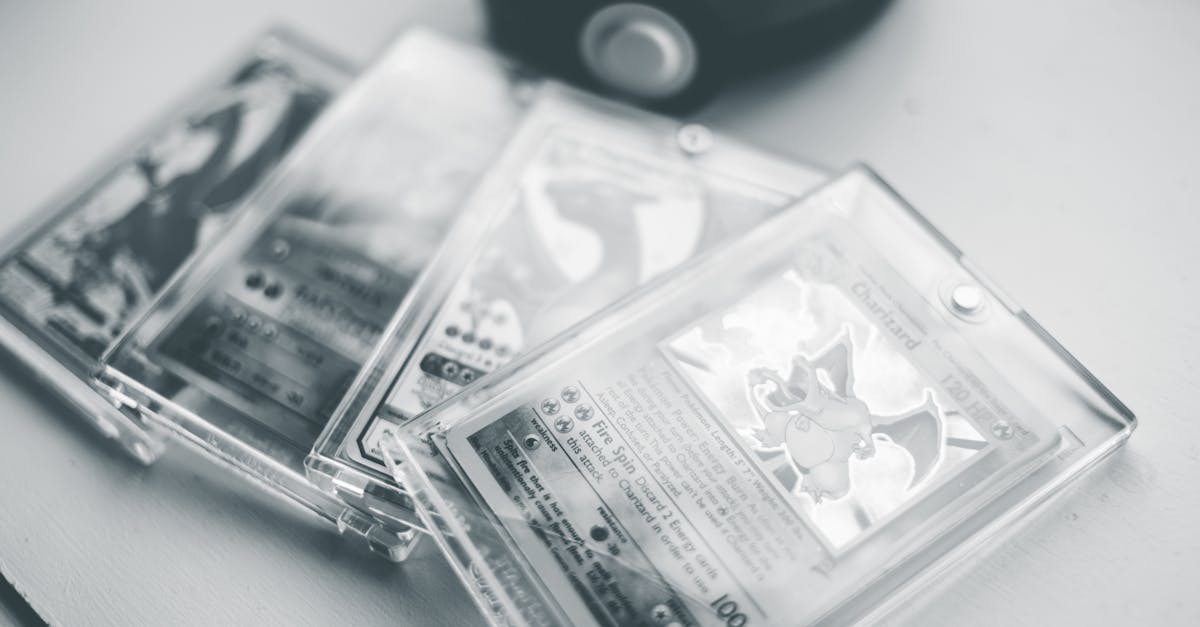
Pokemon Cards: The Pokemon TCG market has exploded beyond childhood collectors to serious investors. First Edition Base Set cards, especially Charizard, remain the holy grail. But modern chase cards from sets like Evolving Skies, Crown Zenith, and special art rares from Japanese sets also command impressive prices. Pay attention to card centering, as condition sensitivity is extreme in this market.
Magic: The Gathering: The original trading card game maintains a solid secondary market driven by both collectors and active players. Reserved List cards that will never be reprinted hold value exceptionally well. Power Nine cards like Black Lotus are worth tens of thousands, but even common Reserved List cards appreciate steadily. Commander format has also created demand for specific legendary creatures and powerful cards.
Other TCGs: Yu-Gi-Oh!, One Piece TCG, Disney Lorcana, and sports cards from emerging sports like UFC and soccer present opportunity. One Piece cards in particular have seen remarkable appreciation as the anime’s popularity grows.
Condition Assessment
Card condition is paramount in determining value. Learn to assess:
- Centering: Cards should have even borders on all sides. Off-center cards lose significant value
- Corners: Sharp corners are essential. Check for wear, dings, and rounding
- Edges: Look for whitening, chips, and damage along all four edges
- Surface: Scratches, print lines, indentations, and staining affect grades
- Overall eye appeal: Sometimes the whole is greater than the sum of its parts
Red Flags to Avoid
- Trimmed or altered cards attempting to hide damage
- Counterfeit cards, especially common in vintage and high-value Pokemon
- Resealed product marketed as factory sealed
- Heavily played cards marketed as near mint
- Cards removed from graded holders (“cracked cases”)
Sourcing Trading Cards
Best Places to Find Inventory
Estate Sales: Ask whether cards are present, inspect storage damage, and identify every high-value claim before pricing. Treat an unsorted box as unknown inventory rather than assuming age means rarity or condition.
Garage and Yard Sales: Ask whether cards are available even when none are displayed. Inspect enough of the box to understand era, product mix, condition, and whether the visible highlights are representative.
Thrift Stores: Mixed lots can appear in the collectibles or toy area. Do not buy from a sealed thrift bag based on one face card; price the visible evidence and assign little or no value to unknown bulk.
Facebook Marketplace and Craigslist: Saved searches for the relevant sport, game, set, or collection can surface local inventory. Meet safely, inspect in person, and avoid deposits or off-platform payment pressure.
Local Card Shows: While dealers know values, show attendees sometimes sell collections they’ve inherited or accumulated. Networking with other collectors can lead to private sales at fair prices.
Storage Unit Auctions: Treat visible cards as only one part of the unit’s liquidation math. Moisture, pests, incomplete access, and sorting time can erase the apparent upside.
Building Supplier Relationships
Consider connecting with:
- Parents looking to offload their children’s abandoned collections
- Estate sale companies who can alert you to upcoming sales with cards
- Retiring collectors willing to sell below market for convenience
- Local game stores that may sell you bulk lots or collections they’ve purchased
Pricing Strategies
Research Methods
Use the same repeatable comp worksheet for every category:
- Write the identity string first. Record the set or product, year, card number, subject, parallel or printing, language, serial number, autograph status, and grade or raw condition. Do not search only the player or character name.
- Pull exact sold evidence. In eBay Product Research, start with the exact string and use the relevant category, condition, format, and location filters. For TCGs, use TCGplayer only after matching the exact printing and its condition lane.
- Exclude false matches. Remove lots when pricing a single, raw cards when pricing slabs, different grading companies or grades, reprints, altered cards, and different languages or parallels.
- Record the range and dates. Keep at least the sale date, actual sold price, shipping, condition or grade, and why each record is comparable. A median is useful only when the underlying matches are truly similar.
- Measure buyer depth. Note how many relevant sales occurred and how recently. A wide price range or sparse history should lower the maximum buy price.
- Calculate net proceeds. Subtract expected marketplace fees, promoted-listing charges if used, outbound shipping, insurance, packaging, grading, and returns allowance. Then subtract acquisition cost to get expected profit.
Use this worksheet rather than transferring a price from a guide:
| Field | Your evidence |
|---|---|
| Exact identity and proof | ___ |
| Raw condition or exact slab company and grade | ___ |
| Comparable sold records and dates | ___ |
| Conservative expected sale price | ___ |
| Platform and payment costs | ___ |
| Shipping, insurance, and packaging | ___ |
| Grading and round-trip submission cost, if any | ___ |
| Acquisition cost | ___ |
| Expected net profit | sale price minus all costs = ___ |
| Downside result | lower plausible sale or grade minus all costs = ___ |
Grading Considerations
Professional grading can authenticate and standardize condition, but there is no universal raw-value threshold or grade multiplier. Run a downside table for the exact card and grading company:
| Exit | Comparable evidence | Net calculation | Decision use |
|---|---|---|---|
| Sell raw now | Matching raw-condition sales | raw sale minus selling and shipping costs | Baseline that grading must beat |
| Lower plausible grade | Exact company and grade sales | graded sale minus selling, shipping, insurance, and all submission costs | Downside case, not an afterthought |
| Expected grade | Exact company and grade sales | same full cost stack | Working case |
| Highest plausible grade | Exact company and grade sales | same full cost stack | Upside only; never the sole reason to buy |
Grade only when the expected case and an acceptable downside still beat the raw exit by enough to justify delay, damage or loss exposure, price movement, and administrative work. Check the current PSA or CGC service page on submission day. Then use the grading ROI calculator to keep raw, lower-grade, and expected-grade outcomes separate.
Before assigning a raw TCG condition, compare corners, edges, surface, structure, playability, and alterations against TCGplayer’s official condition overview. For sports cards and other marketplaces, photograph every defect and use the venue’s current condition vocabulary rather than silently translating “looks clean” into Near Mint.
Value-Adding Strategies
Improve buyer clarity and reduce avoidable returns by:
- Organizing bulk lots into team sets or player lots
- Piecing out complete sets to maximize individual card values
- Grading only when exact-company downside math beats the raw exit
- Photographing cards with proper lighting to showcase condition
- Providing detailed descriptions of any flaws
Best Selling Platforms
eBay
eBay provides broad cross-category reach and detailed research filters. Choose auction only when comparable auctions show enough bidder depth; scarce does not automatically mean liquid. Fixed price with offers can be safer when the comp range is narrow or the likely buyer pool is small. Photograph front, back, corners, edges, serial numbering, autograph, and any defects, then ship in rigid protection.
TCGPlayer
For supported TCG inventory, TCGplayer offers catalog-based listings and standardized condition lanes. Verify the current fee schedule and seller requirements, then use the exact printing, language, finish, and official condition definition. Photo listings are especially useful when a defect, alteration, or high value makes a catalog-only description insufficient.
COMC (Check Out My Cards)
COMC can handle storage, listing, and fulfillment for eligible cards. Compare its current intake, processing, storage, cash-out, and sale fees with the labor it replaces before sending a large batch.
Facebook Groups
Dedicated buy/sell/trade groups can match specialized inventory with informed buyers. Confirm group rules, payment protection, references, and shipping expectations; “no marketplace fee” can shift more fraud and dispute risk to the seller.
Local Card Shops
Some local card shops buy collections outright or offer consignment. Compare the shop’s cash offer with conservative direct-sale net proceeds and the hours required to sort, list, ship, and service returns. A lower cash offer can be rational when it buys speed and certainty.
Shipping Tips for Trading Cards
Proper shipping protects your investment and reputation.
Packing Best Practices
- Always use penny sleeves: The card goes in a penny sleeve first to protect the surface
- Top loaders or card savers: Insert the sleeved card into a rigid top loader, or use semi-rigid card savers for grading submissions
- Team bags: Seal the top loader in a team bag to prevent moisture and movement
- Choose packaging from the risk: A marketplace letter program may fit eligible low-value singles; use tracked rigid packaging when value, thickness, multiple cards, or buyer expectations require it. Check the current marketplace and carrier rules before buying postage
- Do not bend stickers: Ironically, writing “Do Not Bend” does nothing. Proper packing prevents bending
- Prevent movement: Keep the sleeved card from sliding out, but never tape directly across the card or exposed holder opening
Shipping Carriers
- Compare the marketplace’s current letter-card option, USPS Ground Advantage or Priority Mail, and UPS or FedEx services using the packed dimensions, value, tracking, and signature needs
- Do not assume a service includes enough insurance for the sale; verify the current limit and exclusions before purchase
- Keep the acceptance scan, tracking record, listing photos, and packing photos for high-value shipments
Insurance Considerations
- Set insurance and signature rules from the card’s value, marketplace protection requirements, carrier terms, and your own loss tolerance
- Photograph cards and packing before sealing for dispute protection
- For unusually valuable cards, compare specialized collectibles insurance and chain-of-custody options before listing
Frequently Asked Questions
How do you find accurate sold comps for sports, Pokemon, or Magic cards?
Write the full identity first: sport or game, year, set, card number, subject, language, printing, parallel, serial number, autograph, and condition or exact slab grade. Use eBay Product Research or the relevant TCG catalog, then remove lots, reprints, different parallels, different languages, raw cards, and different grades. Record the sale dates, prices, shipping, and why each result is comparable.
Should I buy sealed product or single cards for flipping?
Treat them as separate models. A single can be identified, condition-graded, and comped before purchase. Sealed product has a sealed-market value, while opening it converts that known asset into a random assortment with sorting and selling costs. Buy sealed inventory only when the conservative sealed exit works; do not justify the purchase with an unowned chase-card outcome.
How many sold comps are enough?
There is no magic count. Use enough exact matches to show a repeatable range across recent dates. Ten weak matches are worse than three exact ones. When only one or two comparable sales exist, record the evidence as sparse, widen the downside, lower the buy price, and avoid an auction exit that assumes several bidders will appear.
When is a trading card worth grading?
Grade only when exact-company sold comps show that the expected grade and an acceptable lower-grade outcome beat selling raw after every submission, selling, shipping, insurance, and holding-time cost. There is no universal raw-value threshold or grade multiplier. Recheck the grading company service page on submission day because fees, value limits, service availability, and estimated turnaround can change.
Conclusion
Trading-card resale is strongest when it is treated as evidence work, not a price-guide shortcut. Identify the exact card, use matching sold records, describe condition conservatively, model every cost, and compare the raw exit with realistic grading outcomes. If identity, authenticity, buyer depth, or downside cannot be established, the disciplined decision is to lower the offer or pass.
Start with one lane and keep dated records. A repeatable comp worksheet will outlast a hot-card list, and a conservative exit plan is more useful than a headline margin that ignores fees, grading misses, and hold time.
Helpful Tools
Ready to start analyzing trading card deals? Use these tools to ensure you’re making profitable buying decisions:
- Grading ROI Calculator - Compare the raw exit with exact-company grade outcomes and all-in submission costs
- Profit Calculator - Calculate expected net profit on a single card or allocated collection buy
- eBay Sold Link Generator - Build a tighter sold-search query from the card’s exact identifiers
- eBay Fee Calculator - Estimate what remains after current marketplace and payment costs
Related Collectibles Guides:
- NASCAR Trading Cards Value Guide - Separate Maxx promos, 1990s base cards, and modern parallels before comping or grading
- Marvel Trading Cards Value Guide - Identify Marvel sets and variants, build exact comps, and route cards to raw, grading, or lot exits
- Star Wars Trading Cards Value Guide - Separate vintage Topps, modern non-sports, and Star Wars: Unlimited cards before comping
- Coins & Numismatics Flipping Guide - A knowledge-based collectibles niche with built-in precious metal floor values, a natural expansion for card collectors
- Sports Memorabilia Flipping Guide - Use this broader proof path when the item is an autograph, jersey, ball, program, or game-used piece rather than a card-only comp
Related articles
Pokemon cards flipping guide for graded and raw cards
Which Pokémon cards to pull from a bulk box, how condition and PSA grading change the price, where to sell, and what bulk lots sold for per card on eBay.
Marvel trading cards value and grading guide
Value Marvel cards by exact set, card number, variant, condition, sold comps, and grading math before choosing a single, lot, or slab exit.
PriceCharting alternatives for multi-category card pricing
Compare the best PriceCharting alternatives for 2026. Learn which tools work better for resellers outside video games and cards, and how to choose the right pricing workflow.
trading card grading and market analysis workflow
Use current PSA, BGS, and CGC service checks, population reports, sold comps, and a grade/no-grade worksheet before submitting trading cards.
Tools that help with this topic
grading ROI calculator for trading cards
Shortlist PSA, BGS, SGC, or CGC by live tier constraints, then compare exact graded sold comps with the raw-card exit and all-in grading cost.
condition grade impact calculator for trading cards
Estimate resale value by condition using sold comps, defects, fees, and repair costs. Compare repair ROI and net payout before pricing.
trading card sold comps on eBay
Build source-backed sold-comp research links for eBay Advanced Search, eBay Product Research, Mercari, and Poshmark, plus a 7-comp pricing worksheet.