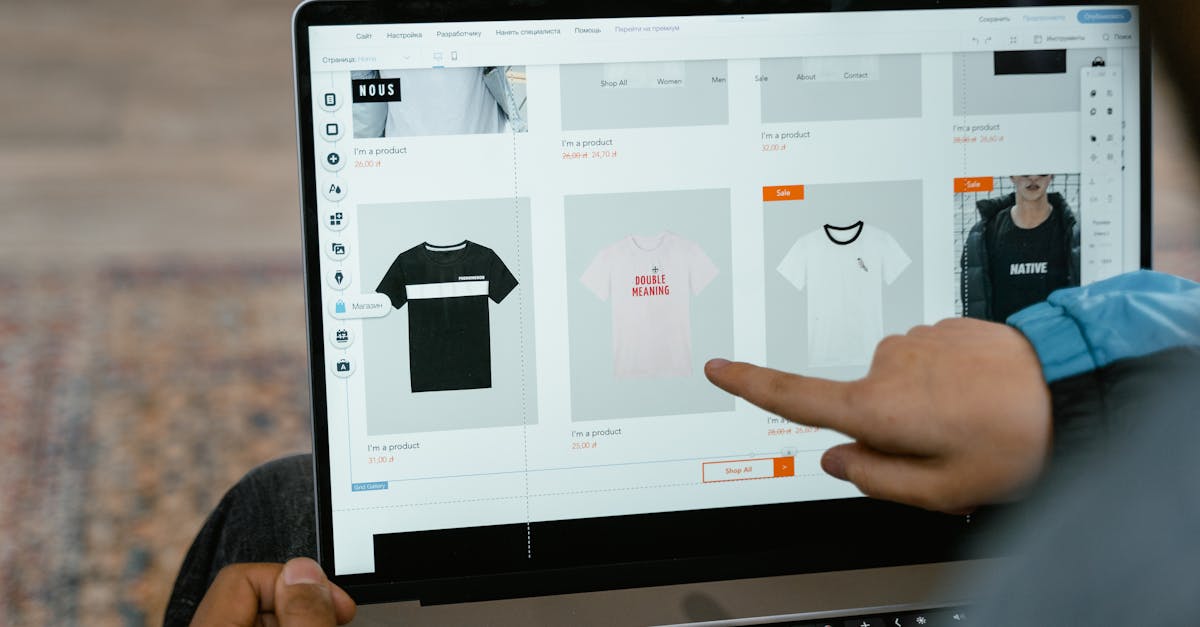
Online arbitrage (OA) means researching and buying inventory through retailer websites for resale. Unlike in-store retail arbitrage, you cannot inspect the exact unit before checkout, and orders can be limited or cancelled under retailer terms. The workflow therefore depends on document retention, restriction checks, conservative condition assumptions, and a buy ceiling—not on the size of a displayed markdown.
This guide shows how to research possible inventory, verify whether a purchase is permitted and documentable, calculate a conservative buy ceiling, and quarantine arrivals for inspection. Clearance, coupons, and cashback are inputs only after those controls pass.
What Is Online Arbitrage?
Online arbitrage is the practice of purchasing products from online retailers at discounted prices and reselling them on platforms like eBay, Amazon, or Poshmark for a profit. The “arbitrage” comes from exploiting price differences between where you buy and where you sell.
For example, you might find a popular board game on clearance at Target.com for $12 and resell it on eBay for $35. After fees, shipping, and your initial cost, you pocket the difference as profit.
Why Online Arbitrage Works in 2026
Several factors make online arbitrage particularly viable this year:
- Retailer inventory cycles: Major retailers constantly rotate stock, creating clearance opportunities
- Price variation: The same product can have vastly different prices across platforms
- Deal stacking: Combining coupons, cashback, and promotional offers amplifies margins
- Data tools: Sophisticated software helps identify profitable opportunities quickly
- Low barrier to entry: Start with minimal capital and scale as you learn
Four Gates Before an Online Arbitrage Order
Run these gates in order. A high projected ROI does not override a failed policy, authenticity, safety, or documentation gate.
Gate 1: Retailer terms, quantity limits, and promotion eligibility
Open the retailer’s current terms during research and save the URL and check date. Target’s current terms reserve the right to limit quantities or prohibit purchases to resellers, and its Circle terms address resale purchases. Walmart’s current terms likewise reserve quantity limits and the right to prohibit sales to dealers or resellers. These are constraints, not sourcing tactics. Never evade a limit with duplicate accounts, identities, addresses, or payment methods, and never count a coupon, loyalty reward, cashback award, or shipping benefit until its terms allow the intended purchase.
Record: retailer; product URL/SKU; terms URL; check date; displayed limit; promotion restrictions; expected cancellation risk; and whether the order is still acceptable without delayed rewards.
Gate 2: Marketplace eligibility and authenticity records
Before buying, confirm that your seller account can list the exact product, brand, category, condition, and fulfillment method. Marketplace approval today is not a promise that documentation will never be requested. Keep the unedited order confirmation, itemized receipt or invoice, payment record, shipping confirmation, packing slip, serial/lot photos, and supplier contact details together under the SKU. A retail receipt may not satisfy every marketplace or brand-authenticity request, so treat missing documentation as a stop signal—not a problem to solve after purchasing.
For Amazon inventory, review the restriction and condition guidance shown in Seller Central for your own account and marketplace. Amazon’s public condition-guideline overview reinforces accurate inspection and condition disclosure; eligibility and documentation requirements can be product- and account-specific.
Gate 3: Recall and resale-safety screen
Search the exact model, UPC, and product family in the CPSC recall database before ordering and again before listing. The CPSC Reseller’s Guide states that federal law prohibits selling products subject to a Commission-ordered recall or a voluntary recall conducted with the agency. Record the search terms and date; do not rely on memory or a generic brand search.
Gate 4: Full buy ceiling
Use a conservative sold comp and subtract every expected outflow and your target profit:
maximum buy cost = conservative sale price - outbound shipping - platform/payment fees - inbound shipping - sales tax - prep/packaging - return allowance - target profit
Worked example (replace with your own current numbers): conservative sale price $78; outbound shipping $9; platform/payment fees $12; inbound shipping $4; sales tax $3; prep/packaging $2; return allowance $6; target profit $18. Maximum buy cost = $78 - $9 - $12 - $4 - $3 - $2 - $6 - $18 = $24. A displayed checkout total above $24 fails even if cashback is pending. Treat card rewards or portal cashback as zero until the transaction qualifies and the credit posts; add verified credits later in bookkeeping.
Online Arbitrage Research Log
| Field | What to retain |
|---|---|
| Identity | Retailer SKU, UPC, exact model/variant, quantity |
| Terms | Retailer terms URL and date checked; limit/promotion notes |
| Marketplace gate | Account/category/brand/condition eligibility checked, date, result |
| Documents | Order confirmation, itemized receipt/invoice, payment and shipping records |
| Safety | Recall search terms, result, and date |
| Economics | Sold-comp set/date, all-in buy ceiling, actual checkout total |
| Arrival QA | Quantity, seals, damage, serial/lot, condition photos |
| Decision | Buy/pass, reason, reviewer, and next policy-review date |
This record is the operational difference between OA and in-store sourcing: the online workflow exchanges physical pre-purchase inspection for stronger documentation and a stricter arrival quarantine. Do not list units until they pass arrival inspection.
Clearance Hunting: A Research Input, Not the Decision
Clearance sections are gold mines for online arbitrage. Retailers need to move old inventory to make room for new products, creating opportunities for savvy resellers who know where to look.
Target Clearance Deals
Target’s clearance pages can surface research candidates, but the current terms and the product economics decide whether an order is usable.
Navigate the Hidden Clearance: Target doesn’t always prominently display their best deals. Use the URL filter target.com/c/clearance/-/N-5q0ga and sort by “price low to high” or “% off” to find the deepest discounts.
Circle Offers Stack: Target Circle (their free loyalty program) frequently offers additional percentage-off deals that stack with clearance prices. A 20% Circle offer on top of 50% clearance pricing creates excellent margins.
Timing Claims Need Verification: Retail markdown schedules change. Observe and timestamp prices yourself rather than relying on an unpublished weekly cadence.
Category Focus: Toys, home goods, and seasonal items tend to offer the best arbitrage opportunities at Target. Electronics are competitive but can work during model transitions.
Decision Example: If a clearance item has a $28 checkout total, compare that number with the all-in buy ceiling from your dated sold comps. Do not count an additional loyalty offer unless its current terms permit the purchase and the offer applies at checkout.
Walmart Online Clearance
Walmart.com has become increasingly competitive for online arbitrage, but opportunities still abound:
Rollback vs. Clearance: Walmart distinguishes between “Rollback” (temporary price reductions) and “Clearance” (permanent markdowns). Focus on clearance items denoted by yellow tags with “CLEARANCE” text-these won’t be restocked.
Store-Specific Inventory: Walmart’s website shows different availability by location. Use the “pickup today” filter while changing zip codes to find deals available only in certain regions.
Membership Benefits: Check the current membership terms, price, shipping exclusions, and resale restrictions. Allocate any membership cost to orders before claiming that a benefit improves margin.
Hidden Gem Categories: Walmart excels for arbitrage in automotive, sporting goods, and outdoor living. These categories see less competition from casual resellers.
Decision Example: For a blender, identify the exact model and included parts, clear the recall and marketplace gates, and compare the checkout total with sold comps for the same configuration. Similar-looking models are not interchangeable evidence.
Amazon Warehouse and Outlet Deals
Yes, you can actually arbitrage Amazon to sell back on Amazon (through different channels) or on eBay:
Amazon Warehouse: These are open-box and returned items sold at discounts. Items in “Like New” or “Very Good” condition can often be resold at full price on eBay, where buyers have different expectations.
Amazon Outlet: This dedicated clearance section features overstock from brands. Navigate to amazon.com/outlet for deals up to 50% off retail.
Subscribe & Save Stacking: Some items on Subscribe & Save offer 15% discounts + coupons. While margins are thinner, this works for high-velocity items.
Lightning Deal Strategy: Monitor daily Lightning Deals for items with strong resale demand. Speed matters here-deals sell out within hours.
Coupon Stacking: Amplify Your Margins
Coupon stacking is the practice of combining multiple discounts on a single purchase. When done correctly, it transforms marginal deals into highly profitable ones. Use the online arbitrage discount stacking calculator to verify the effective buy cost after every eligible discount.
Understanding Stacking Rules
Most retailers allow combining:
- Store coupons (like Target Circle offers)
- Manufacturer coupons
- Credit card rewards/offers
- Cashback portal percentages
- Gift card discounts (purchased at a discount)
The key is understanding what each retailer permits. Target is famously stack-friendly, while some retailers restrict combinations.
Practical Stacking Example
Let’s walk through a real stacking scenario:
Base Item: Oral-B electric toothbrush, regular price $99.99
- Sale price: $69.99 (30% off)
- Target Circle offer: Additional 20% off → $55.99
- Manufacturer coupon: $10 off Oral-B products → $45.99
- RedCard discount: 5% off → $43.69
- Cashback (Rakuten): 2% back → $42.82 effective cost
- Discounted gift card: Paid with gift cards bought at 10% off → $38.54 effective cost
That’s a 61.5% total discount on an item that retails for $99.99 and sells on eBay for $75-85. Your profit margin just went from breakeven to excellent.
Where to Find Coupons
Manufacturer Websites: Many brands offer printable or digital coupons directly on their sites.
Coupon Databases: Sites like Coupons.com, RetailMeNot, and Honey aggregate available codes.
Browser Extensions: Install Honey, Capital One Shopping, or Rakuten’s extension to automatically find and apply codes.
Rebate Apps: Ibotta and Fetch Rewards offer cash back on specific products-these stack with everything else.
Sunday Newspaper Inserts: Old school but still valuable. P&G, Unilever, and other major brands distribute high-value coupons weekly.
Cashback Sites: Get Paid to Shop
Cashback portals are essential for online arbitrage. These sites pay you a percentage of your purchase for clicking through their links before buying.
Top Cashback Platforms for 2026
Rakuten (formerly Ebates): The largest cashback site with partnerships at 3,500+ stores. Rates vary from 1-15% depending on the retailer and promotional periods. Quarterly bonus payouts via check or PayPal.
TopCashback: Often has higher rates than Rakuten for the same stores. Their “elevated” rates for new members are particularly aggressive.
BeFrugal: Solid rates plus a price adjustment policy if you find a higher rate elsewhere within 30 days.
Ibotta: Started as a groceries app but now works at major online retailers. Unique product-specific bonuses stack with site-wide cashback.
Credit Card Portals: Don’t overlook Amex Offers, Chase Offers, and similar credit card reward programs. These stack with third-party cashback.
Maximizing Cashback Strategy
Compare Before Clicking: Always check multiple cashback sites before making a purchase. Rates vary significantly, and promotional elevations happen frequently.
Stack Browser Extensions: Run both Rakuten and Capital One Shopping extensions. They’ll alert you when cashback is available.
Time Purchases Around Elevated Rates: Cashback sites regularly run double or triple cash back promotions, especially around holidays. For non-urgent purchases, wait for elevated rates.
Track Everything: Cashback claims fail occasionally. Screenshot your purchases and track pending cash back to dispute missing amounts.
Bookkeeping Rule: Reconcile cashback from the posted transaction record. Do not project a “typical” rate across retailers, because exclusions, returns, caps, tracking failures, and resale restrictions can change the amount to zero.
Deal-Finding Tools: Work Smarter, Not Harder
Professional online arbitrage sellers use specialized tools to identify opportunities faster than manual searching allows.
Keepa: The Amazon Price Tracker
Keepa is arguably the most essential tool for Amazon-focused online arbitrage. This browser extension and website tracks Amazon price history, allowing you to:
Identify Pricing Patterns: See how prices fluctuate over time. A product currently at $40 might regularly drop to $25-you’ll know to wait.
Set Price Alerts: Get notified when items drop below your target buy price. Set alerts for products on your research list.
Analyze Sales Rank History: Sales rank indicates how quickly items sell. Keepa’s historical rank data helps you avoid slow-moving inventory.
Track Stock Availability: See when items go in and out of stock. Low stock often precedes price increases.
Practical Use: Before buying any item for Amazon resale, check its Keepa chart. Look for stable or improving sales rank (lower is better) and verify you’re buying at or below typical low prices.
CamelCamelCamel: Free Price Tracking
CamelCamelCamel offers similar price tracking to Keepa but is completely free. It’s an excellent starting point for beginners:
Browser Extension: The “Camelizer” extension adds price history charts directly to Amazon product pages.
Price Drop Alerts: Create a free account to set unlimited price drop notifications via email.
Historical Lowest Price: Instantly see if the current price is a deal compared to historical data.
Limitations: CamelCamelCamel doesn’t track sales rank history and updates less frequently than Keepa’s premium version. Most serious resellers use both tools.
Additional OA Tools
RevSeller: A Chrome extension that adds profit calculations directly on Amazon pages. Input your costs and see projected ROI instantly.
Third-Party Sourcing Tools: Before using any scanner, confirm that its access method and your intended use comply with current retailer and marketplace terms. Evaluate current pricing on the provider’s site and include the subscription cost in your workflow economics.
BrickSeek: Originally for retail arbitrage, BrickSeek also shows online inventory availability and pricing across retailers.
Deal Aggregators: Sites like Slickdeals, Brad’s Deals, and DealNews crowdsource deals. Set up alerts for categories you source.
Building Your Online Arbitrage Workflow
Success in online arbitrage requires systematic processes. Here’s a proven daily workflow:
Morning Routine (30-45 minutes)
- Check email alerts: Review Keepa, CamelCamelCamel, and deal site notifications
- Scan clearance pages: Quick run through Target, Walmart, and Amazon Outlet
- Process cashback: Review any pending cashback and file disputes for missing amounts
- Check inventory status: Ensure yesterday’s orders processed without cancellations
Research Sessions (1-2 hours)
- Category deep dives: Systematically work through product categories you know well
- Tool scanning: Run any paid tools like Tactical Arbitrage
- Competitor research: Check what successful resellers are listing-work backward to find sources
- New product research: Identify upcoming releases that may go on clearance after initial hype
Order Processing
- Stack maximally: Before checkout, ensure you’ve applied all possible discounts and clicked through cashback
- Shipping optimization: Consolidate orders when possible to reduce per-item shipping costs
- Document everything: Screenshot confirmations, track order numbers, log expected cashback
- Quality control: Inspect items on arrival before listing
Common Online Arbitrage Mistakes to Avoid
Learning from others’ mistakes accelerates your success:
Ignoring All-In Costs
Your profit calculation must include:
- Purchase price
- Shipping to you
- Packaging materials
- Shipping to buyer (or FBA fees)
- Platform selling fees (typically 10-15%)
- Return allowance (budget 5-10% of sales)
- PayPal/payment processing fees
Many beginners only consider purchase price vs. selling price and wonder why they’re not making money.
Over-Relying on Single Sources
Building your business on one retailer or deal type is risky. Diversify across:
- Multiple retailers
- Various product categories
- Different selling platforms
- Several deal types (clearance, coupons, seasonal)
Neglecting Repricing and Velocity
A great deal doesn’t matter if the product takes six months to sell. Use tools to verify items have healthy sales velocity before buying. Tie up capital in slow-moving inventory, and you’ve wasted opportunity cost.
Violating Platform Terms
Amazon’s restrictions on certain brand and category sales tighten regularly. Understand gating requirements and brand restrictions before purchasing inventory you can’t actually list.
Scaling Your Online Arbitrage Business
Once you’ve mastered the basics, these strategies help scale:
Virtual Assistants for Sourcing
Train VAs (often hired through Upwork or OnlineJobs.ph) to handle initial deal screening. Provide them with your criteria-minimum ROI, acceptable categories, velocity requirements-and review their findings.
Inventory Management Software
Tools like InventoryLab, Sellerboard, or Sellbrite become essential at scale. They track costs, calculate true profitability, and help with tax preparation.
Prep Center Partnerships
As volume grows, consider routing inventory directly to prep centers rather than your home. They receive, inspect, label, and ship to FBA, allowing you to source more without handling every item.
Capital Optimization
Successful OA sellers use credit card rewards strategically, floating inventory costs through billing cycles while earning cashback and points. A solid business credit card setup can add 2-5% to your margins.
Getting Started: Your First Week Action Plan
Ready to launch your online arbitrage journey? Here’s your week-one checklist:
Day 1-2: Setup
- Create accounts at major retailers (Target, Walmart, Amazon)
- Join Target Circle and create Walmart+ trial
- Sign up for Rakuten and one other cashback site
- Install Keepa and CamelCamelCamel browser extensions
Day 3-4: Research
- Spend 2 hours exploring clearance sections at each retailer
- Practice checking items against eBay sold listings
- Identify 3-5 product categories that interest you
- Set up deal alerts on Slickdeals for those categories
Day 5-7: Action
- Source and purchase your first 5-10 items
- Document every cost meticulously
- List items on your chosen platform
- Make your first sales and analyze real versus projected profit
Conclusion
Online arbitrage in 2026 offers tremendous opportunity for those willing to learn the systems and put in the work. By mastering clearance hunting at major retailers, stacking coupons and cashback strategically, and using deal-finding tools like Keepa and CamelCamelCamel, you can build a profitable reselling operation from anywhere with an internet connection.
Start small, track everything, and systematically improve your processes. The resellers who succeed long-term treat online arbitrage as a business-not a hobby-implementing workflows, using tools, and always calculating true profitability.
Ready to analyze the deals you find? Underpriced helps you instantly evaluate any product’s resale potential, taking the guesswork out of sourcing decisions.
Looking for complementary sourcing strategies? Check out our complete guide to retail arbitrage to diversify your inventory sources beyond online deals.