Kitchen Appliance Reselling: Model, Safety & Shipping Guide
By the Numbers
Store ratings checked Sep 27, 2026. How we count
Kitchen appliance flipping represents one of the most accessible and consistent niches in reselling. Unlike trendy collectibles with volatile markets, kitchen appliances fill ongoing practical needs-people always need blenders, stand mixers, and coffee makers. This guide covers everything you need to know to profit from kitchen appliances, from identifying premium brands to testing used equipment and shipping safely.
The Buy Decision Is Model-Specific, Not Brand-Specific
A brand name is only a lead. The buy decision comes from the exact model, serial or date code, recall status, included parts, observed condition, and recent comparable sales. Do not use a category-wide margin or resale-price promise: two appliances with the same logo can have different motors, bowls, attachments, safety histories, and shipping economics.
| Gate | Record before buying | Pass condition |
|---|---|---|
| Identity | Brand, complete model number, serial/date code, voltage, capacity | Exact configuration is identifiable |
| Safety | CPSC recall search terms and date checked | No unresolved recall; stop if identity is incomplete |
| Function | Category test matrix below | Every advertised function passes without smell, sparking, leaks, or abnormal noise |
| Completeness | Bowl, lid, blade, pusher, carafe, cord, guards, manuals | Missing parts are priced into the buy ceiling and disclosed |
| Demand | Dated sold comps for the same model and condition | Enough comparable sales exist to estimate a conservative price |
| Fulfillment | Packed dimensions, weight, supplies, insurance, local option | Shipping does not erase the target profit |
Why Kitchen Appliances Are Exceptionally Profitable
Kitchen appliances offer unique advantages for resellers that create reliable profit opportunities.
Constant Demand: Unlike seasonal or trendy items, people need kitchen equipment year-round. Marriages, home purchases, kitchen renovations, and appliance failures drive continuous demand regardless of economic conditions.
Brand Premium Power: Premium brands like KitchenAid, Vitamix, and Breville command significant price premiums even used. Buyers trust these names and willingly pay more for proven quality over unknown alternatives.
Thrift Store Ignorance: Most thrift store pricing ignores brand distinctions. A $600 Vitamix might be priced at $25 alongside cheap Walmart blenders. This knowledge gap creates your margin.
Durability Creates Resale: Quality kitchen appliances last decades. A 20-year-old KitchenAid stand mixer functions identically to a new one. Longevity makes used purchases appealing to budget-conscious consumers.
Gift Surplus Market: Wedding registries generate unwanted duplicates. Returns, regifting, and barely-used appliances flood the secondary market at substantial discounts from retail.
Discontinued Model Value: Specific colors, attachments, or models get discontinued while demand persists. Collectors and completionists pay premiums for exact matches.
What to Look For: High-Value Kitchen Appliances
Brands That Consistently Resell
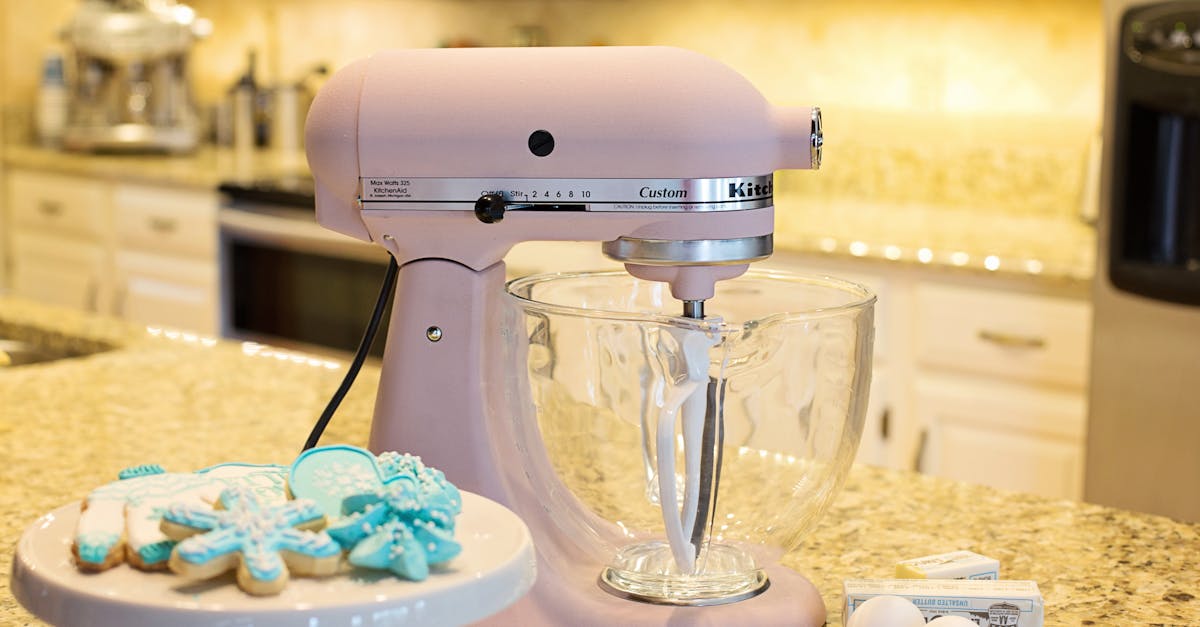
KitchenAid Stand Mixers: The holy grail of kitchen appliance flipping. Bowl-lift models (Professional, Pro Line) command $200-$400 used. Even basic Artisan models resell for $150-$250. Rare colors and limited editions bring premiums. Before assigning an era, use the KitchenAid mixer serial number age decoder to read the documented year-and-week fields while keeping the 30-year code cycle visible. For an adjacent high-value countertop niche, see the coffee equipment flipping guide for premium countertop appliances.
Vitamix Blenders: Professional-grade blenders with $400-$600 retail prices. Working units sell used for $200-$350 consistently. Even older models maintain strong resale.
Breville Products: Espresso machines (Barista Express, Barista Pro, Oracle), toaster ovens (Smart Oven), and juicers all resell strongly. Premium positioning transfers to secondary market.
All-Clad/Le Creuset: While technically cookware, these often appear in appliance sections. Dutch ovens, pans, and bakeware in good condition flip reliably for $50-$200.
Food Processors: Cuisinart and Breville food processors consistently resell. Complete units with blades and accessories bring best prices.
Specialty Coffee Equipment: Nespresso, Keurig (specific models), and specialty espresso machines have dedicated buyer bases. Condition and completeness matter significantly.
Categories to Target
Stand Mixers: KitchenAid dominates, but commercial brands (Hobart, Globe) found at restaurant closings can be goldmines.
High-Performance Blenders: Vitamix, Blendtec, and professional models. Avoid cheap consumer blenders-margins are minimal.
Espresso Machines: Breville, De’Longhi higher-end models, and semi-professional units. Requires functionality testing but rewards are substantial.
Food Processors: Cuisinart, Breville, KitchenAid-complete units with accessories command premiums.
Premium Toaster Ovens: Breville Smart Oven series, Cuisinart convection models. Growing category as air fryer functionality expands demand.
Slow Cookers/Pressure Cookers: Instant Pot specifically maintains resale. Vintage Crock-Pots in certain patterns attract collectors.
What to Avoid
Not all kitchen appliances merit flipping attention:
- Generic brand small appliances (Black+Decker, Hamilton Beach basic lines)
- Heavily used items with visible wear, staining, or damage
- Appliances with burnt motor smell or electrical issues
- Incomplete units missing critical attachments
- Items with safety recalls (verify before purchasing)
- Bulky appliances with shipping cost challenges (cheap KitchenAid knockoffs)
Condition Assessment
New/Sealed: Factory sealed commands maximum price. Verify box condition and ensure seals are intact.
New Open Box: Unused, opened for inspection. 80-95% of retail value for premium brands.
Like New: Minimal use, complete accessories, original packaging when possible. 60-80% of current retail.
Good: Normal wear consistent with regular use, fully functional, reasonably clean. 40-60% of retail.
Acceptable: Visible wear, possible cosmetic damage, but fully functional. 20-40% of retail.
Sourcing Strategies for Kitchen Appliances
Thrift Stores
Kitchen appliances appear constantly at Goodwill, Salvation Army, Savers, and local thrift shops. Most thrift stores price without brand consideration, creating consistent arbitrage.
Strategy: Visit regularly-inventory turns quickly. Learn by sight which brands justify closer inspection. KitchenAid mixers in any color warrant immediate examination.
Testing: Most thrift stores allow outlet testing. Bring a mental checklist-does it power on? Motors sound normal? Controls respond? Test all speeds/functions.
Negotiation: Ask about discounts for items without power cords, imperfect cosmetics, or bulk purchases. Many thrift stores negotiate, especially on larger items.
Estate Sales
Estate sales frequently contain quality kitchen equipment from generations of home cooks. Premium appliances purchased in the 1980s-2000s remain fully functional.
Early Access: Many estate sales offer early buyer numbers or VIP preview access. For kitchen appliance hunting, early arrival matters-other resellers know these values.
Bulk Opportunities: Negotiate discounts for taking multiple appliances. Estate companies want to clear inventory, not store it.
Facebook Marketplace and Local Apps
Moving sales, downsizing households, and divorce liquidations generate underpriced kitchen equipment daily. Parents listing kids’ wedding gifts and upgrading homeowners create constant supply.
Search Terms: “Kitchen appliances,” specific brand names, “moving must go,” “wedding gift never used.” Set alerts for KitchenAid, Vitamix, and Breville.
Quick Response: Good deals go fast. Have transportation ready and respond within hours of posting.
Retail Arbitrage and Clearance
Big box stores (Target, Kohl’s, Macy’s, Bed Bath & Beyond successor stores, Home Goods/TJ Maxx) discount kitchen appliances seasonally.
Timing: January post-holiday clearance, model year transitions, and store closing sales create buying opportunities.
Returns/Open Box: Stores sell returned appliances at significant discounts. Inspect carefully but these often resell at full used value.
Restaurant Equipment Auctions
Restaurant closures generate commercial-grade equipment at fraction of replacement cost. Commercial mixers, blenders, and prep equipment have crossover appeal to serious home cooks.
Platforms: Restaurant equipment auction houses, BidSpotter, government surplus auctions, and local auction houses handling restaurant liquidations.
Transport: Factor in pickup logistics-commercial equipment is heavy and requires appropriate vehicles.
Liquidation Palettes and Lots
Amazon returns, Target liquidation, and appliance store closeout palettes contain kitchen appliances. Requires sorting and handling non-working items but can yield substantial margins.
Platforms: BULQ, Direct Liquidation, B-Stock, and local liquidation warehouses.
Risk Management: Buy palettes with manifests when possible. Assume 20-30% of items need repair or recycling.
Pricing Your Kitchen Appliance Inventory
Research Tools
eBay Sold Listings: The most reliable reference for used appliance values. Filter to “Sold” and match condition, color, and completeness. Validate the asking price with the kitchen appliance sold comps on eBay, matching condition and model as closely as possible.
Facebook Marketplace Comparables: Check active local listings to understand your market. Geographic pricing varies significantly.
Amazon (for new reference): Establish current retail prices to calculate percentage of retail your used items can command.
Manufacturer Sites: Verify current model availability and MSRP. Discontinued items sometimes command premiums.
Pricing Strategy
For thrift finds, research exact model sold prices and price 10-15% below for quick turnover or at market rate for patient selling.
Consider your acquisition cost and target 3-5x return minimum on thrift store finds. A $30 KitchenAid mixer should list at $150+ to justify your time.
Account for platform and payment processing fees:
- eBay: about 13.6% plus $0.40 per order (processing included)
- Facebook Marketplace: 0% local, ~6% shipped
- Mercari: 10% selling fee
- Poshmark: 20% fees (but active home goods market)
eBay fees verified Oct 1, 2026 (eBay Help).
Color and Accessory Premiums
KitchenAid mixer colors significantly impact price-Empire Red and Aqua Sky command premiums over basic white or black. Discontinued colors (Blue Willow, Green Apple) attract collectors.
Complete accessory sets multiply value. A mixer with pouring shield, multiple beaters, and flex edge beater exceeds bare unit prices substantially.
Best Platforms for Selling Kitchen Appliances
Facebook Marketplace
Local sales eliminate shipping challenges and maximize margins. Kitchen appliances move quickly to local buyers who can inspect before purchasing.
Best for: Larger appliances, quick turnover, avoiding shipping hassles, reaching local buyers
eBay
National reach connects you with buyers seeking specific models and colors. Higher fees but substantially larger audience. Calculated shipping helps manage expectations.
Best for: Rare colors, discontinued models, complete accessory sets, reaching collectors
Mercari
Growing platform with active home goods category. User-friendly listing process and reasonable fees. Good for mid-range appliances.
Best for: Mid-value items, mobile-first sellers, straightforward listings
Poshmark
Originally fashion-focused, now significant home goods market. Higher fees (20%) but engaged buyer community and social selling features.
Best for: Premium brands, reaching gift-buying audience, lifestyle-oriented marketing
OfferUp
Strong local presence in many markets. Automotive origins mean buyers comfortable with larger item transactions.
Best for: Local sales, larger appliances, meeting-based transactions
Shipping Kitchen Appliances Safely
Kitchen appliances require careful packing due to weight, fragile components, and buyer expectations:
- Original boxes preferred: Save boxes when possible. Original packaging dramatically simplifies shipping and reassures buyers of condition.
- Double boxing heavy items: KitchenAid mixers weigh 25+ pounds. Use sturdy outer boxes rated for the weight.
- Protect glass and ceramic: Blender carafes, food processor bowls, and ceramic components need individual wrapping and separation from units.
- Secure moving parts: Lock mixer heads, tape power cords, and immobilize anything that could shift and cause damage.
- Insurance for value: Insure shipments over $100. Document condition extensively in listing photos for claim protection.
- Weight-based shipping: Most kitchen appliances require weight-based or calculated shipping. Oversized/heavy shipping premiums surprise buyers-be transparent upfront.
Consider offering local pickup for heavy items or pricing shipped items to fully cover realistic shipping costs plus insurance.
Model, Recall, and Test Workflow
- Photograph the rating plate before moving the appliance. Capture the complete model number, serial/date code, voltage, wattage, and any suffix that identifies color or package.
- Search the exact model and the broader product family in the CPSC recall database. Record the date and search terms. The CPSC says federal law prohibits selling a product subject to a Commission-ordered recall or a voluntary recall conducted with the agency; its 2025 Reseller’s Guide is the baseline safety reference for this workflow.
- Compare the rating plate, attachments, and physical details with the recall notice. A similar brand name is not enough to clear or condemn an item.
- Stop when a recall is unresolved, the identity plate is missing, insulation is damaged, the plug is altered, liquid reaches electrical areas, or a safety guard is absent. Do not describe a recalled unit as “for parts” without confirming that the sale itself is allowed.
- After the safety gate passes, run the category test matrix and document the result in the listing.
| Category | Dry inspection | Controlled function test | Stop conditions |
|---|---|---|---|
| Stand mixer | Cord, strain relief, bowl lock, beater clearance, hub cover | Run every speed unloaded, then a brief light-load test with the correct bowl/attachment | Grinding, surging, oil leak, hot smell, arcing, loose head or bowl lift |
| Blender/processor | Jar, lid, blade assembly, gasket, interlock, pusher | Water-leak check; pulse and each speed with the lid secured | Cracked jar, blade play, leaking seal, failed interlock, burning smell |
| Coffee maker/espresso | Reservoir, seals, portafilter/carafe, scale, cord | Water-only heat, pump, steam, and leak test; discard test water | Leaks near electrics, unstable pressure, failed thermostat, damaged carafe |
| Toaster/air fryer | Basket/tray, crumb buildup, element guards, cord | Short supervised heat cycle on a noncombustible surface | Uneven element failure, smoke after cleaning, damaged nonstick surface, failed shutoff |
| Slow/pressure cooker | Pot, gasket, valve, lid lock, cord | Manufacturer-specified water test only after exact-model manual review | Missing valve/lock part, cracked pot, failed seal, recall ambiguity |
Food-Contact Cleaning and Completeness
Cleaning improves presentation but does not repair unsafe materials. Use the exact-model manual to identify removable, washable parts. Do not immerse a motor base, hide corrosion, coat damaged food-contact surfaces, or promise sanitization that you cannot verify. Replace only parts that the manufacturer identifies as compatible with the exact model. Photograph permanent stains, scratches, mineral scale, gasket wear, and nonstick damage after cleaning.
Use a completeness checklist in every draft listing: power cord; bowl/jar/carafe; lid; blade or beater; gasket; pusher; splash guard; tray; valve; measuring cap; proprietary adapter; and manual. Mark each item included, missing, or not applicable. Then compare sold listings with the same bundle—not a bare base against a complete set.
Shipping Versus Local Pickup: Two Buy-Ceiling Examples
These are decision examples, not market-price claims. Replace every number with your measured package and dated comps.
Compact blender shipped: conservative sale price $85, marketplace/payment fees $13, buyer-paid shipping shortfall $4, label $18, packaging $5, return reserve $6, target profit $20. Maximum buy cost = $85 - $13 - $4 - $18 - $5 - $6 - $20 = $19.
Heavy stand mixer local pickup: conservative sale price $180, marketplace/payment fees $0 for a cash local transaction, cleaning/test supplies $6, fuel/meetup allowance $8, return/problem reserve $10, target profit $45. Maximum buy cost = $180 - $6 - $8 - $10 - $45 = $111. If the transaction uses a platform checkout, add that platform’s actual fees before buying.
For shipped inventory, calculate from packed—not bare—dimensions and weight. For heavy or fragile models, compare the shipped buy ceiling with a local-pickup ceiling before sourcing.
Frequently Asked Questions
How do you flip kitchen appliances for profit as a reseller?
Flipping kitchen appliances for profit starts with identifying premium-brand items — KitchenAid, Vitamix, Breville — that thrift stores routinely misprice at $20–$40 when the resale value is $150–$350 or more. After sourcing, test every motor and function before listing, clean and detail thoroughly, then photograph against a clean background. List on eBay or Facebook Marketplace with complete model numbers and accessory details, since buyers searching for specific configurations pay more than category browsers.
Which kitchen appliances have the best resale value?
KitchenAid bowl-lift stand mixers have the best resale value in the kitchen appliance category, selling used for $200–$400 consistently, with rare colors and limited editions going higher. Vitamix blenders — $400–$600 new — resell reliably for $200–$350 in working condition. Breville espresso machines and toaster ovens also hold value well, and specialty coffee equipment has a dedicated buyer base willing to pay for complete, working units.
Are kitchen appliances a good niche for resellers?
Kitchen appliance reselling is one of the more reliable niches because demand is constant — people need working equipment year-round regardless of season. Thrift stores frequently misprice premium brands alongside cheap alternatives, creating 200–500% margin opportunities on targeted buys. The $75–$350 sweet spot covers most KitchenAid and Vitamix flips at price levels where buyers actively search rather than wait for deals.
Should you sell flipped kitchen appliances on eBay or Facebook Marketplace?
eBay reaches national buyers and works best for high-value items like KitchenAid bowl-lift mixers or Vitamix blenders where buyers will pay shipping for the right model. Facebook Marketplace suits heavier or bulkier appliances where local pickup avoids the complexity of shipping fragile electronics. Listing on both platforms simultaneously maximizes exposure, and descriptions and photos can be reused with minimal extra effort.
Conclusion
Kitchen appliance flipping offers reliable, sustainable profits for resellers willing to learn brand hierarchies, source consistently, and present inventory professionally. Unlike collectibles markets driven by hype cycles, kitchen equipment fills ongoing practical needs with stable demand.
Success requires developing instant recognition of valuable brands, understanding condition standards that impact price, and choosing sales channels matched to your inventory. Start with thrift store sourcing to build expertise and capital before expanding into estate sales and liquidation opportunities.
Focus on quality over quantity-a single KitchenAid mixer flip generates more profit than a dozen generic appliances. Build expertise in specific categories, develop sourcing routines at productive locations, and scale gradually as you learn your market.
Clean thoroughly, test completely, photograph professionally, and describe honestly. Reputation matters in reselling-accurate condition descriptions generate positive reviews that drive repeat business and platform visibility.
Helpful Tools
- Underpriced - Quickly check if a kitchen appliance is worth buying to flip
- Coffee Equipment Flipping Guide - Apply the model, scale, leak, and parts workflow to coffee equipment
- Cast Iron Cookware Flipping Guide - Compare non-electric cookware condition and cleaning decisions
- Reseller Cleaning and Restoration Guide - Plan honest, material-safe presentation work
- CPSC Recalls - Verify products aren’t subject to safety recalls
- CPSC Reseller’s Guide - Review the federal safety baseline before listing used products
Related articles
coffee equipment flipping guide for premium countertop appliances
Master coffee equipment flipping with this comprehensive guide. Learn how to resell espresso machines, grinders, and specialty brewing gear for maximum profit in 2026.
when to sell local vs. ship
Choose the right local selling channel for furniture, tools, electronics, clothing, and bulky resale items with pricing rules, meetup safety, and negotiation scripts.
how to pack and ship fragile items
Compare USPS, UPS, FedEx, and Pirate Ship rates for resellers in 2026. Real price examples by weight, cubic pricing hacks, free supplies, and how to cut shipping costs by 40%.
Tools that help with this topic
kitchen appliance sold comps on eBay
Build source-backed sold-comp research links for eBay Advanced Search, eBay Product Research, Mercari, and Poshmark, plus a 7-comp pricing worksheet.
kitchen appliance flip profit calculator
Calculate net profit, ROI, margin, break-even price, and target sale price after marketplace fees, shipping, reserves, and labor. Free calculator included.
dimensional weight calculator for bulky appliances
Calculate dimensional weight for USPS, UPS, and FedEx. Compare billable weight, carrier rounding, and USPS cubic eligibility before shipping.